Frame Variations
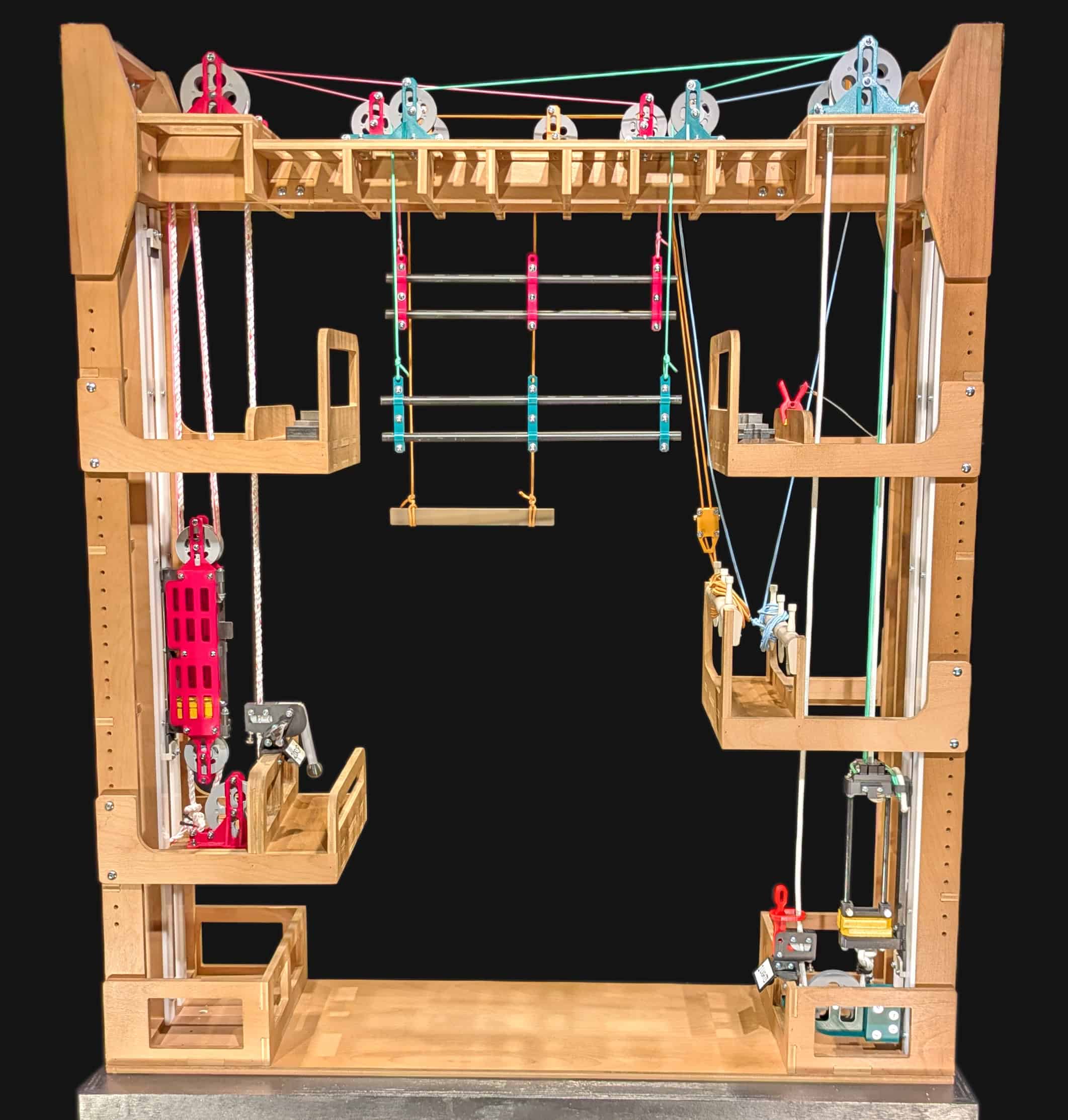
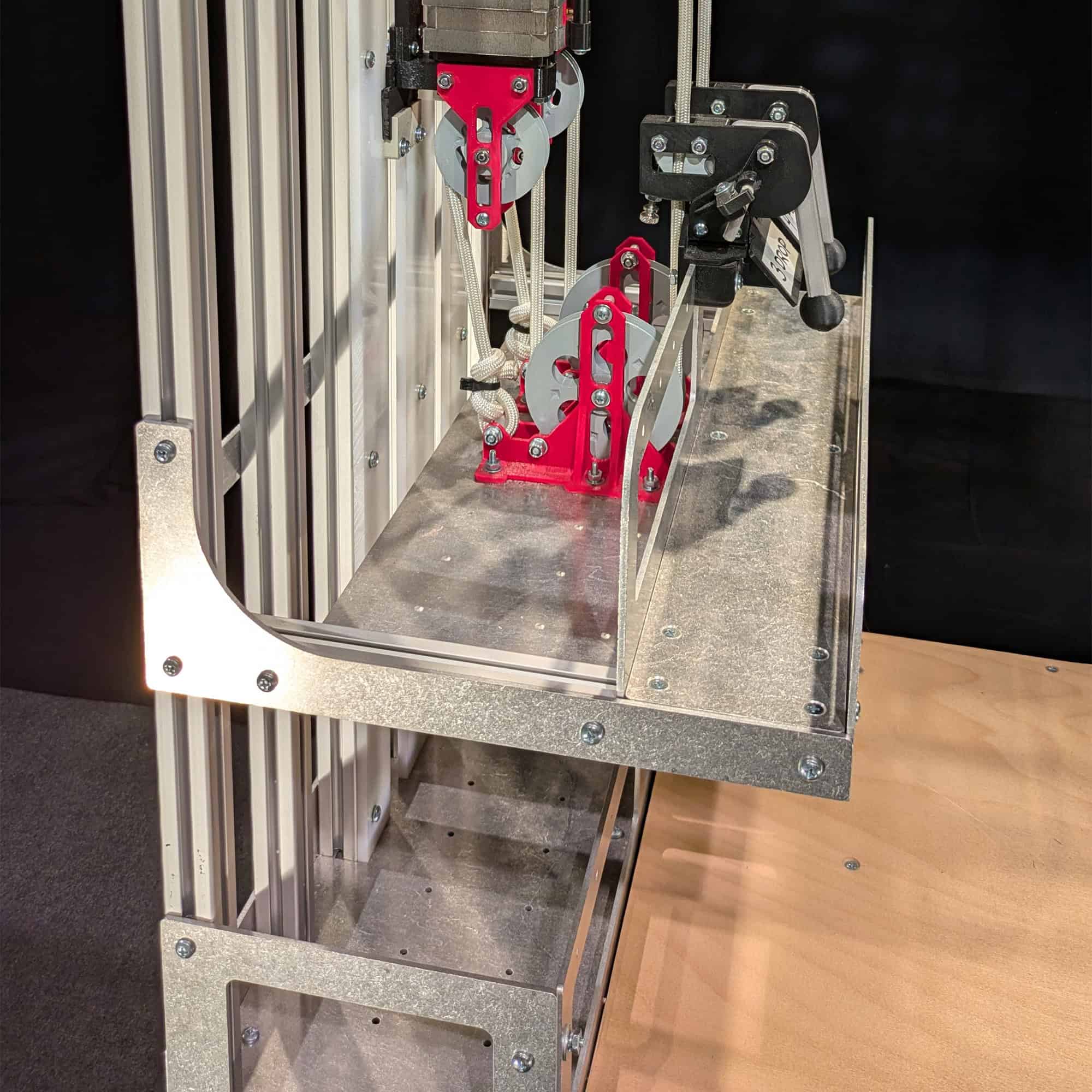
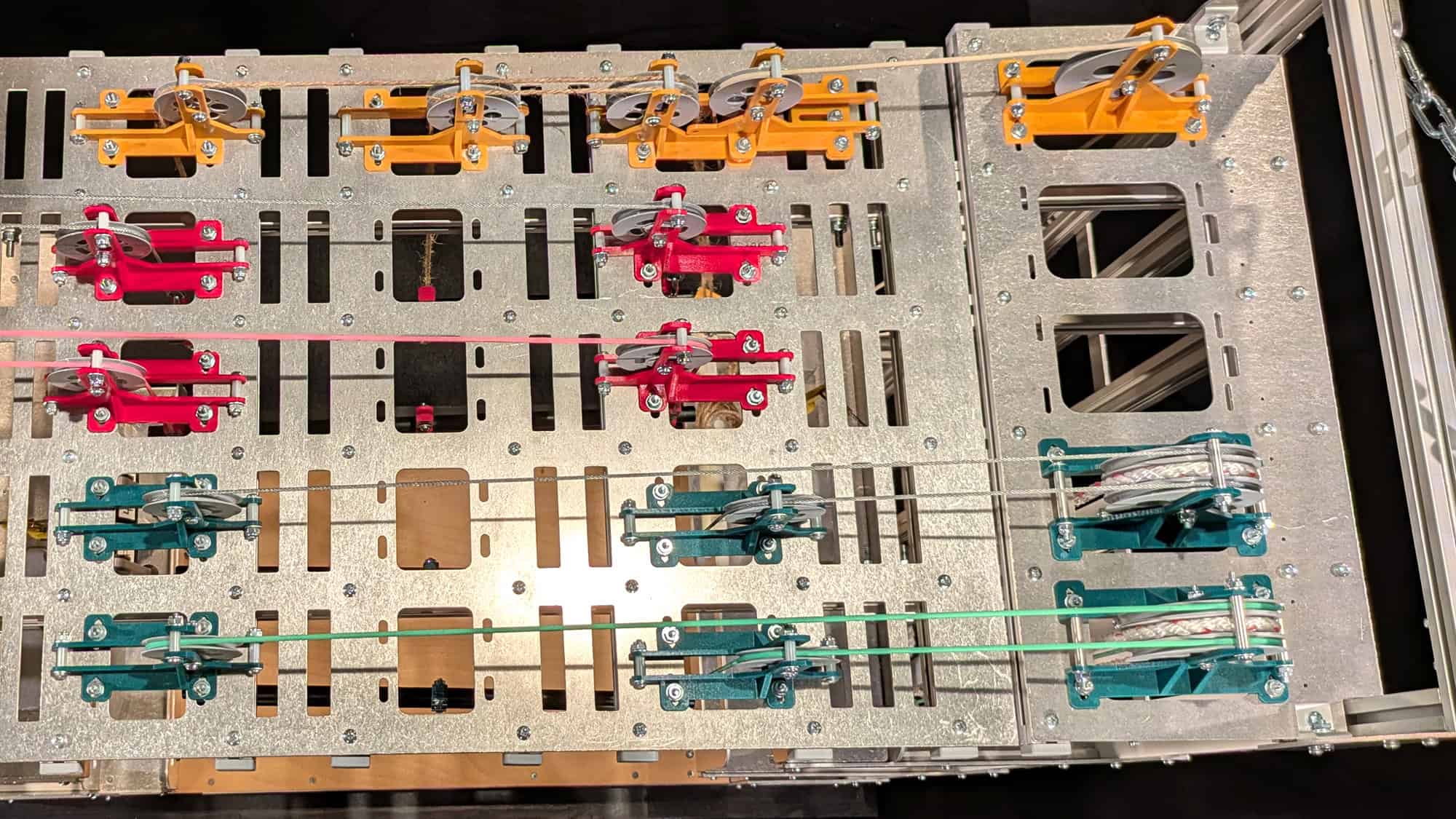
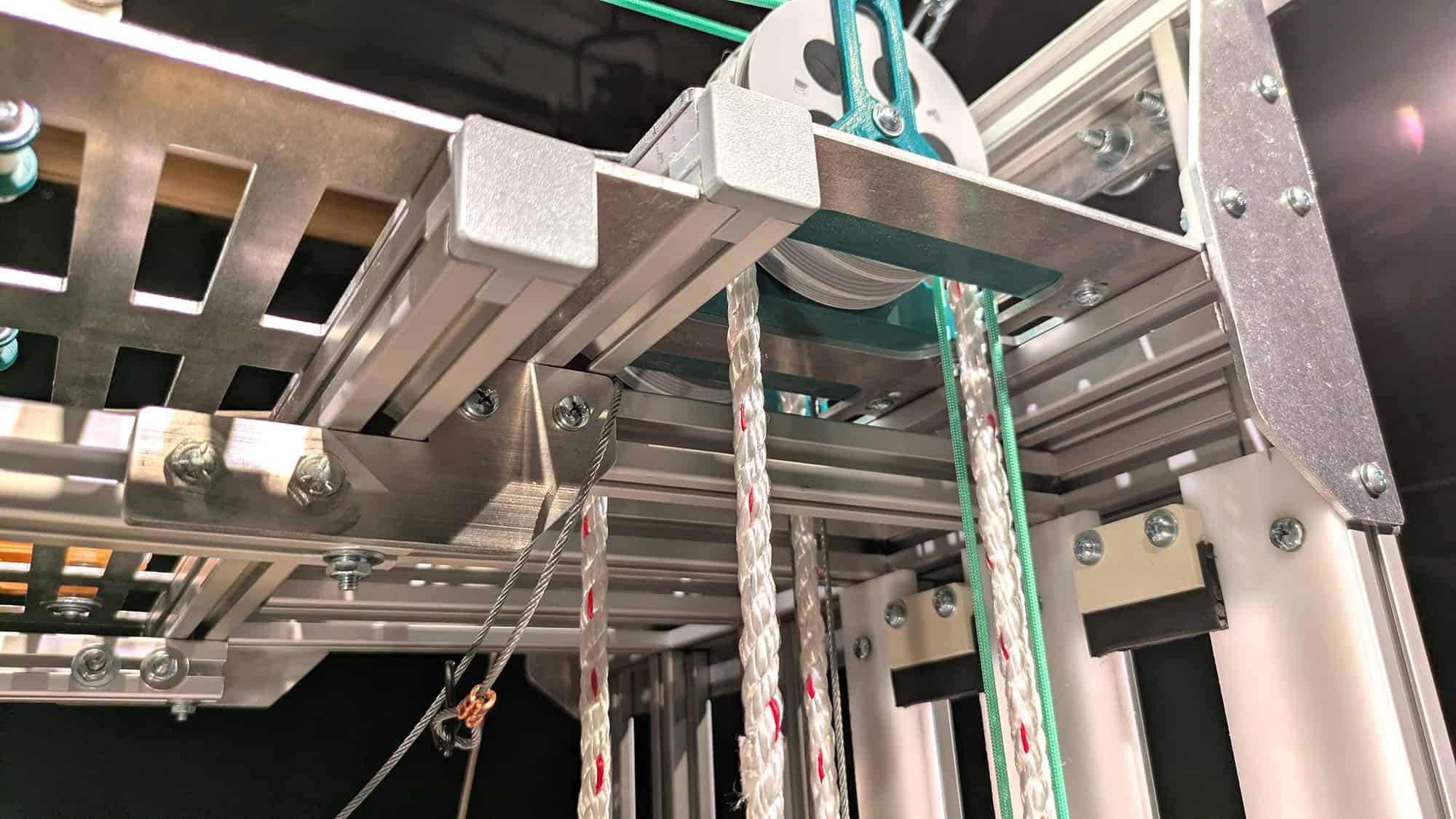
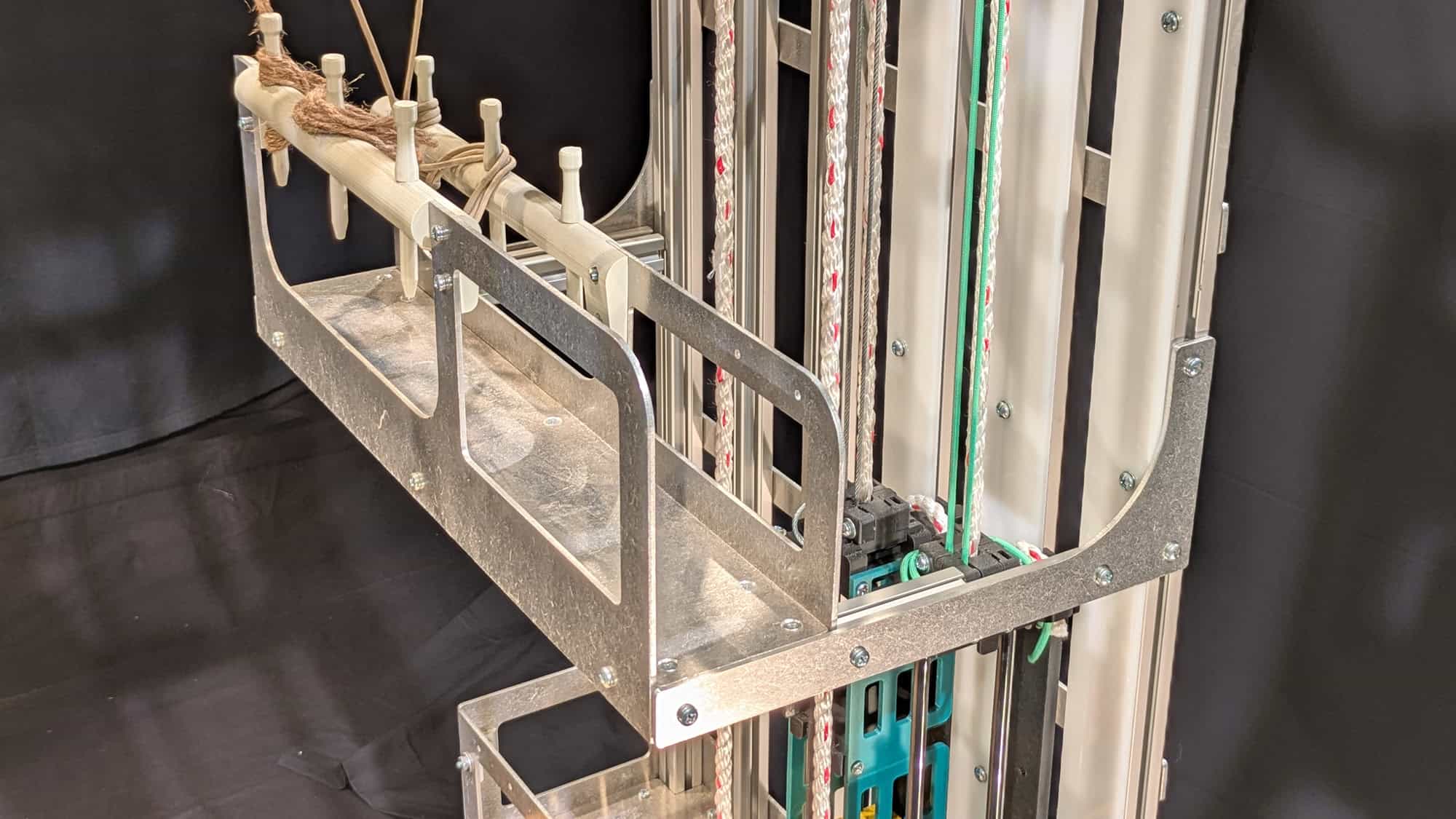
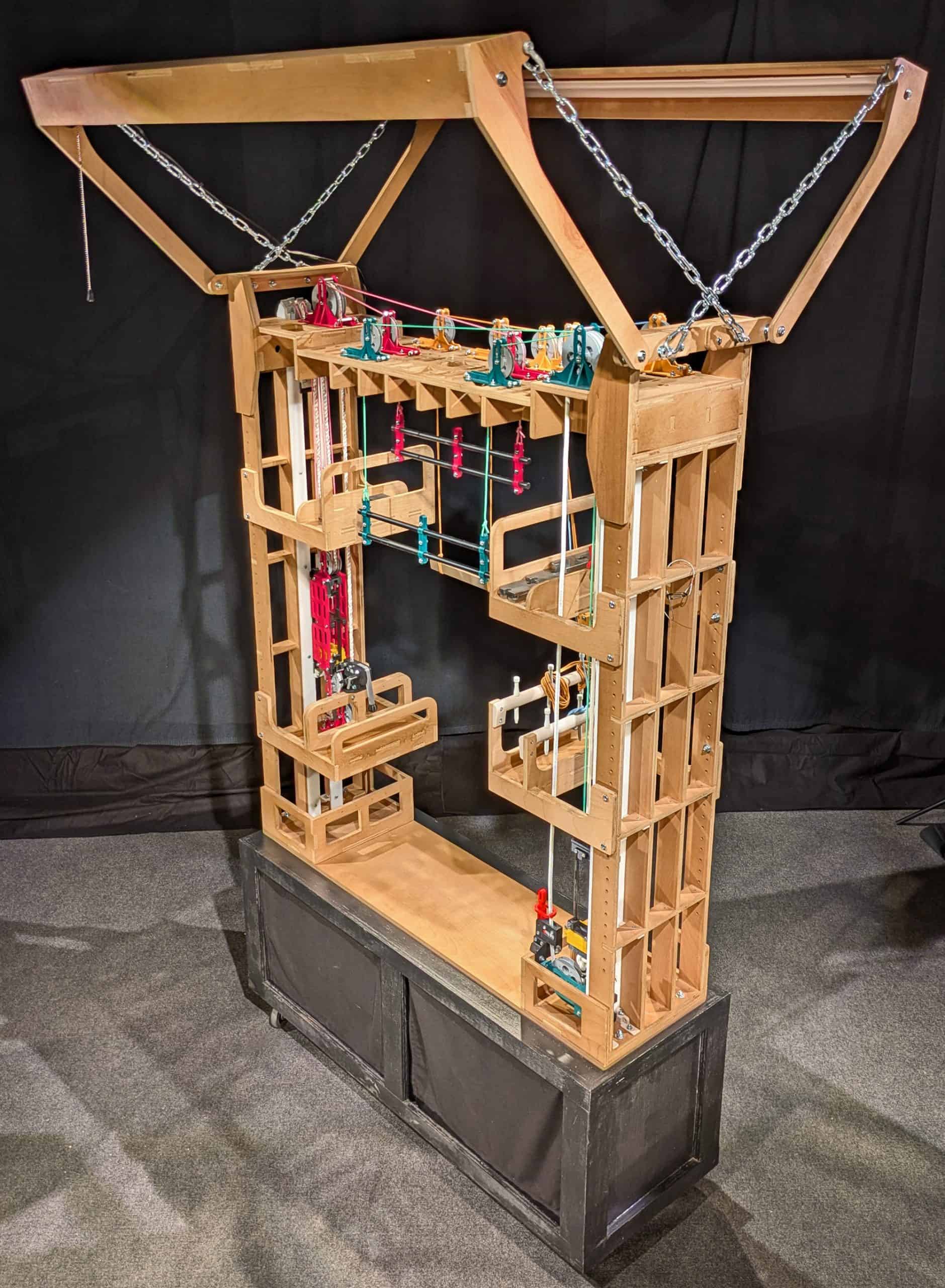
The KRT structure represents the cross-section of a typical proscenium-style theater. The frame is the main assembly that forms the fly tower, locking rail, grid, and galleries. There are two variations: the flat-pack frame and the square tube frame. Both variations are available with three or five line sets.
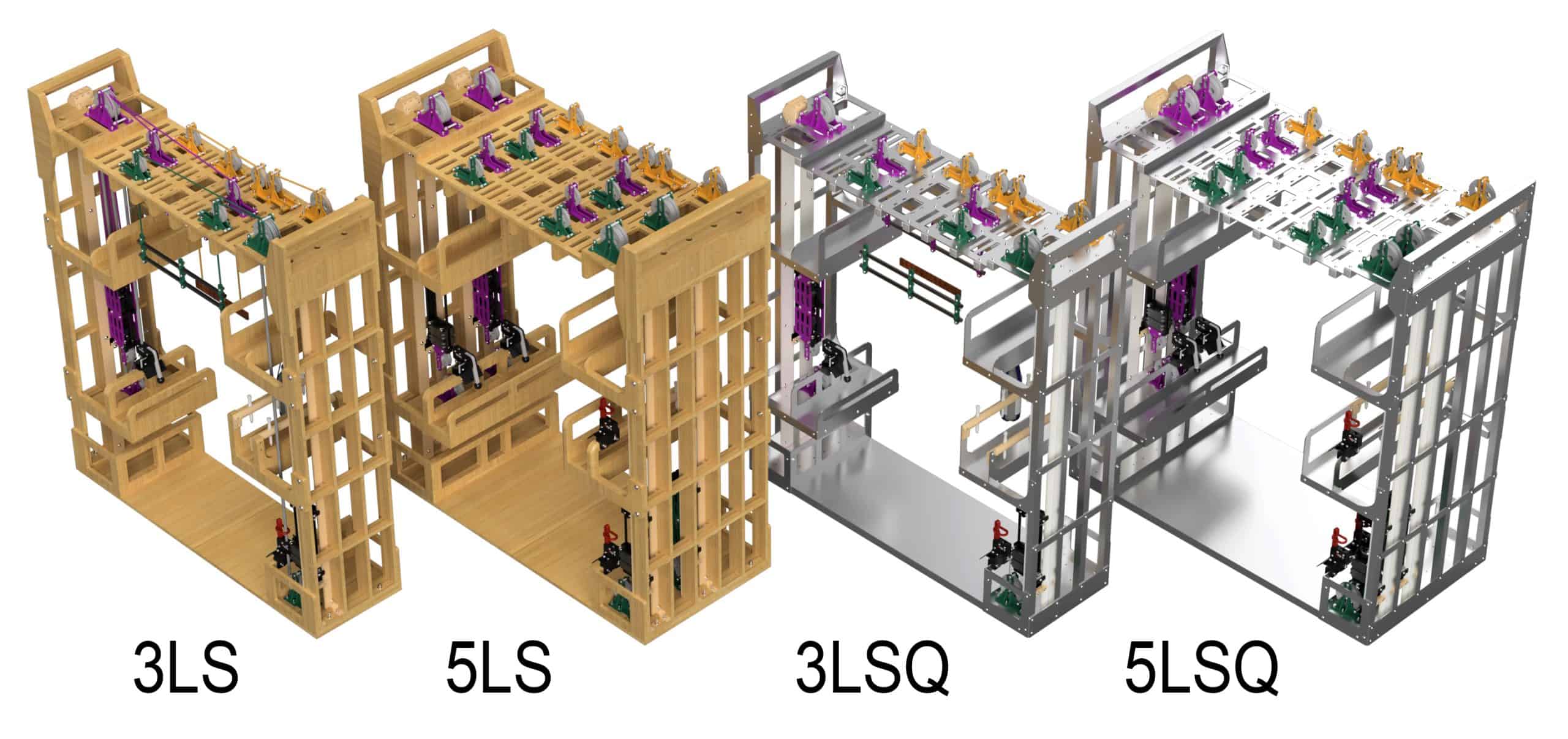
- 3LS = Flat-pack frame with 3 line sets
- 5LS = Flat-pack frame with 5 line sets
- 3LSQ = Square tube frame with 3 line sets
- 5LSQ = Square tube frame with 5 line sets
Flat-Pack Frame
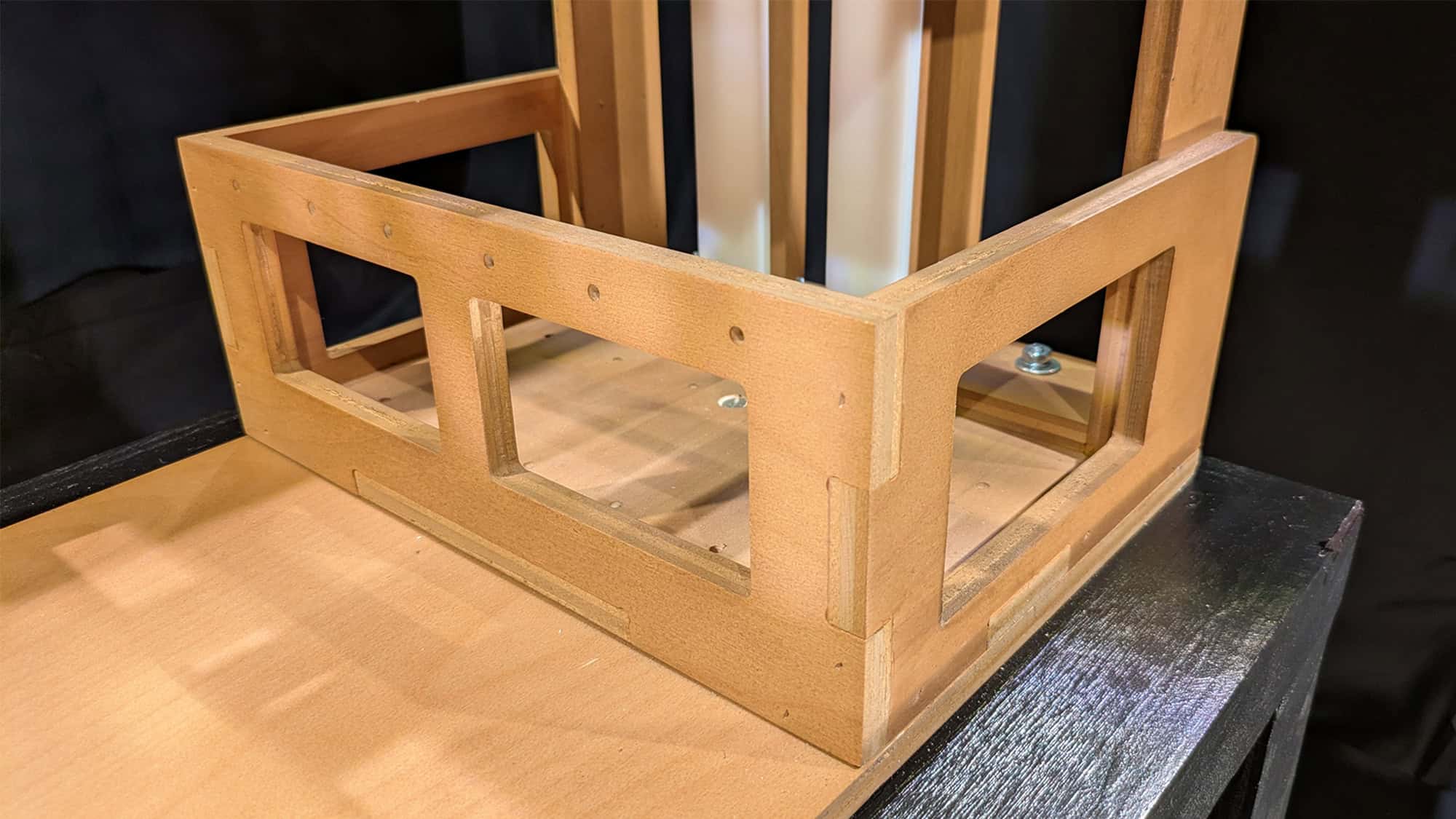
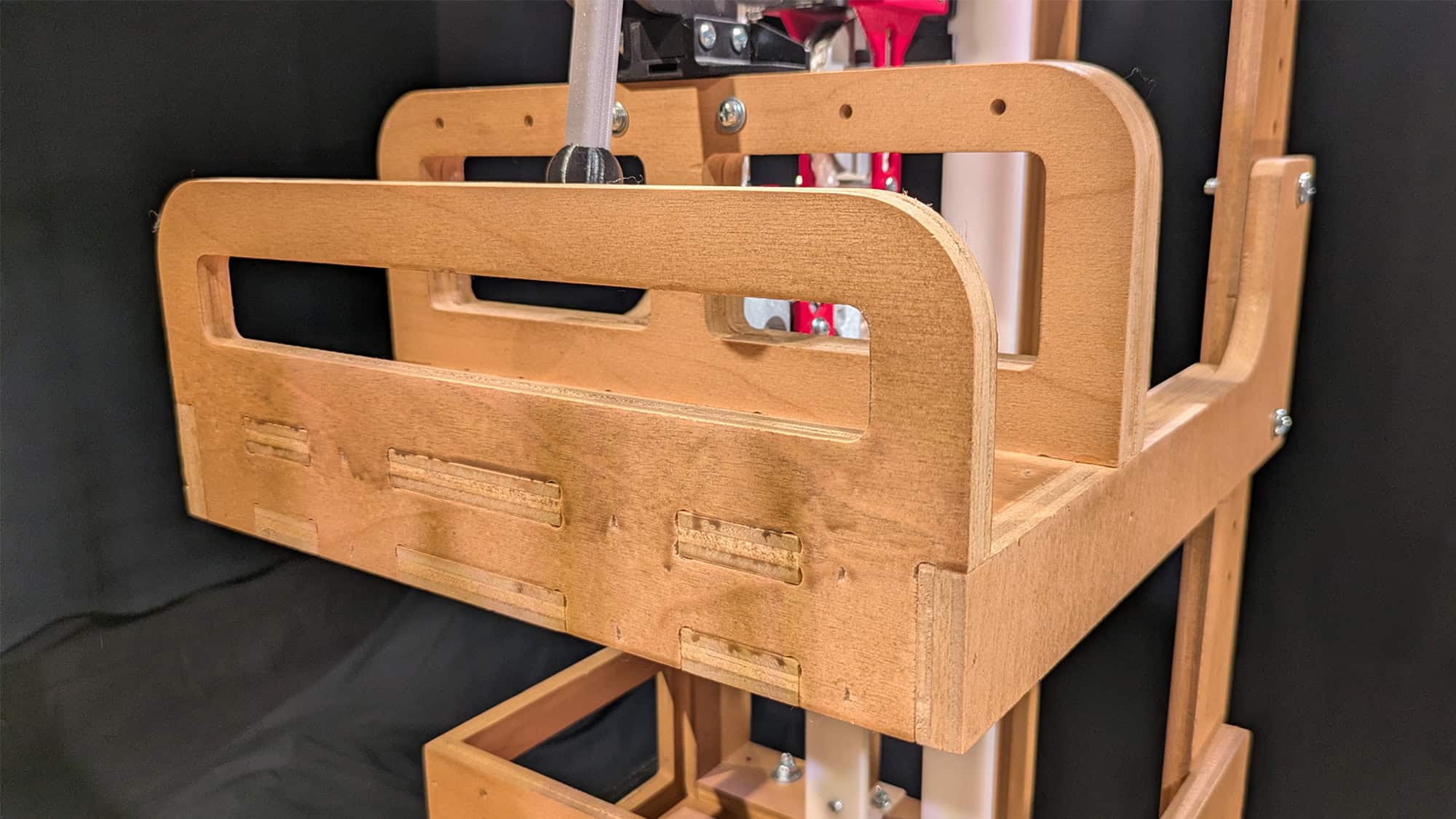
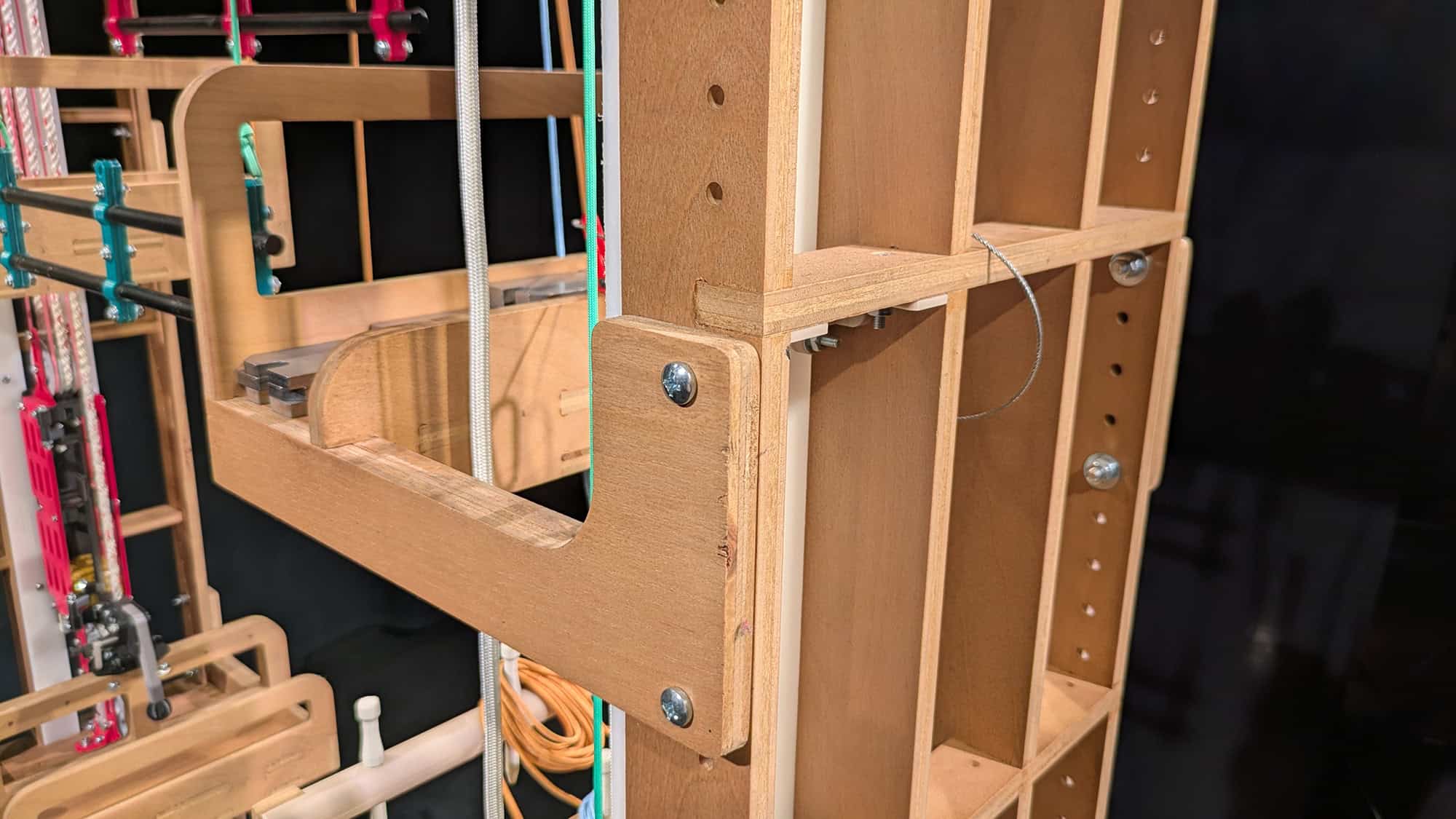
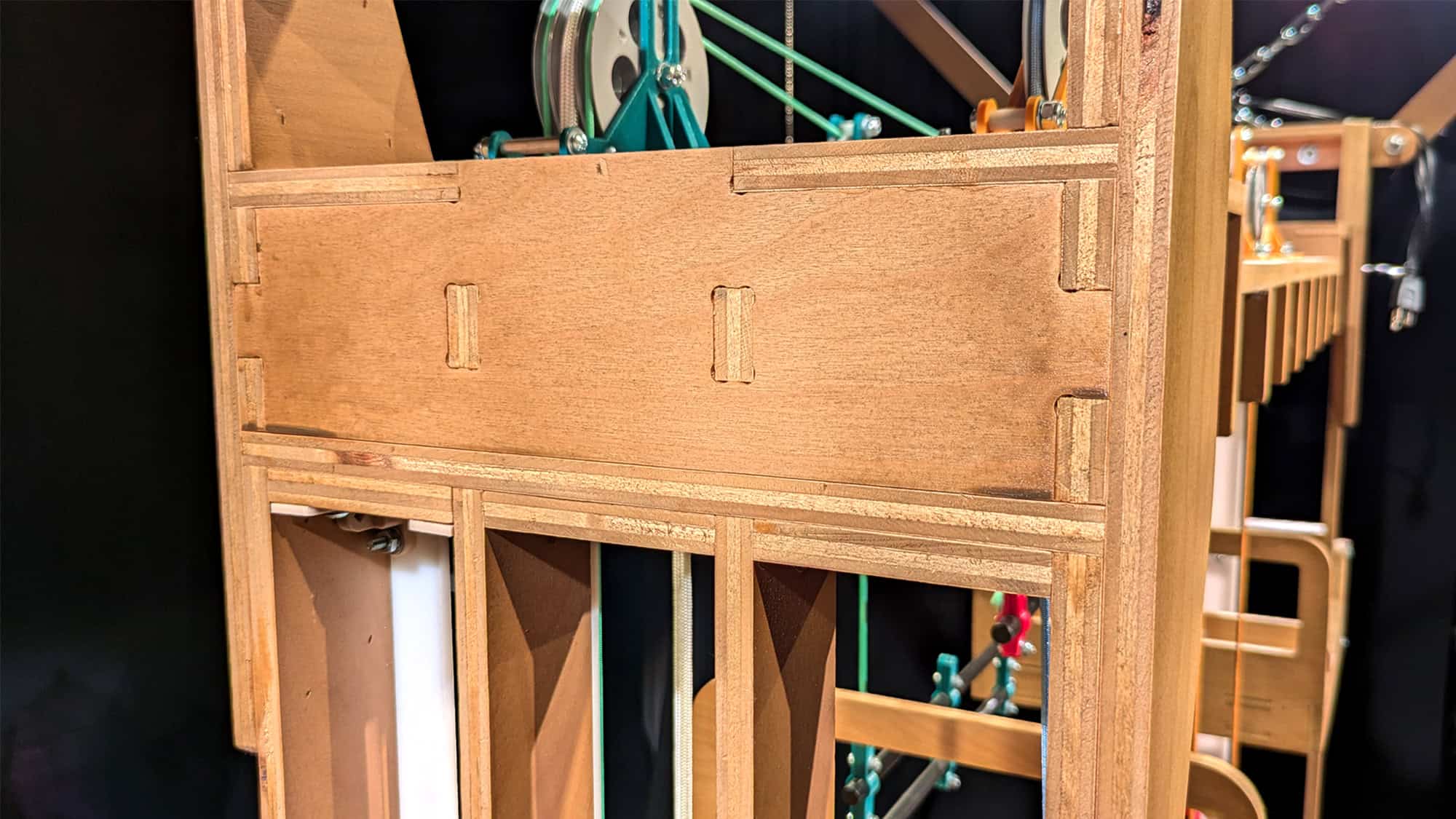
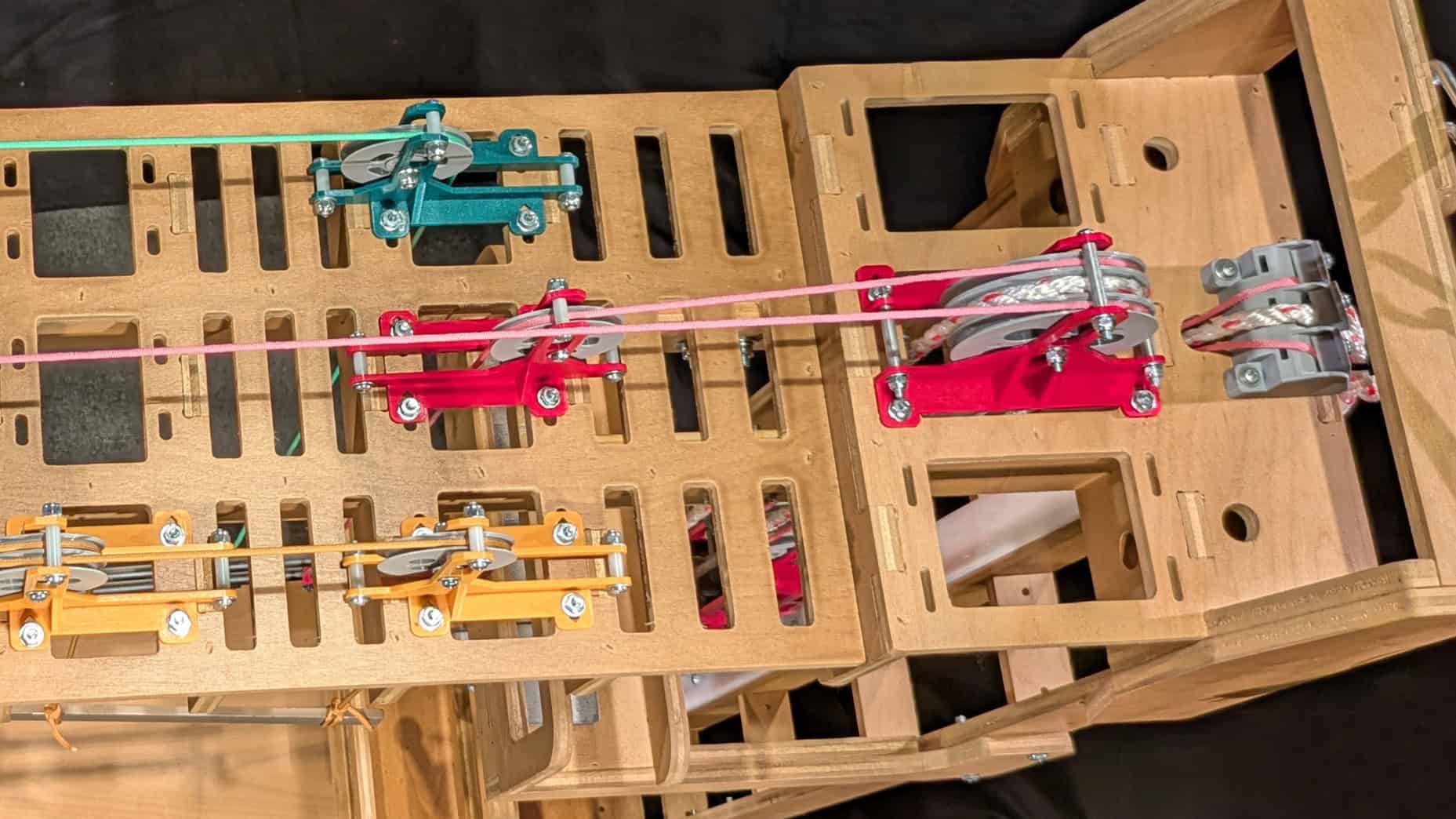
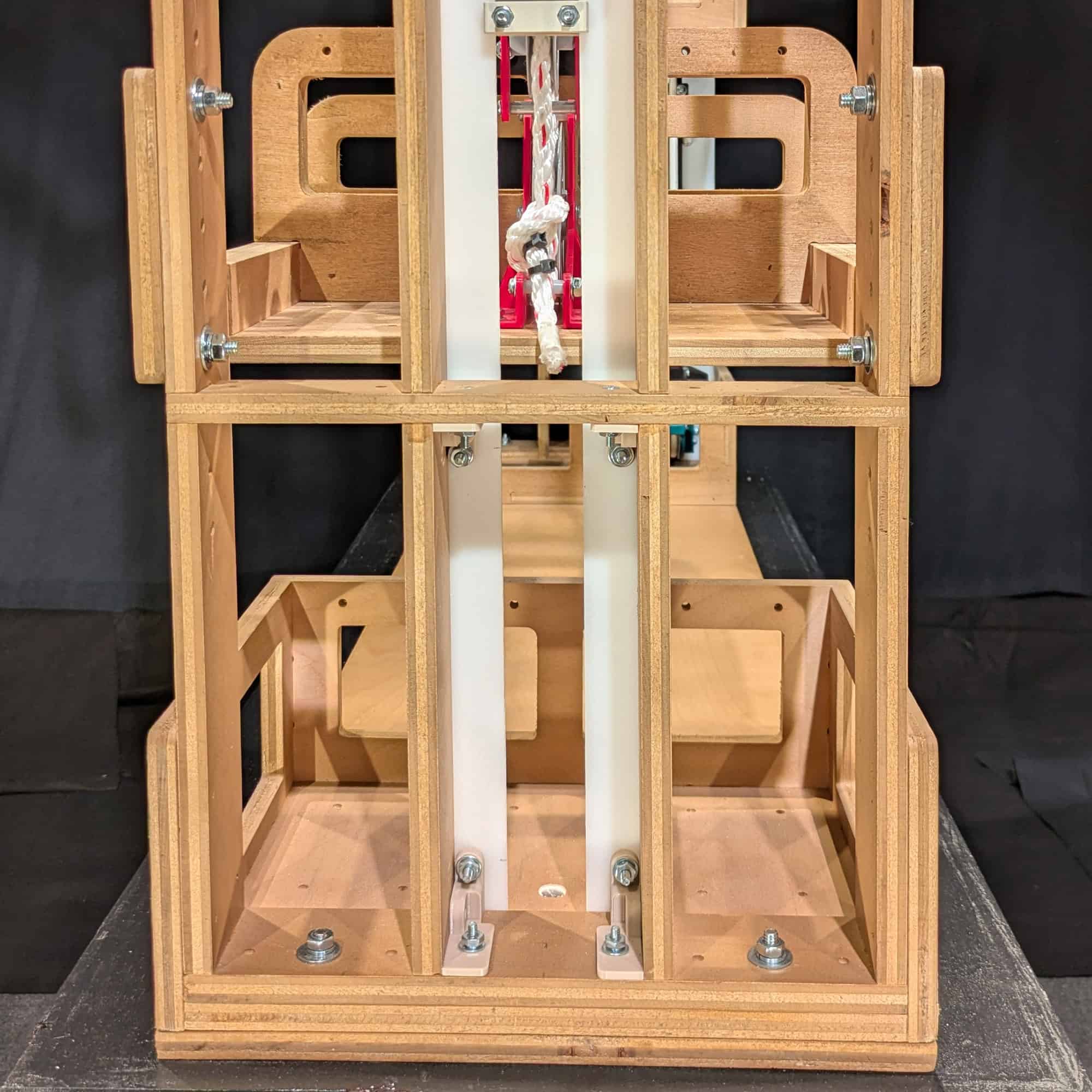
The flat-pack design relies upon a single type of sheet good, like high-quality plywood. The parts include tab-and-slot features to aid in alignment during assembly. The parts are intended to be cut by a CNC router, therefore they include “dog bone corners” in the tabs and slots. The prototype below is made from 1/2″ (12mm) Grade A Birch plywood.
Square Tube Frame
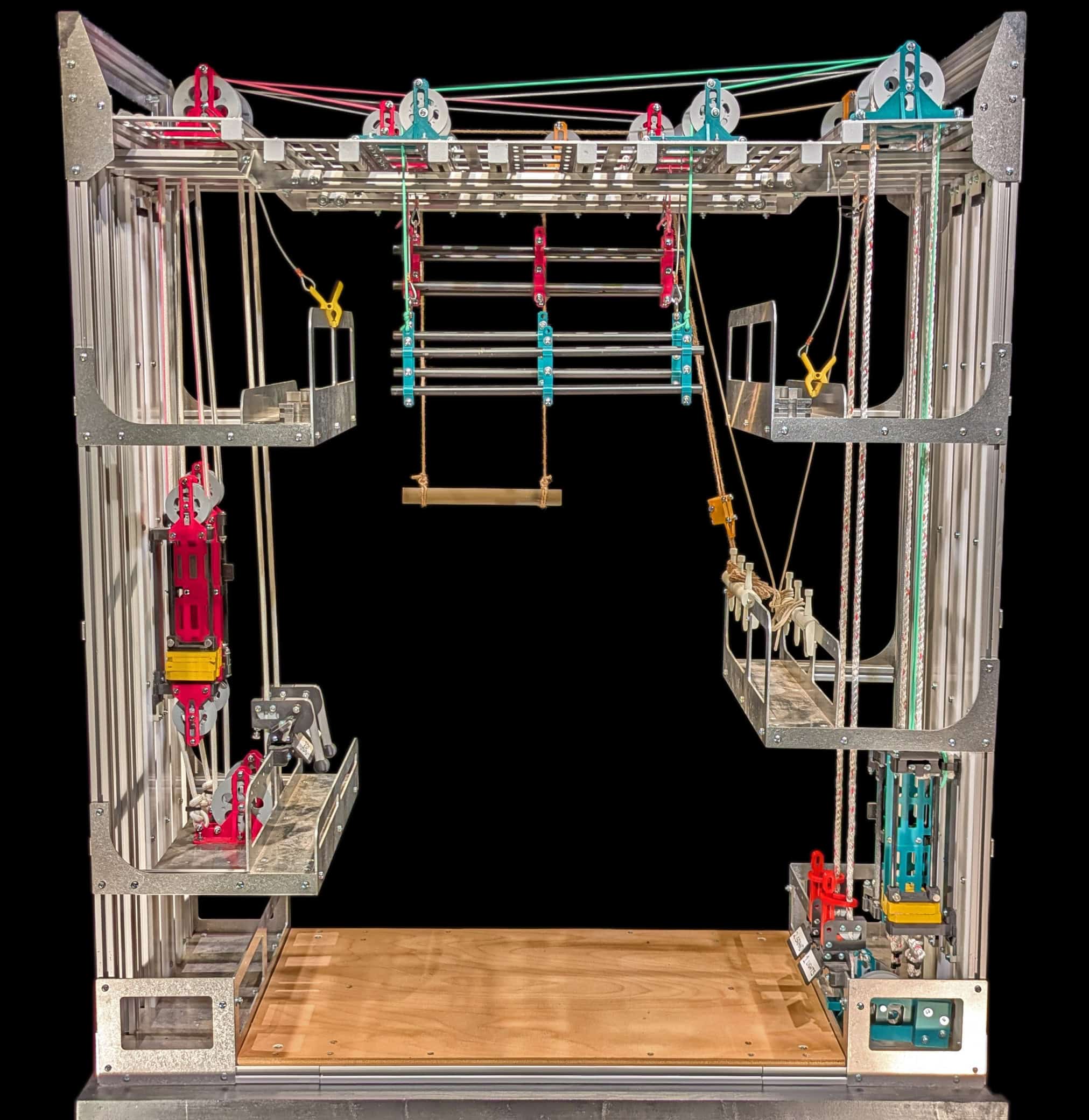
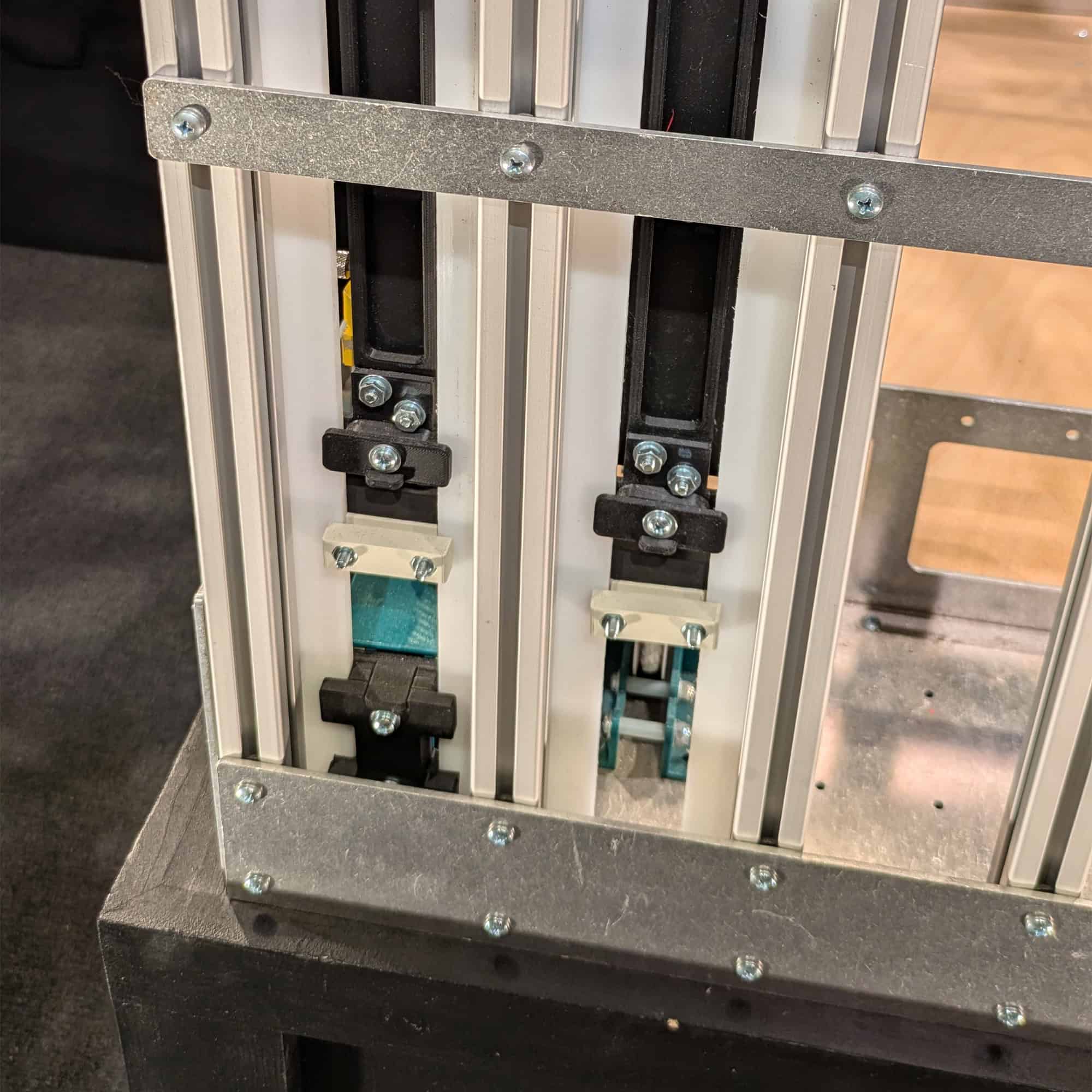
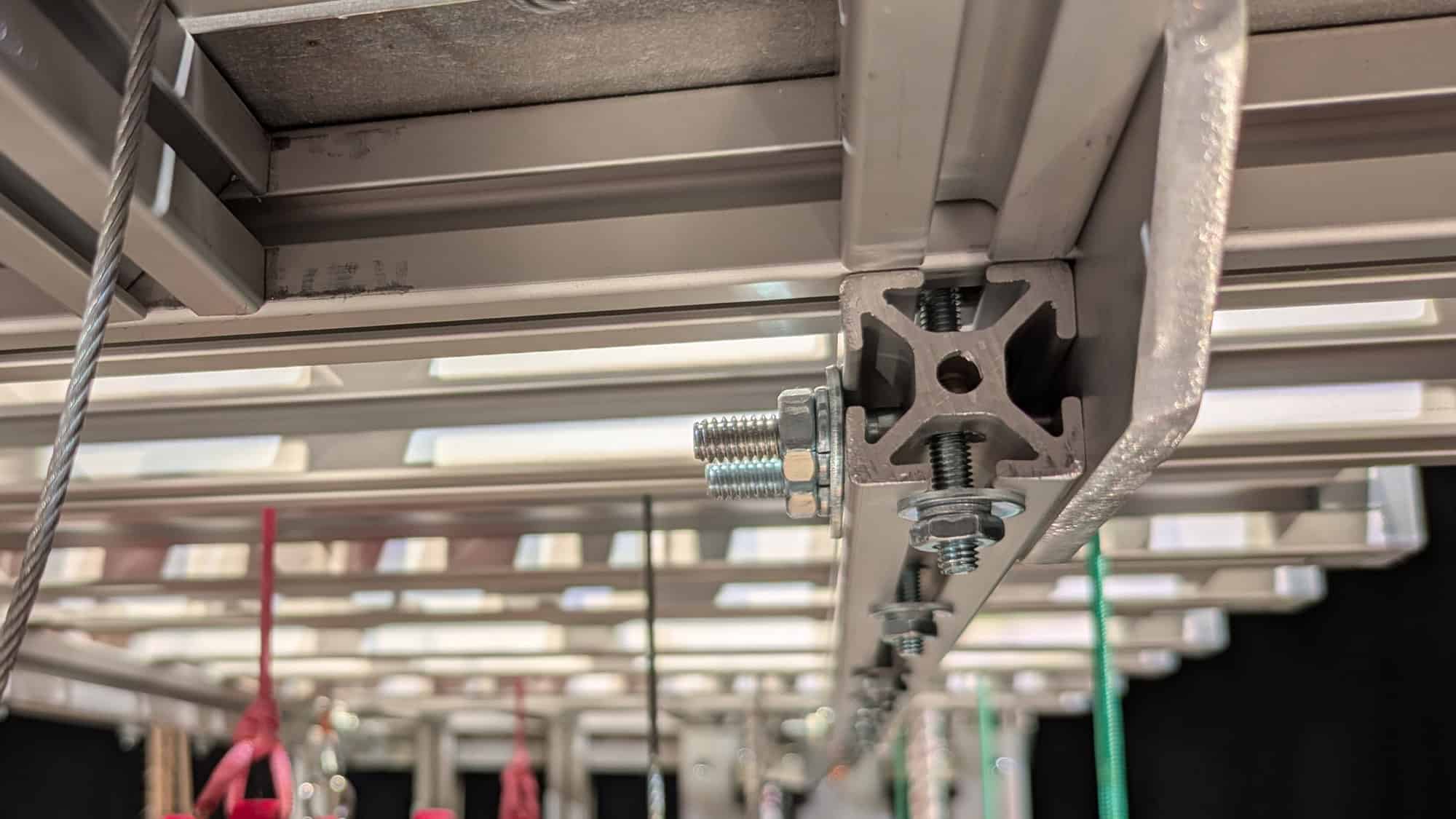
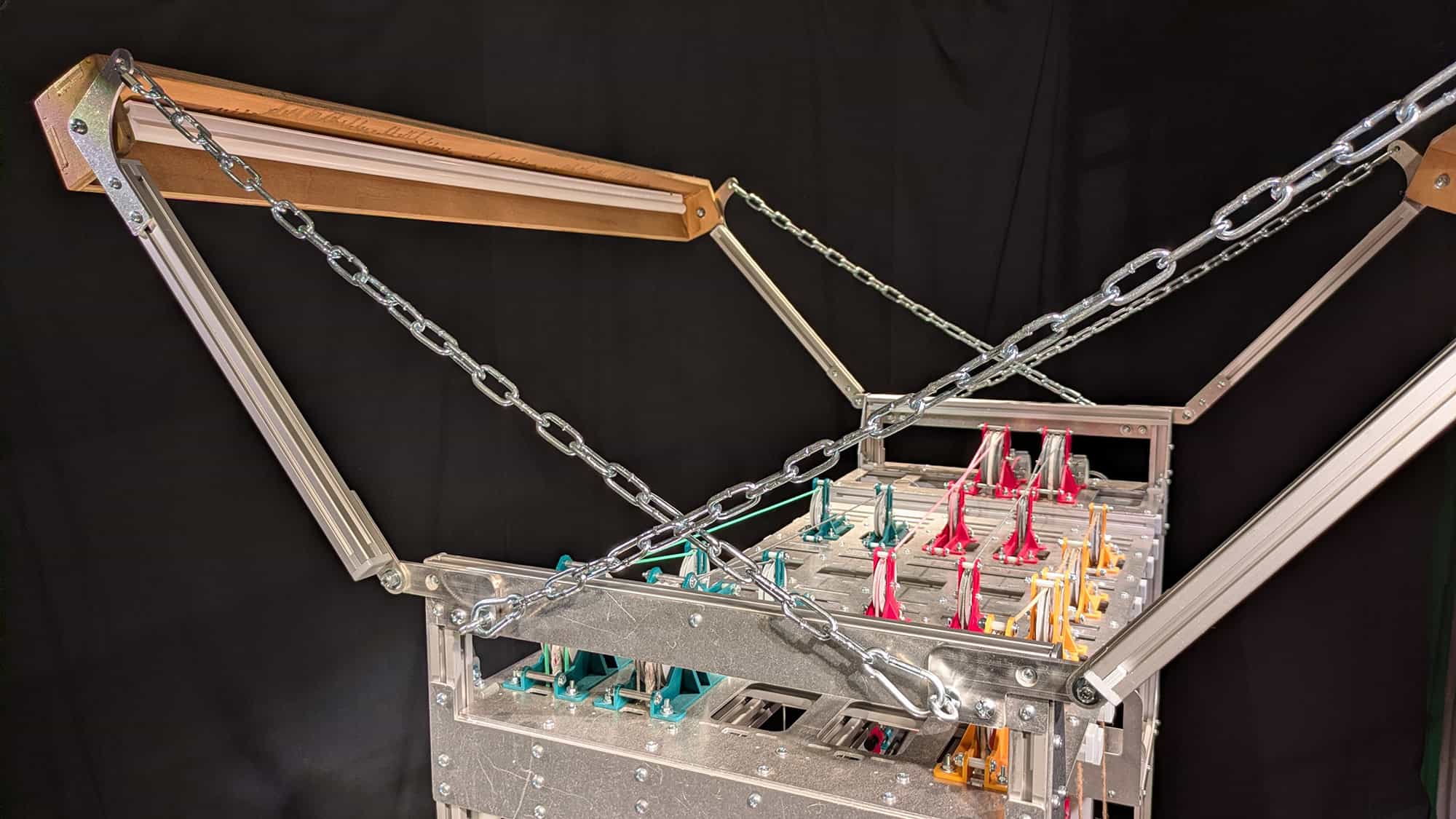
The square tube design uses tubular stock with a square external cross-section joined by flat plates and gussets. The flat plate parts are intended to be cut by a CNC with effectively zero kerf, like a laser or waterjet. The prototype below uses 1” (25mm) T-slot extruded aluminum for the tube stock. The plate parts are made from 1/8” (3mm) aluminum.
Overview
Size
All versions of the KRT are 4-feet wide (1220mm) and about 4′-9″ tall (1450mm). The three line-set trainers are about 14″ deep (356mm). The five line set trainers are about 23″ deep (585mm). All dimensions increase when the cart or lights are added.
Scale
The KRT does not conform to one scale. The relative size of components is not realistic by design. Given the overall size of the trainer, the components are sized to optimize visibility and interactivity.
Cart & Lights
The KRT includes designs for transportation carts and overhead strip lights.
Transport
The strip lights may be folded down for easier transport. The KRT is designed to fit through a typical 80″ (2030mm) tall doorway. Due to the increased width, the five line set trainers may not fit through all doorways with the strip lights folded down. See the KRT Manual and drawings for more information.
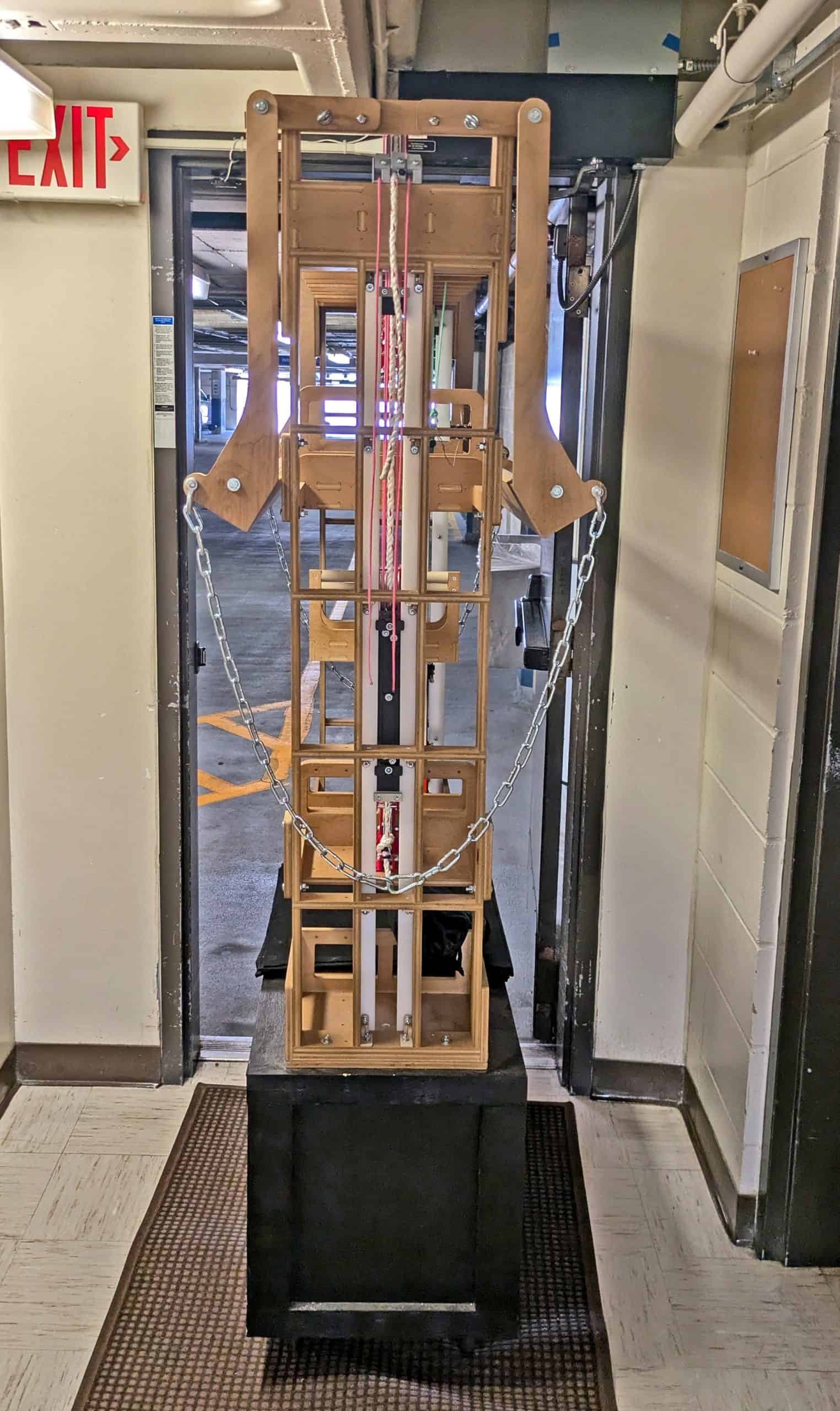
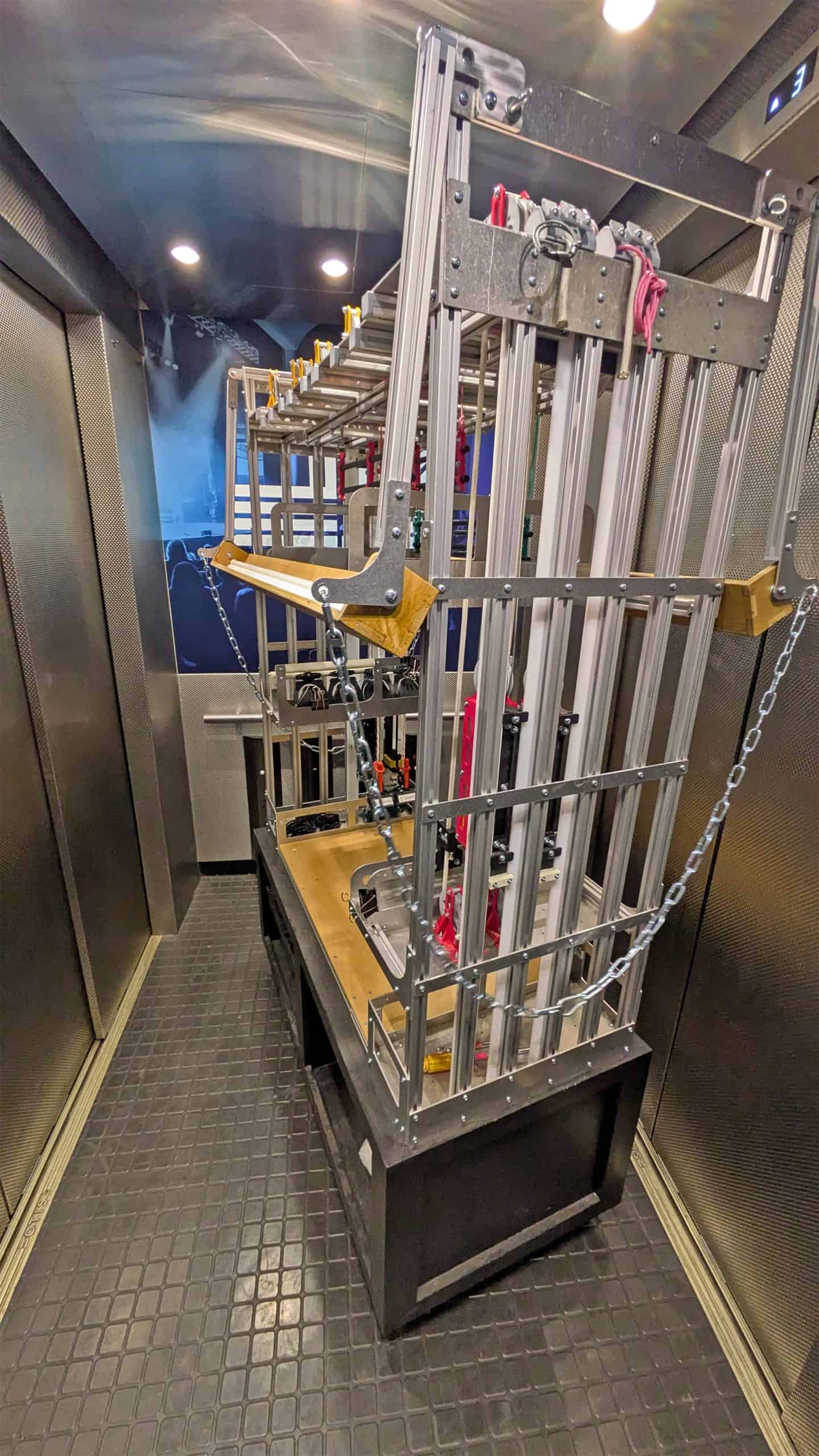
Trainers shown in doorway and elevator
Disassembly
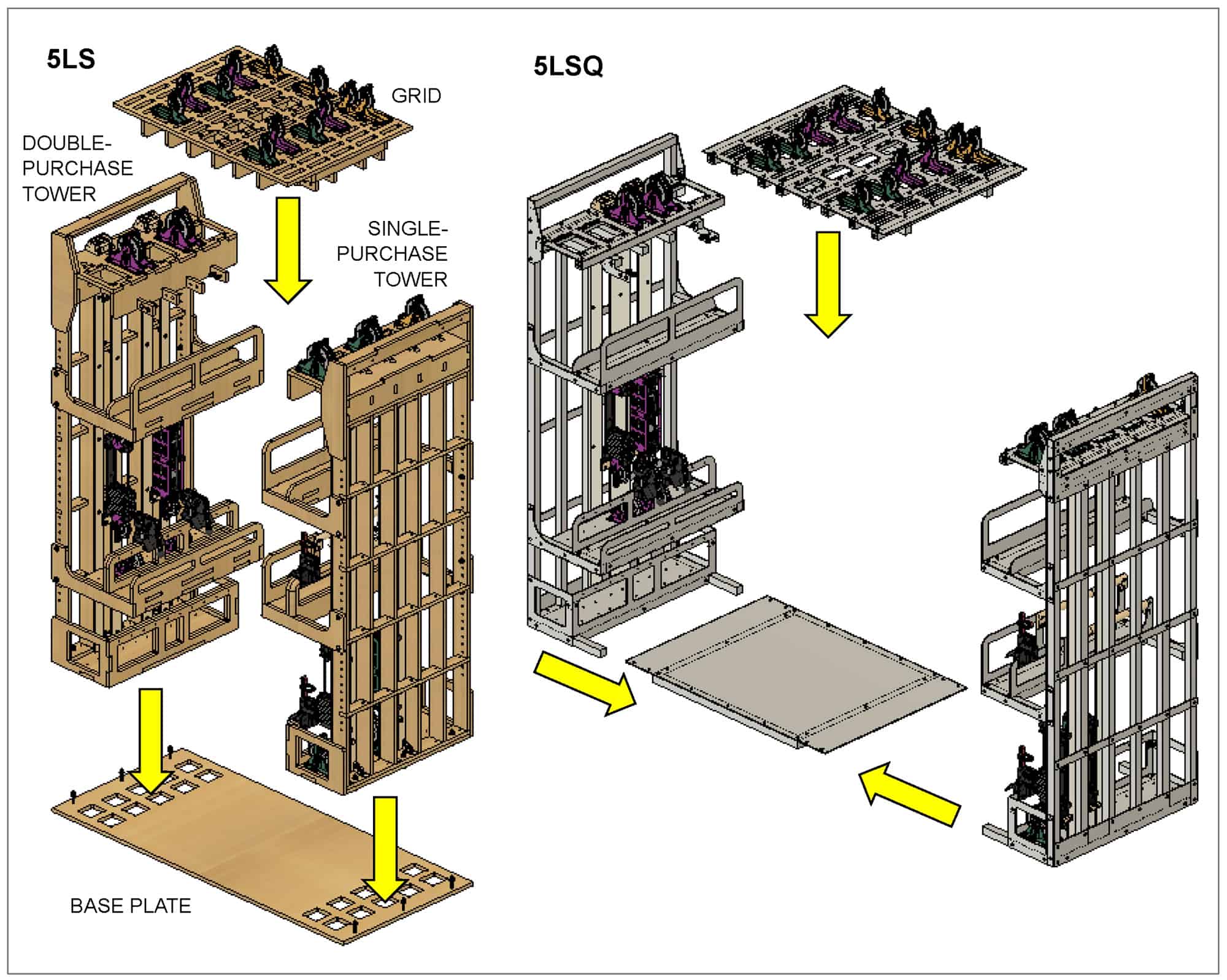
Excluding the cart and strip lights, the KRT dismantles into four pieces. To do this, the battens must be detached, and the lift lines must be removed from the grid pulley blocks, but all other rigging equipment can remain in place.
Line Sets
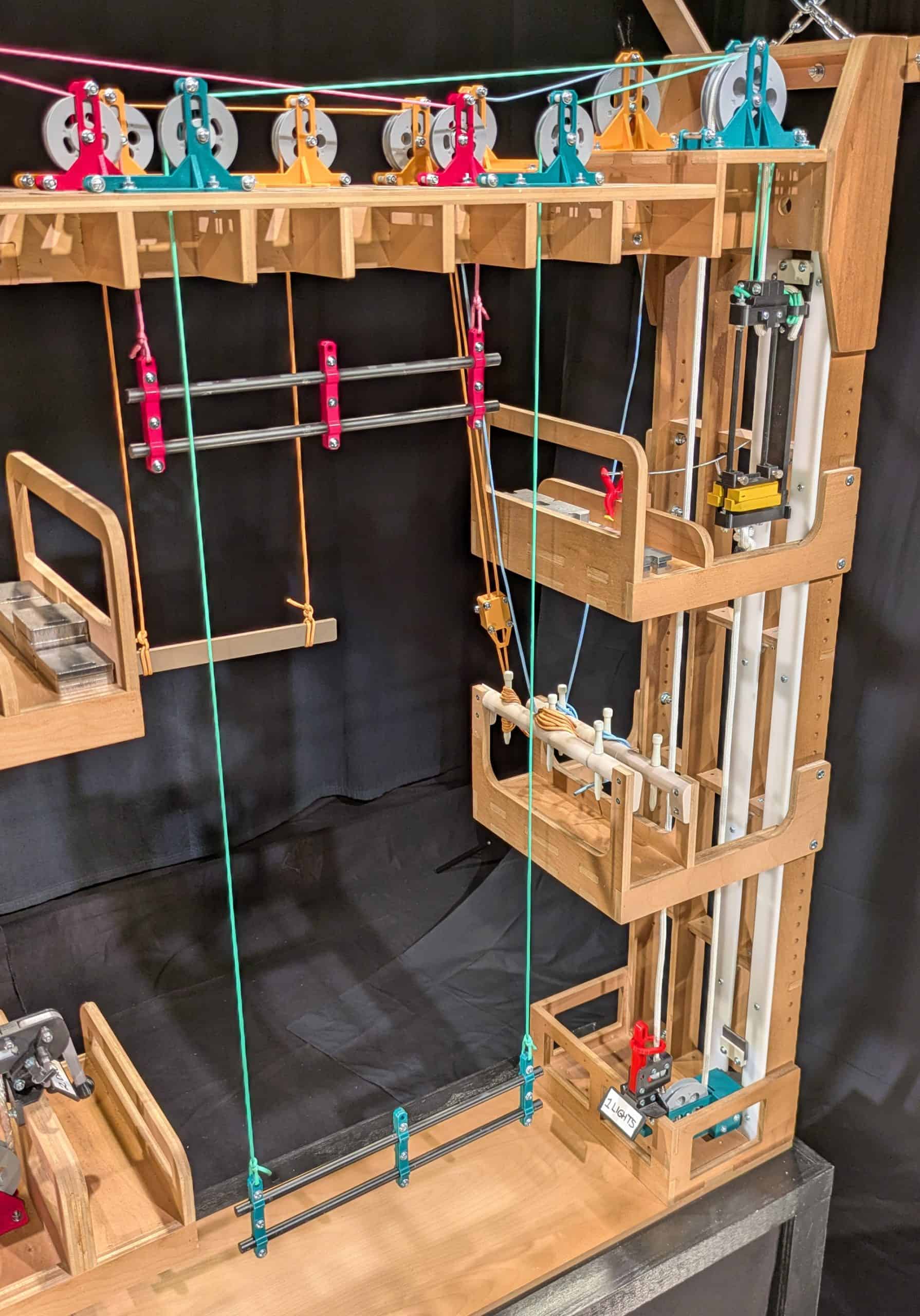
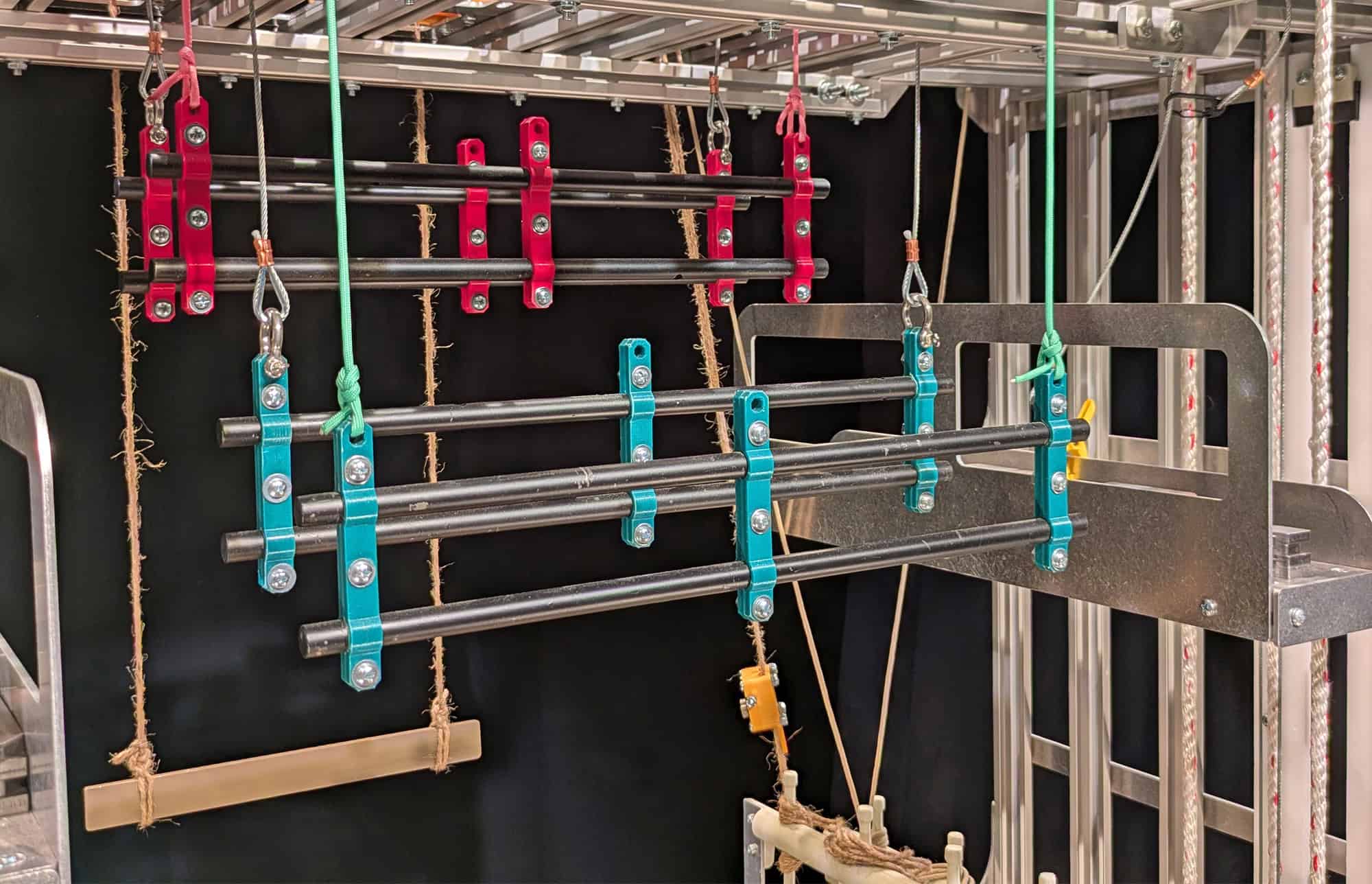
Each KRT includes at least one single-purchase, double-purchase, and hemp line set.
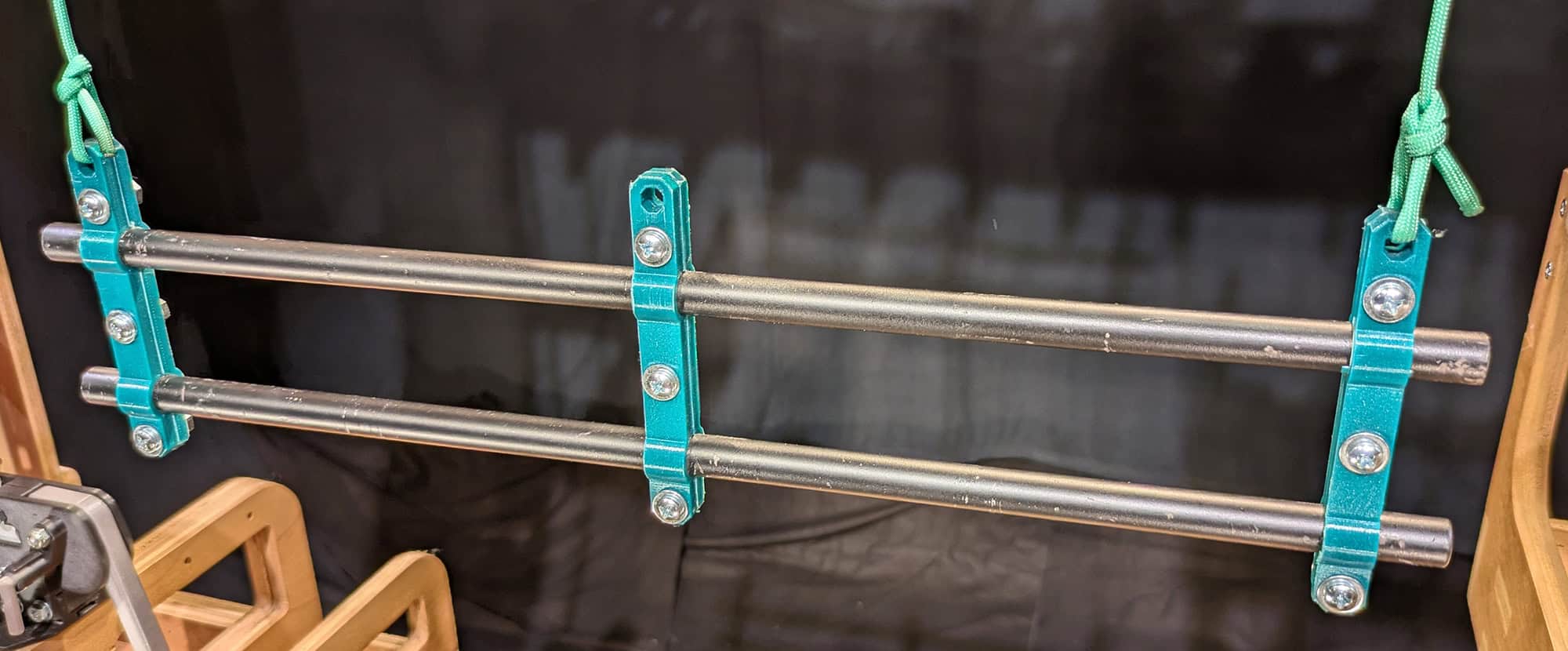
Single-Purchase Line Set
The equipment is color-coded teal and the lift lines are mint green.
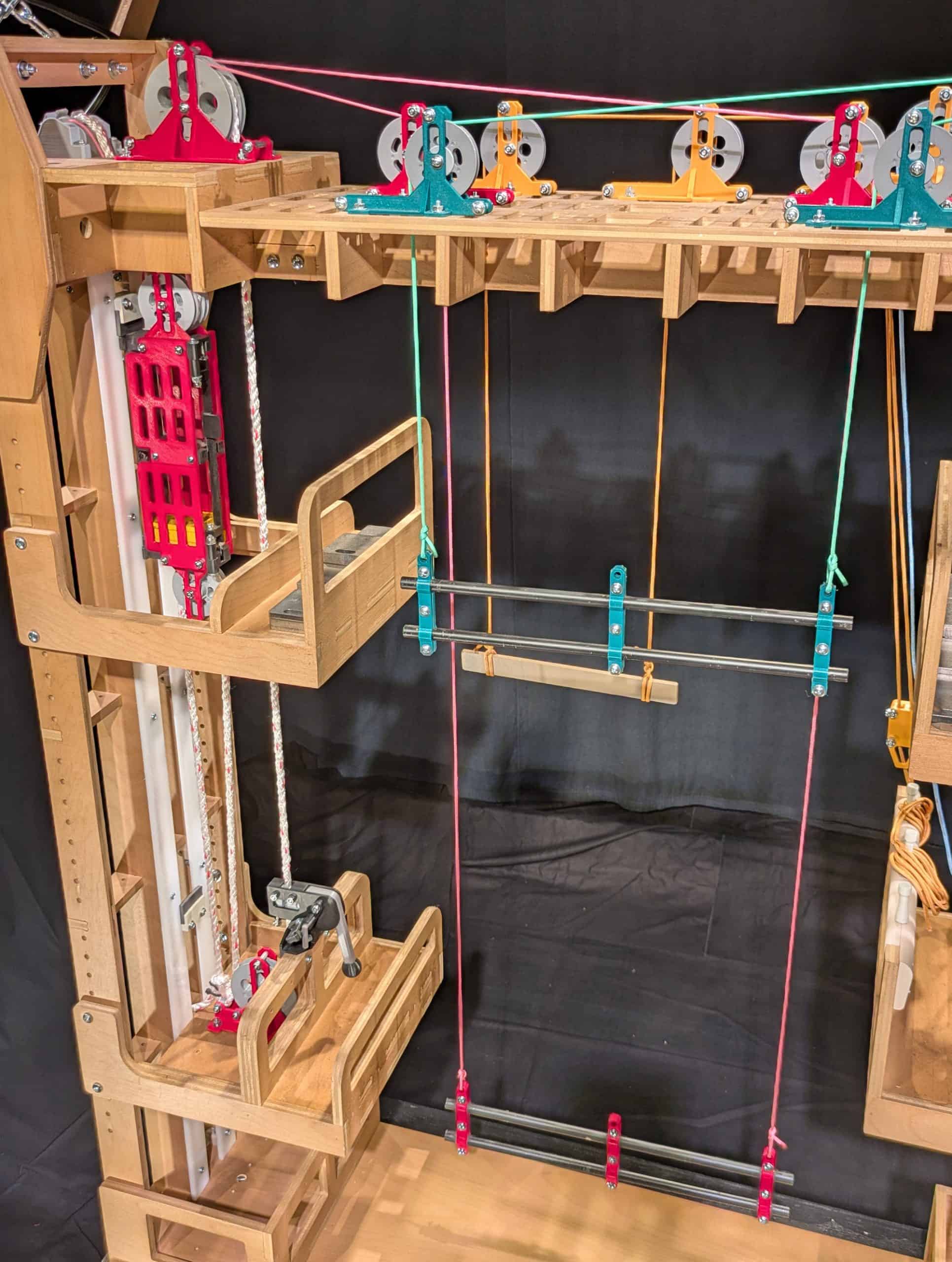
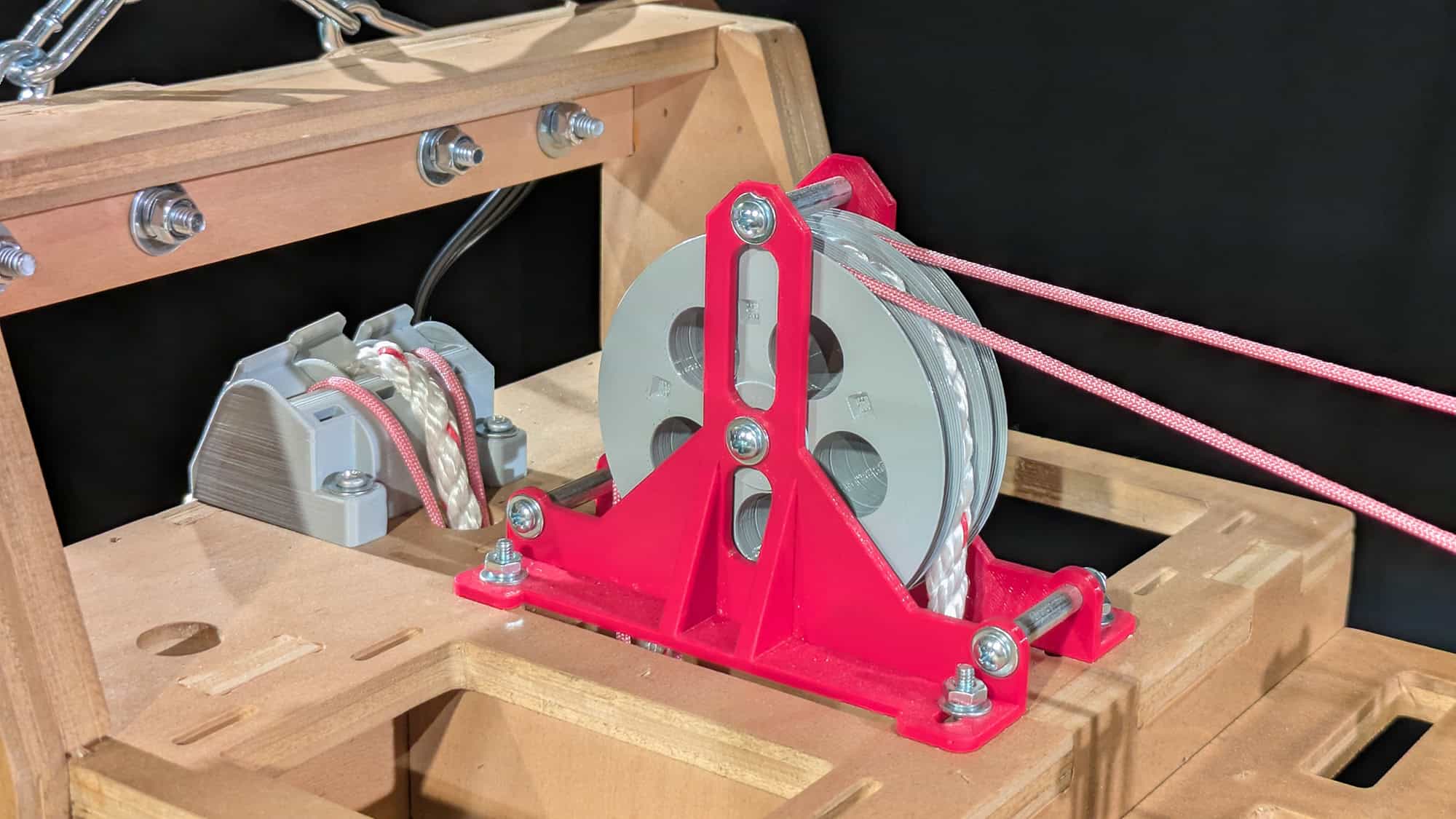
Double-Purchase Line Set
The equipment is color-coded magenta and the lift lines are pink.
Hemp Line Set
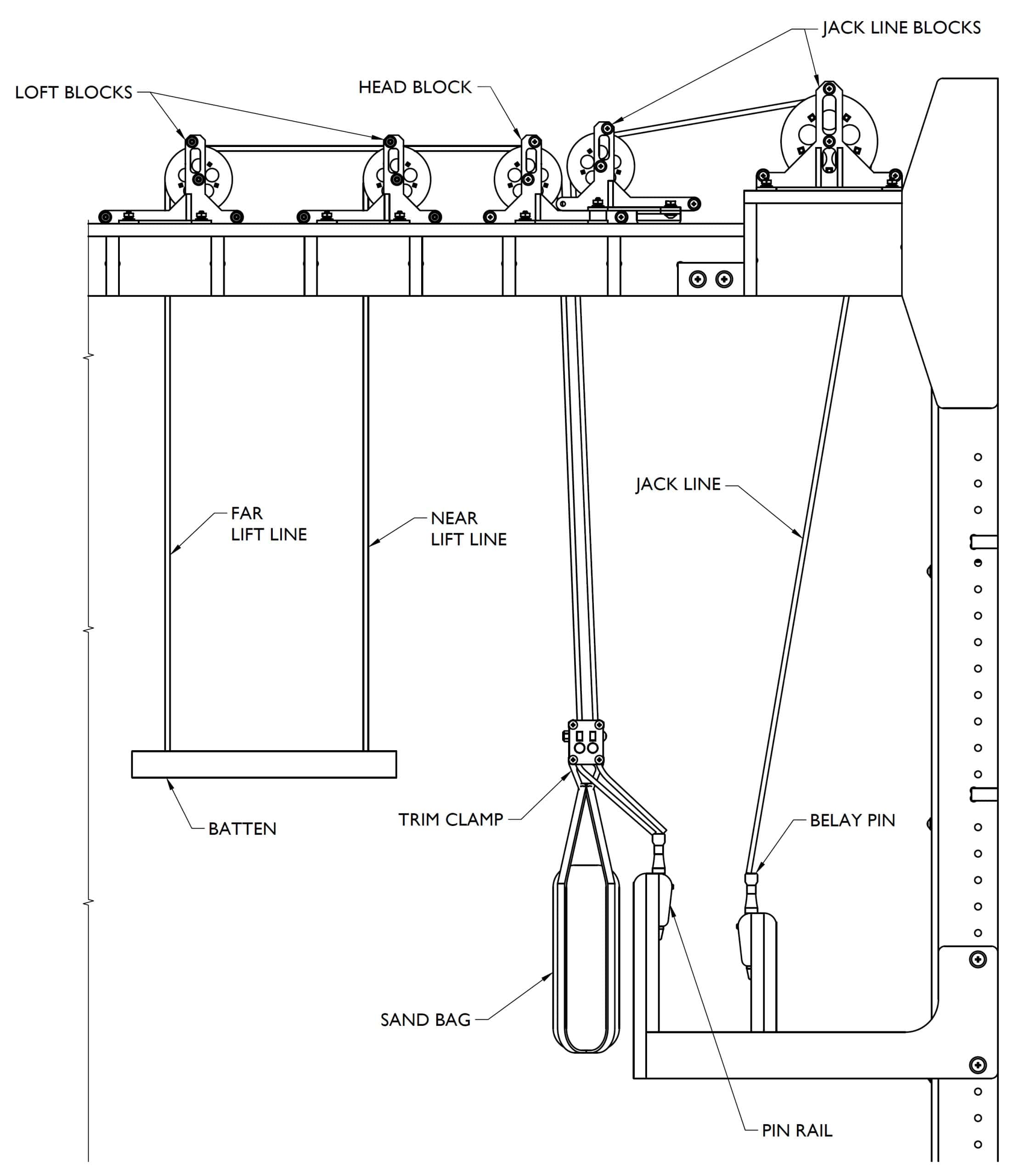
The equipment is color-coded yellow-orange and the lift lines are gold. The jack line is light blue.
Why is a hemp set included with the KRT?
First, modern counterweight systems are closely related to historical hemp systems. The systems have parts with common functions; both leverage the same fundamental principles of physics. Understanding the history of theatrical rope line systems provides context for why they look and function the way that they do.
Second, because hemp rigging has fewer specialty parts and mechanisms, it can be used to deliver a lesson which progresses from a single rope and pulley to the need for tying off the rope, to a multi-line system, to the need for counterweight, to the logistics of safely changing the weight balance, etc. All of these fundamentals can be introduced through the hemp line set before moving on to the modern counterweight systems.
Lastly, hemp rigging is still used. Though it is rare to see full-stage hemp systems in the United States, it is more common around the world. Also, hemp rigging techniques are still used for special or temporary rigging applications alongside modern rigging systems.
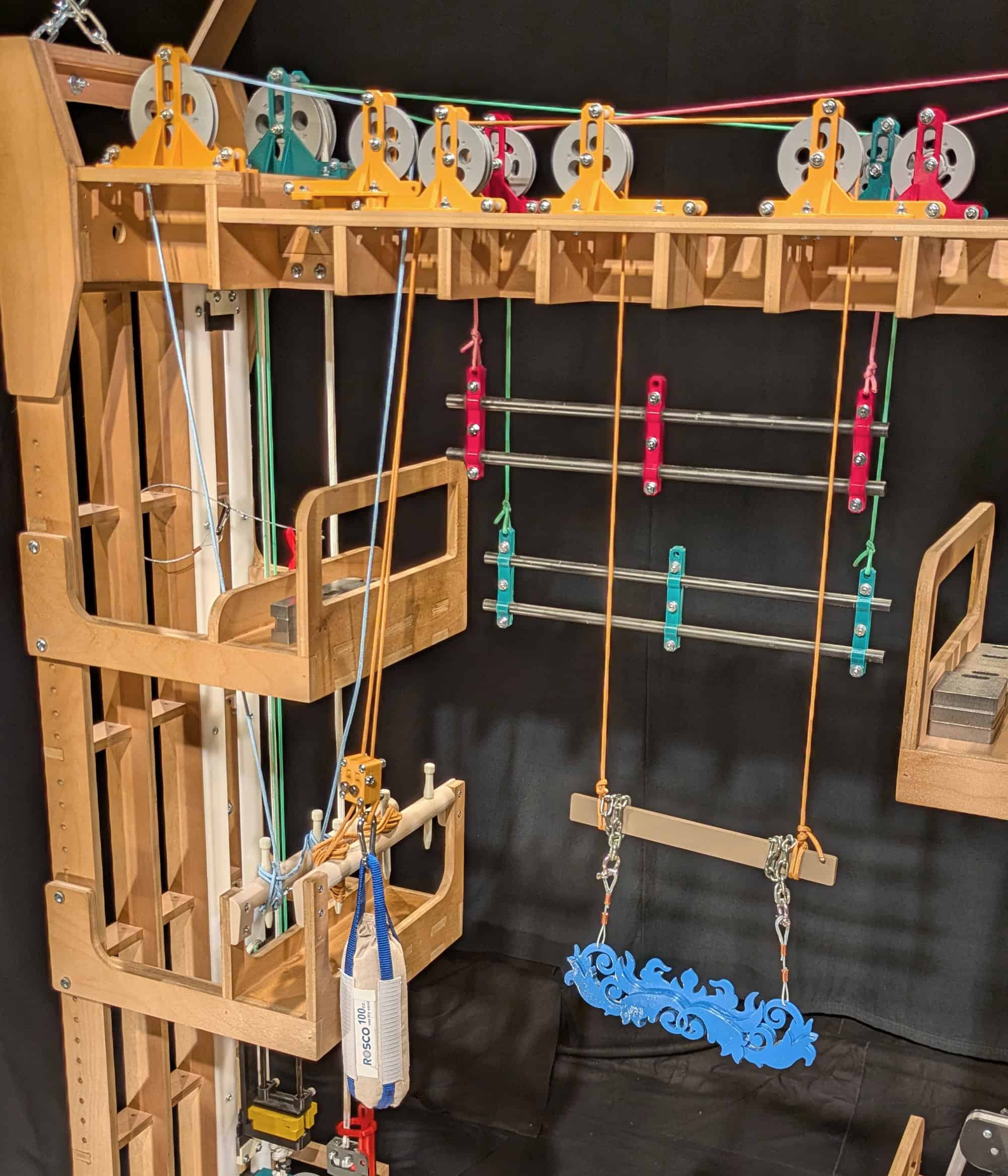
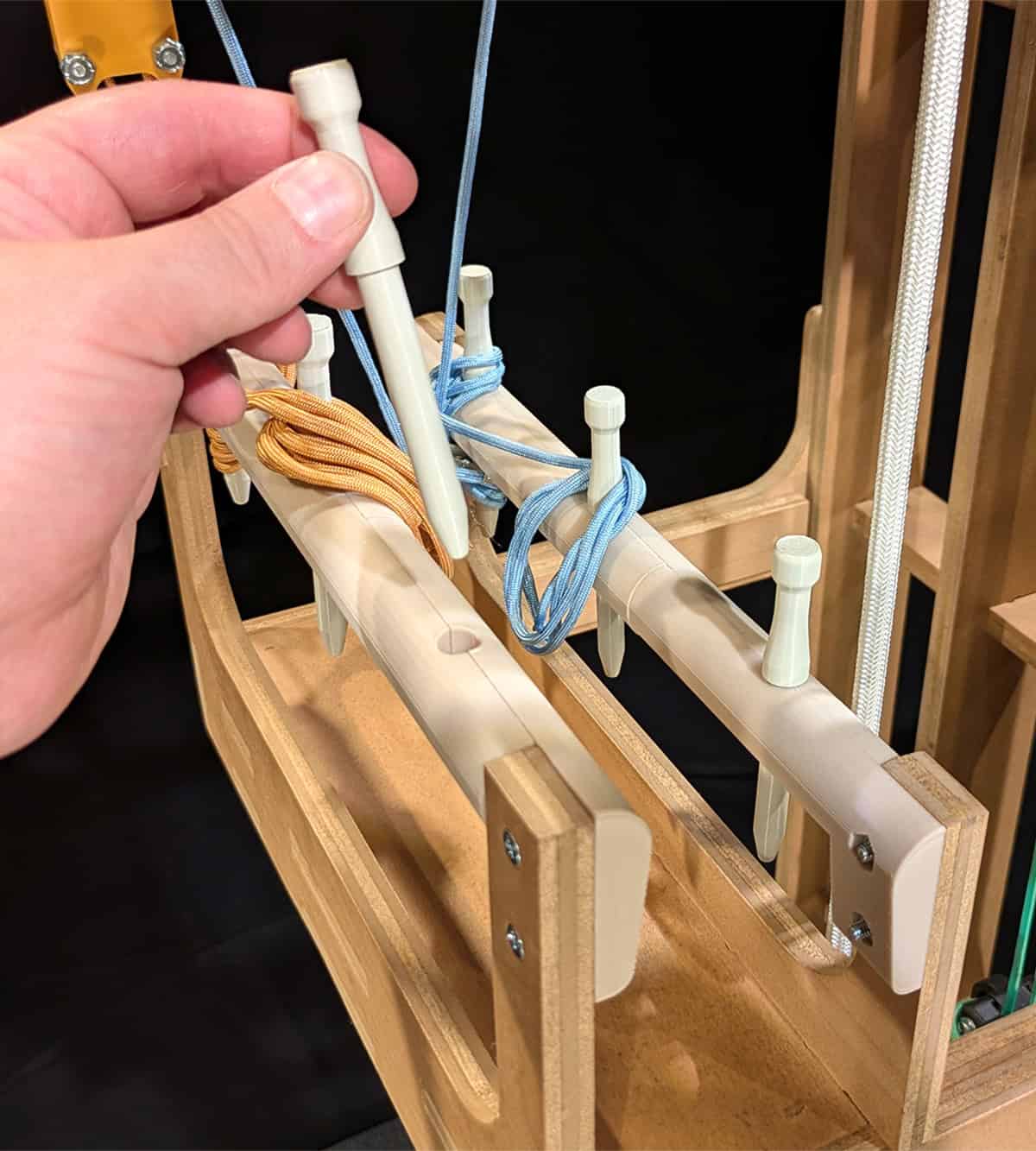
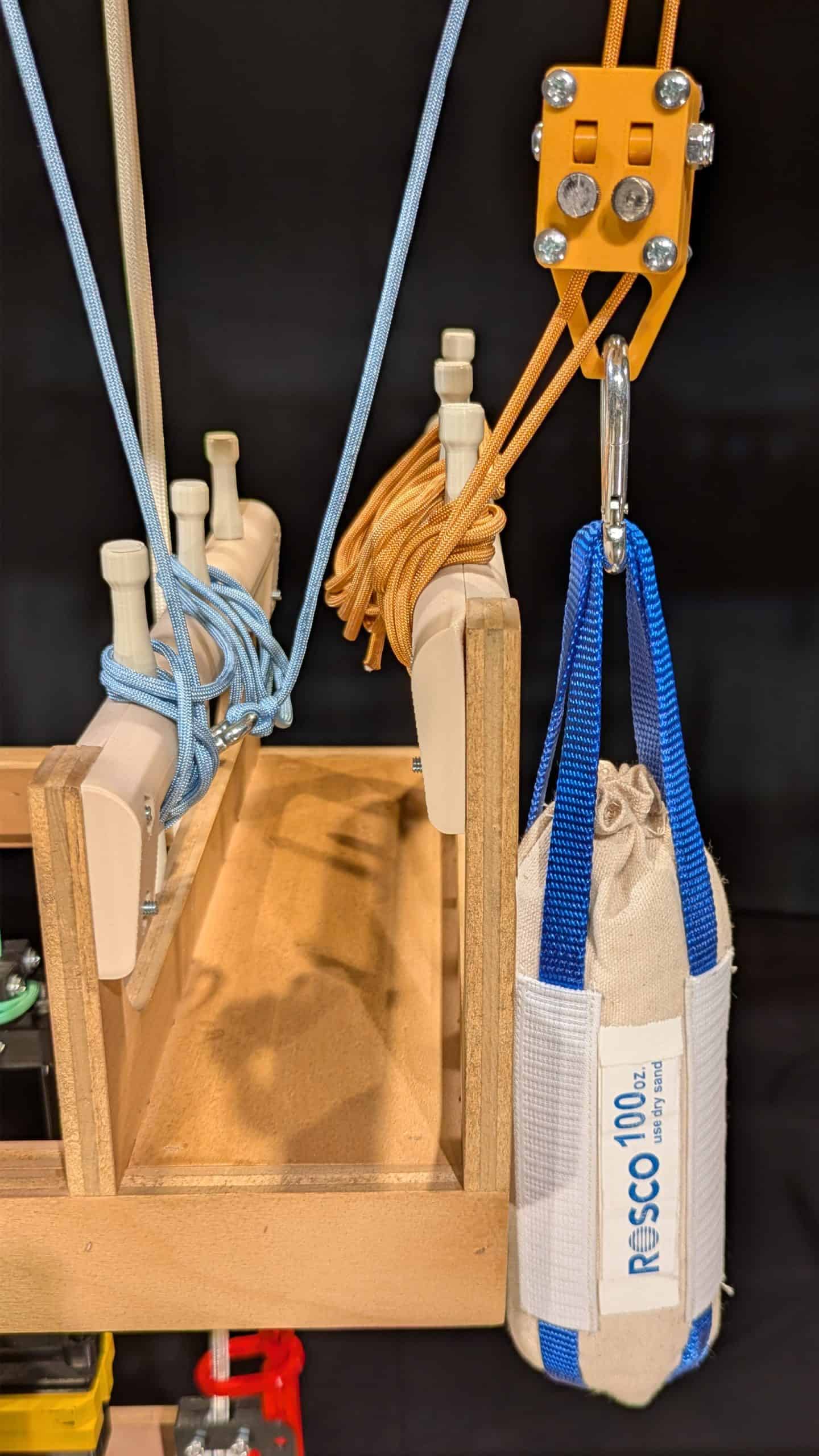
The KRT is not sponsored by Rosco Laboratories Inc.
Color Scheme
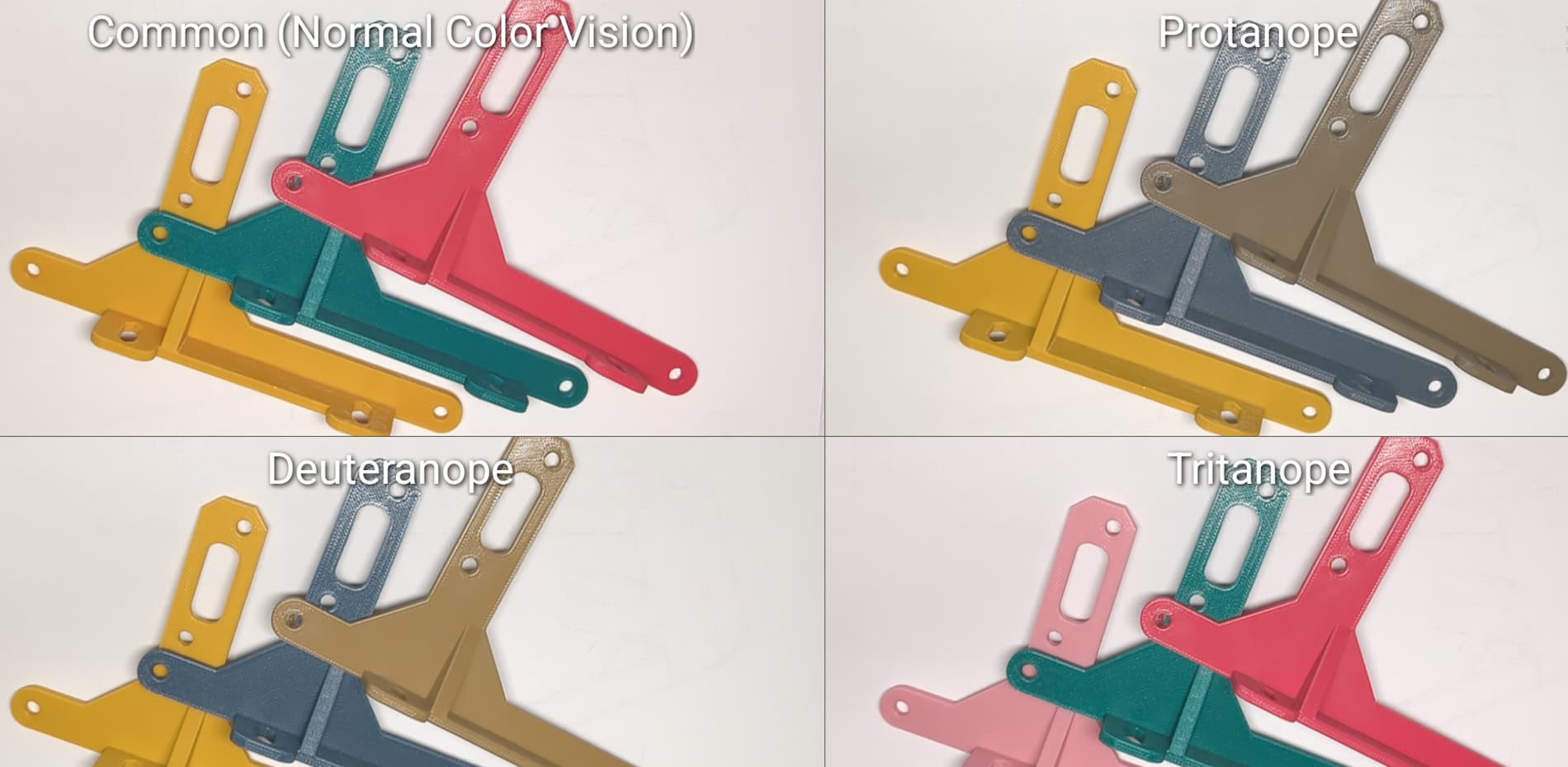
The line sets are color-coded to accommodate common forms of color blindness.
Ropes
Many ropes may be used with the KRT.
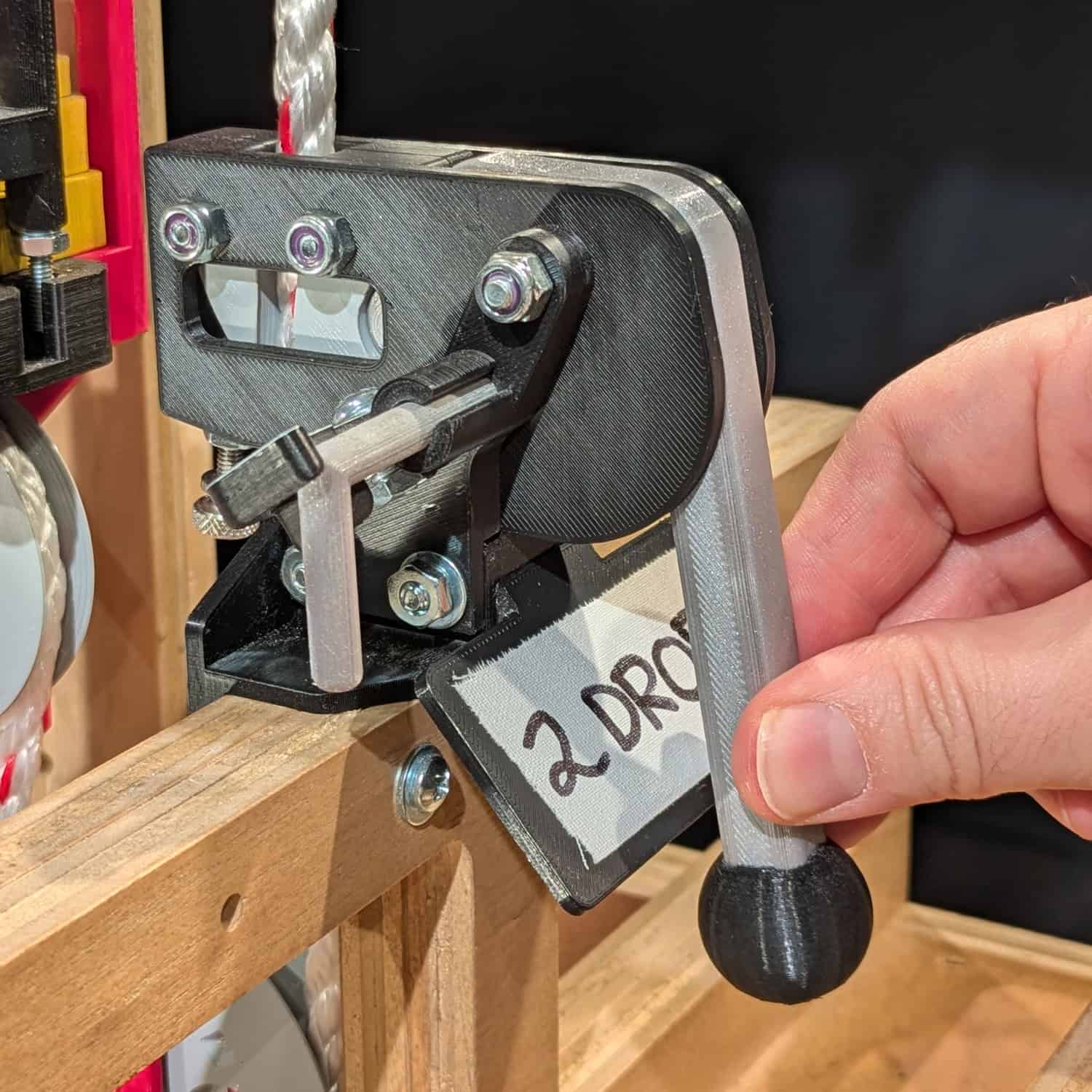
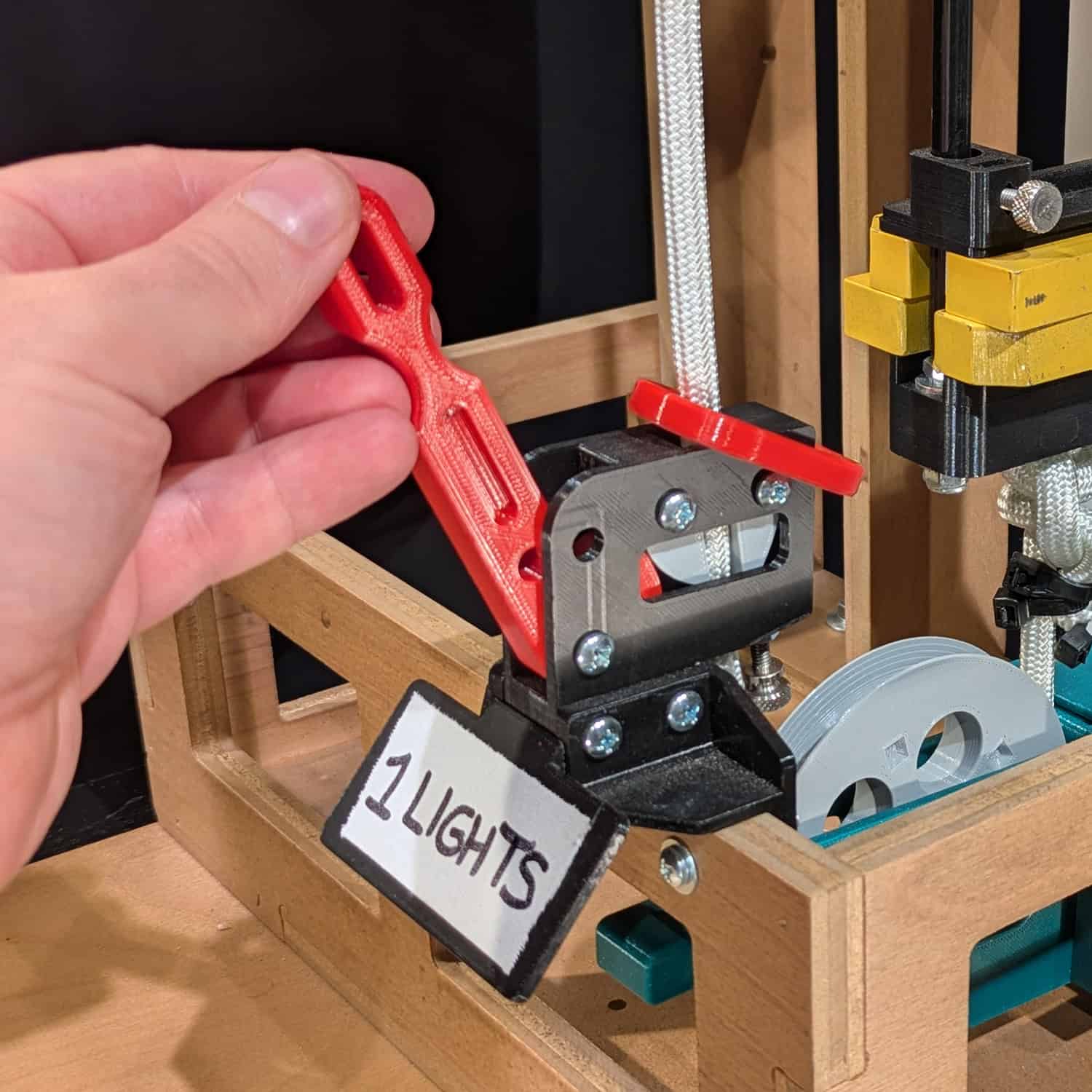
Rope Locks
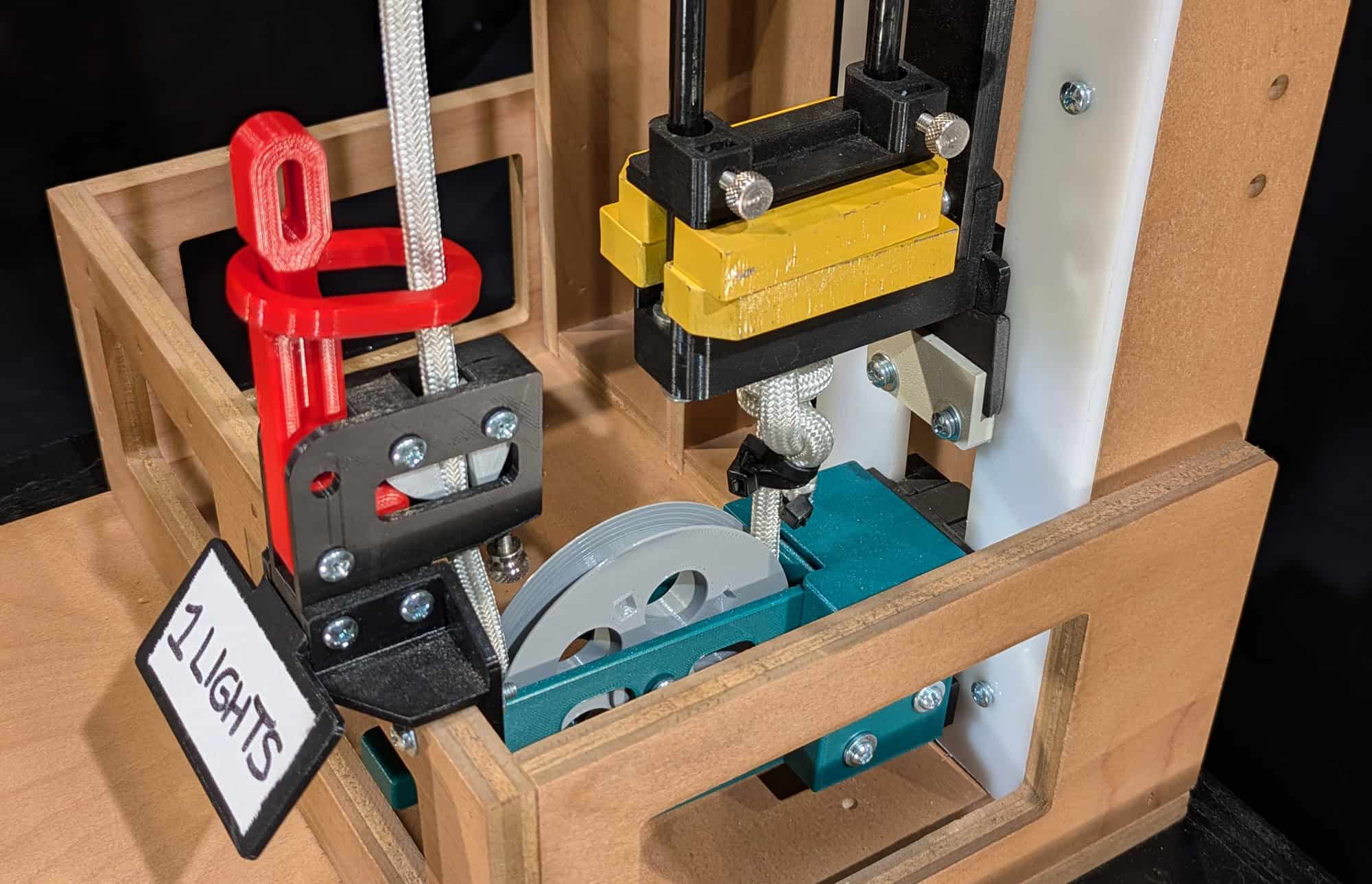
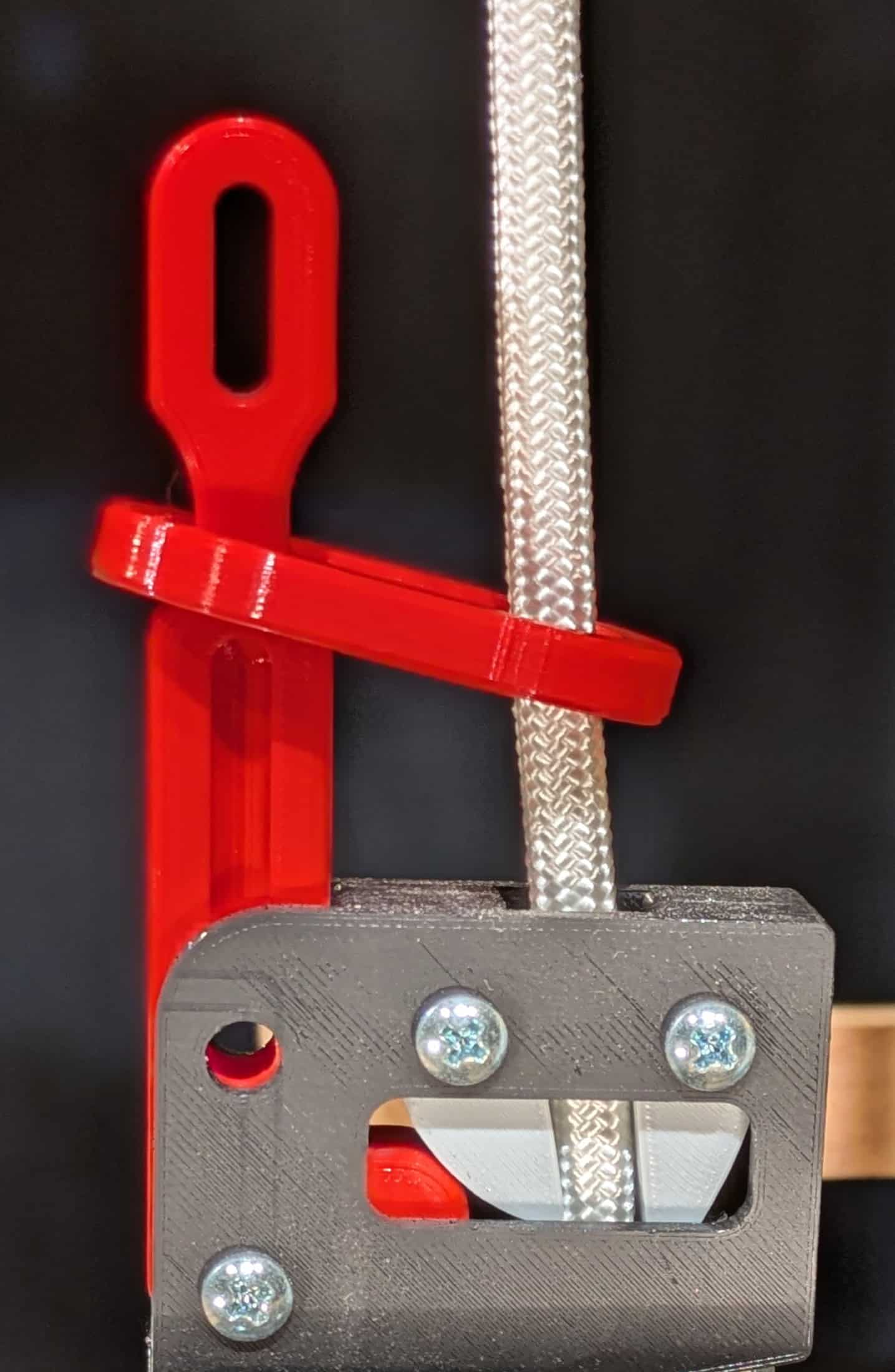
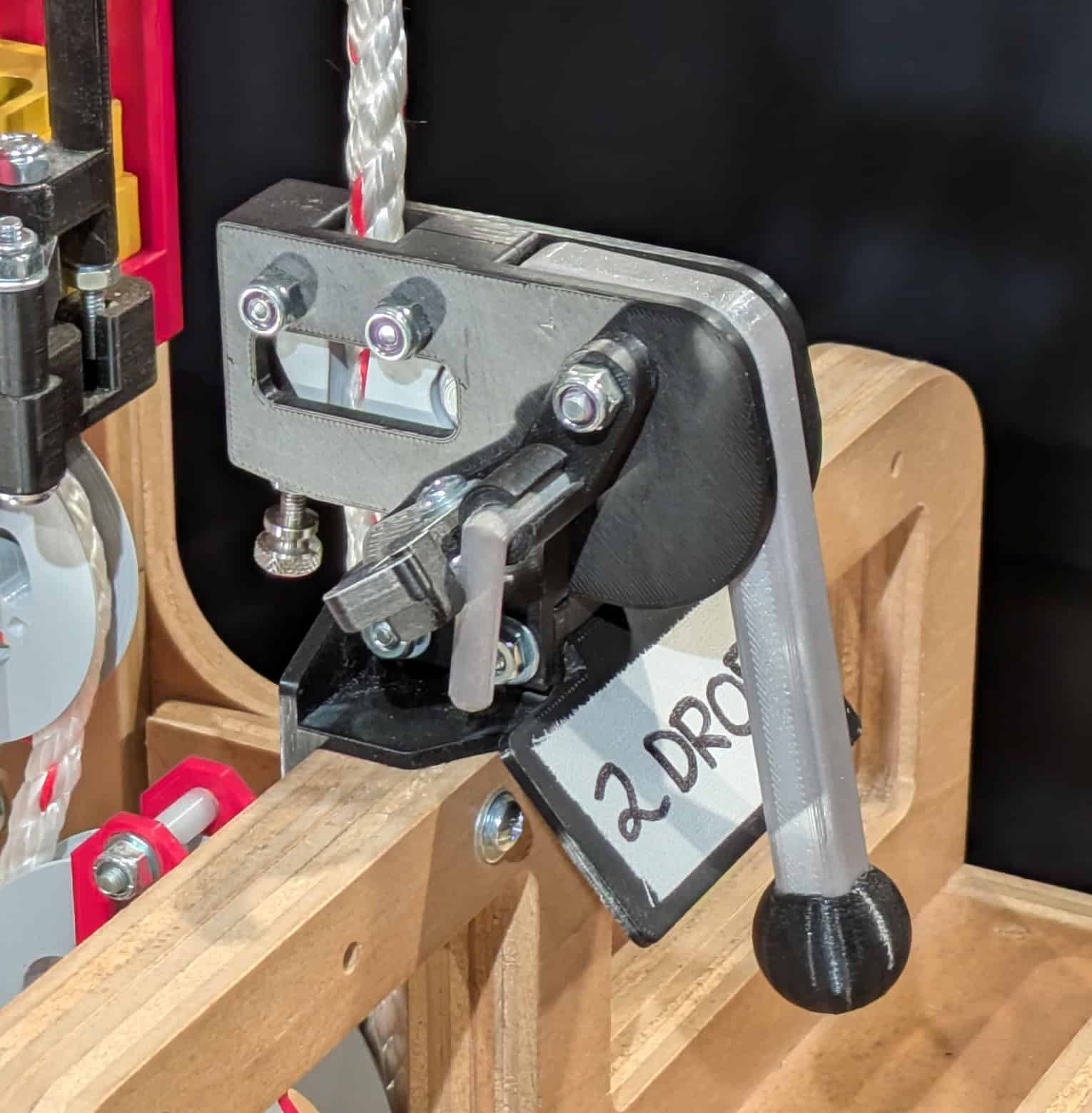
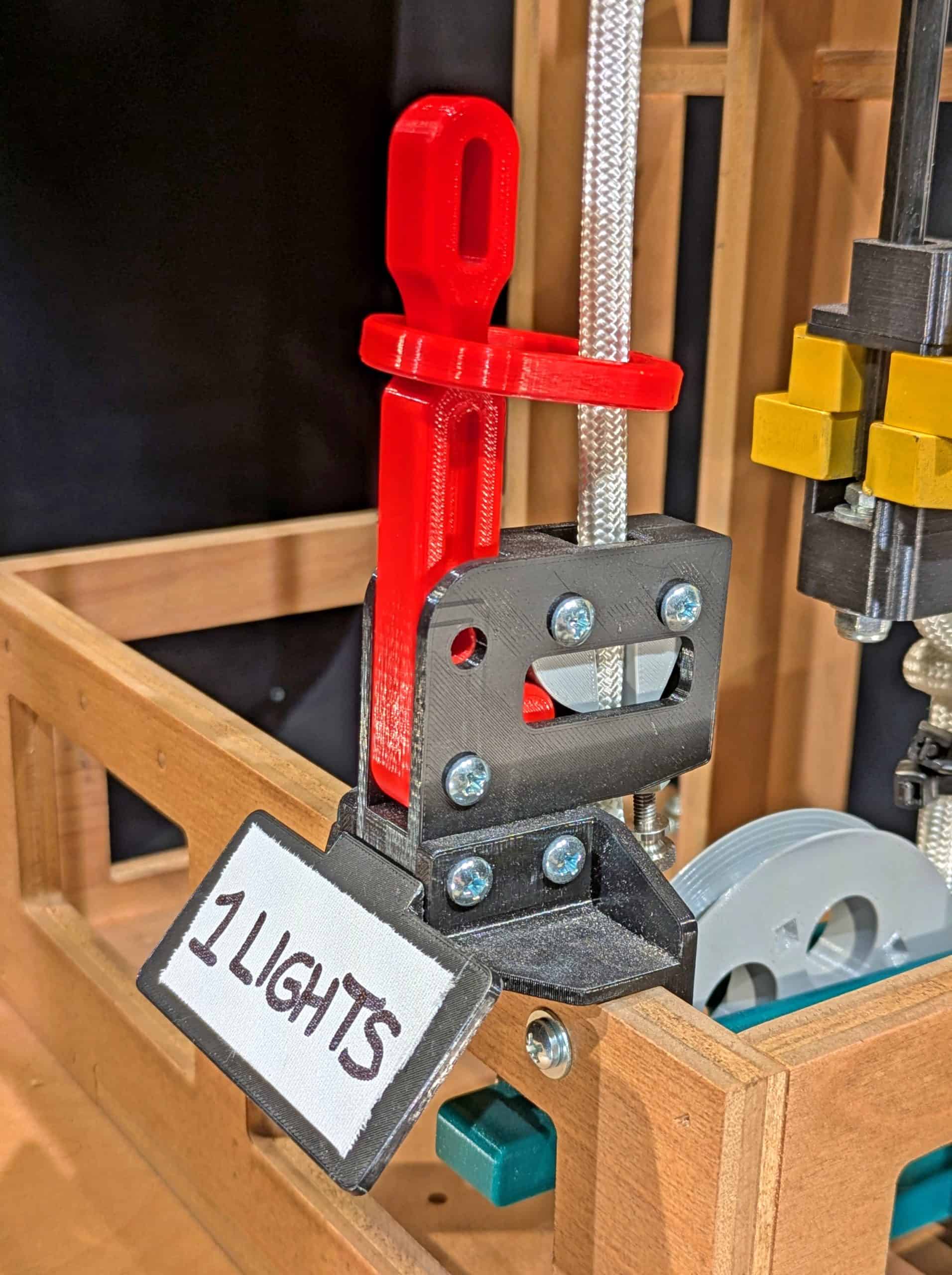
There are two types of rope locks included with the KRT. They are identified by the behavior of the operator’s handle:
- RTL = “Raise to lock” = Raise the handle to engage the lock
- RTU = “Raise to unlock” = Raise the handle to release the lock
The RTL lock is secured using the classic ring around the handle and purchase line. The RTU lock is secured using a barrel bolt latch. The RTU lock is included with the KRT to represent rope locks that may be found outside the United States.
Index Placard
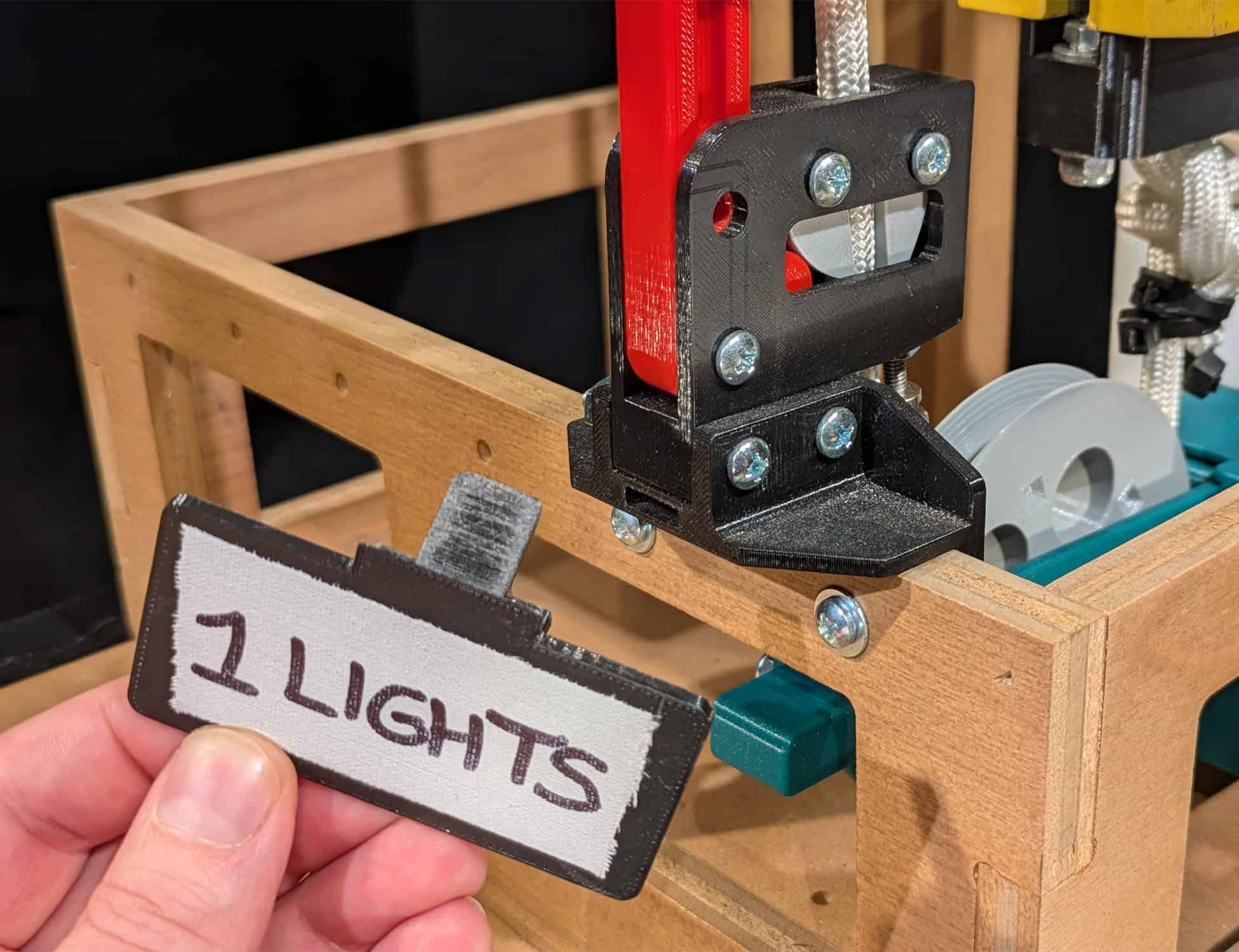
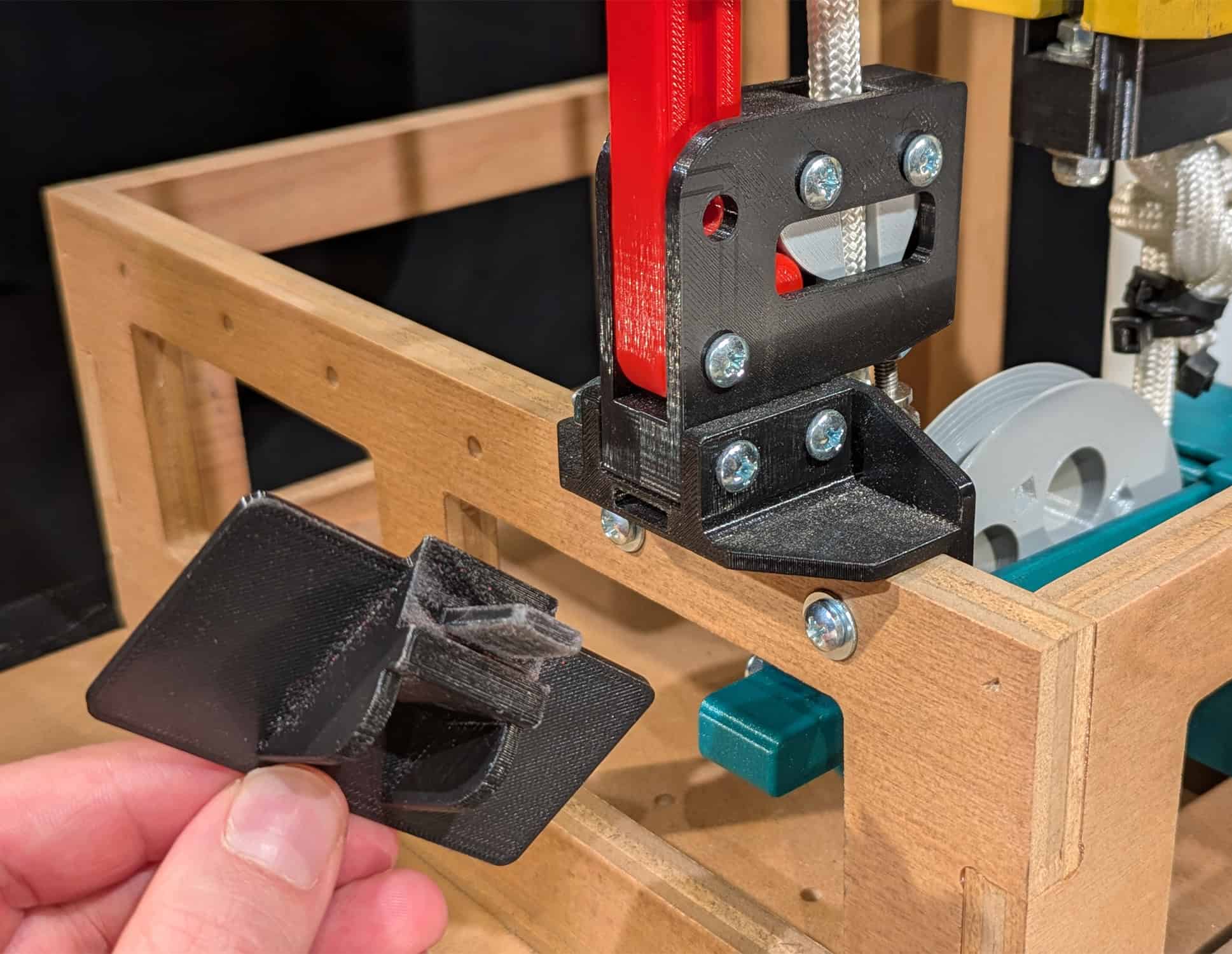
The rope locks have a removeable index placard for easier labeling.
3D-Printed Parts
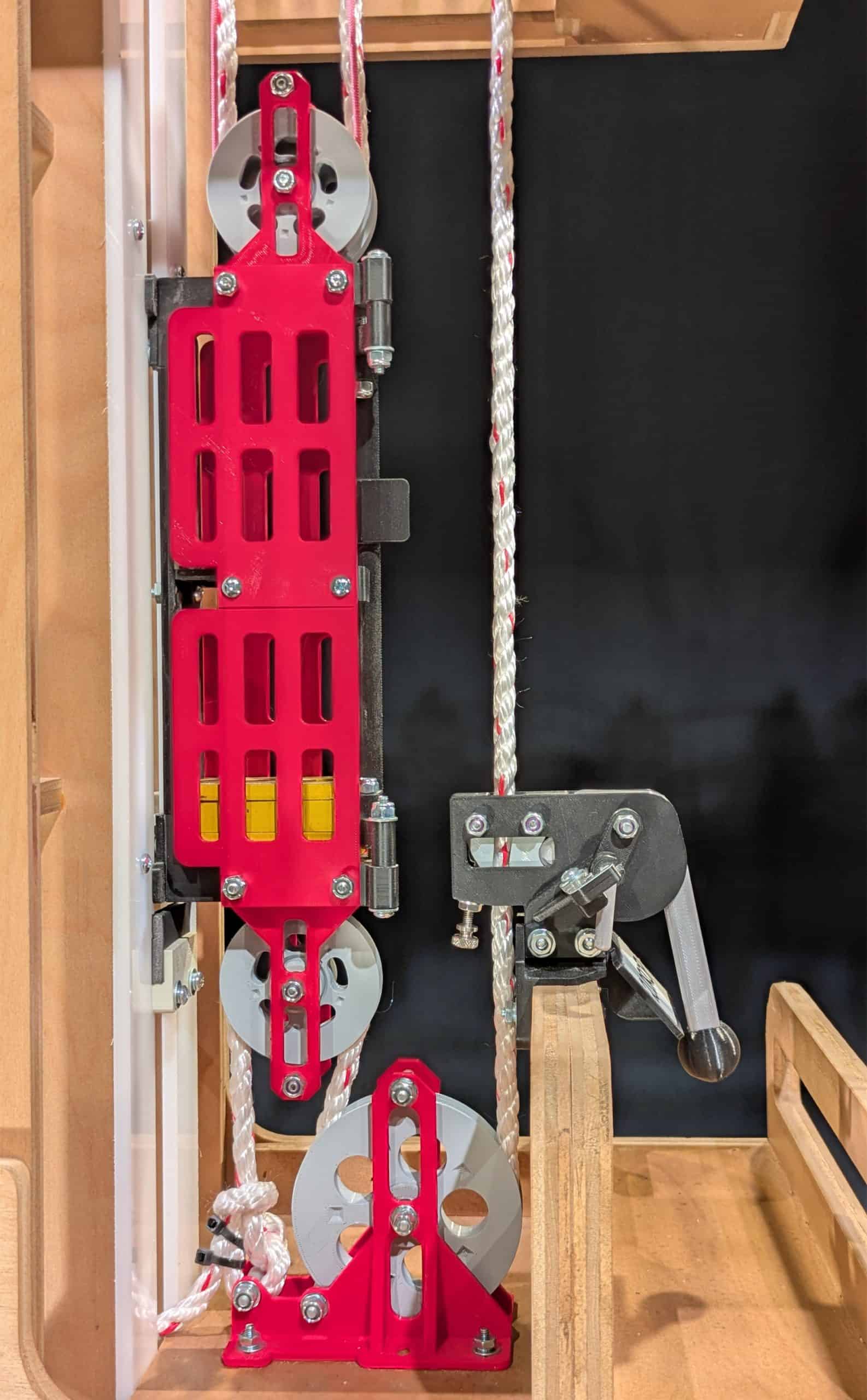
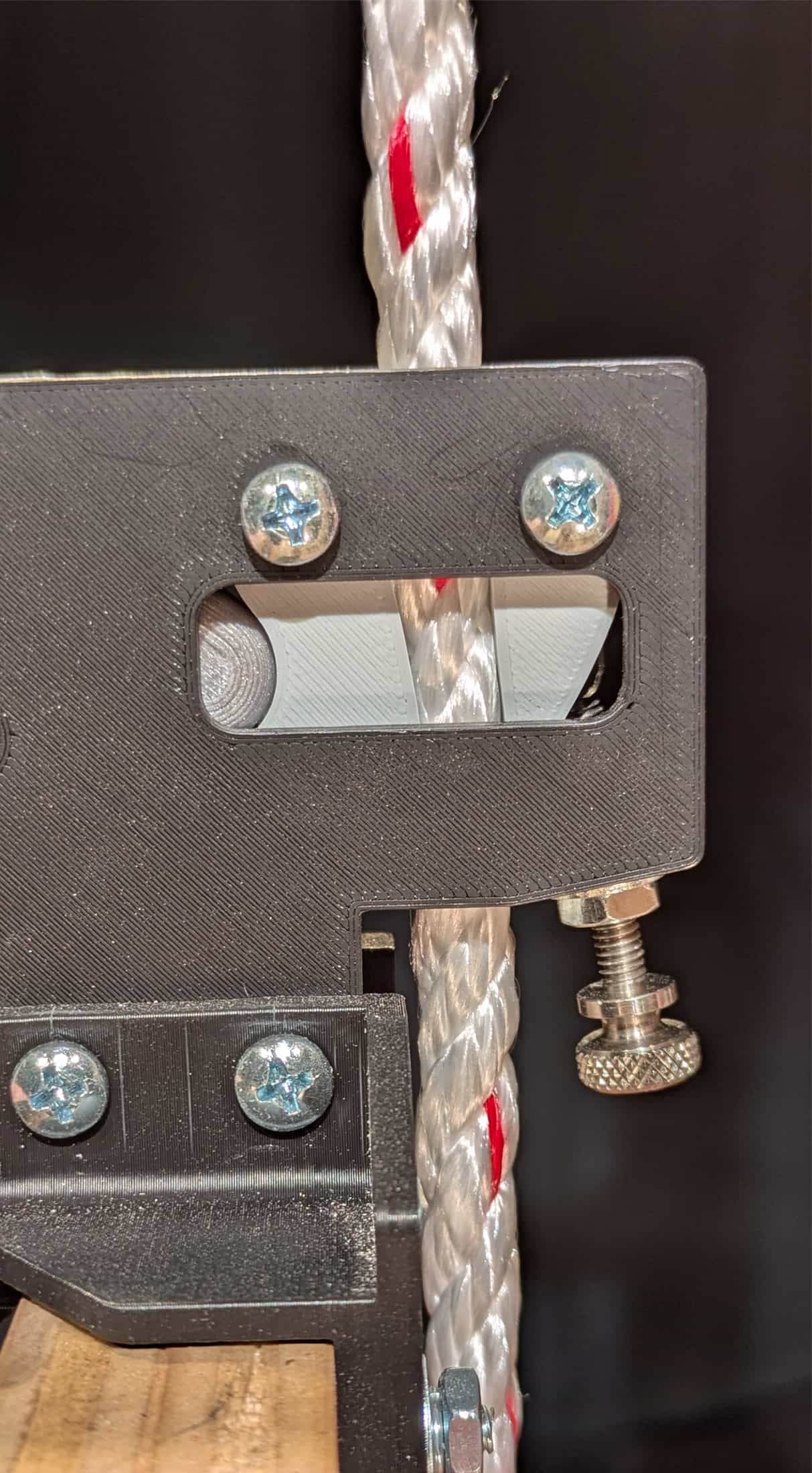
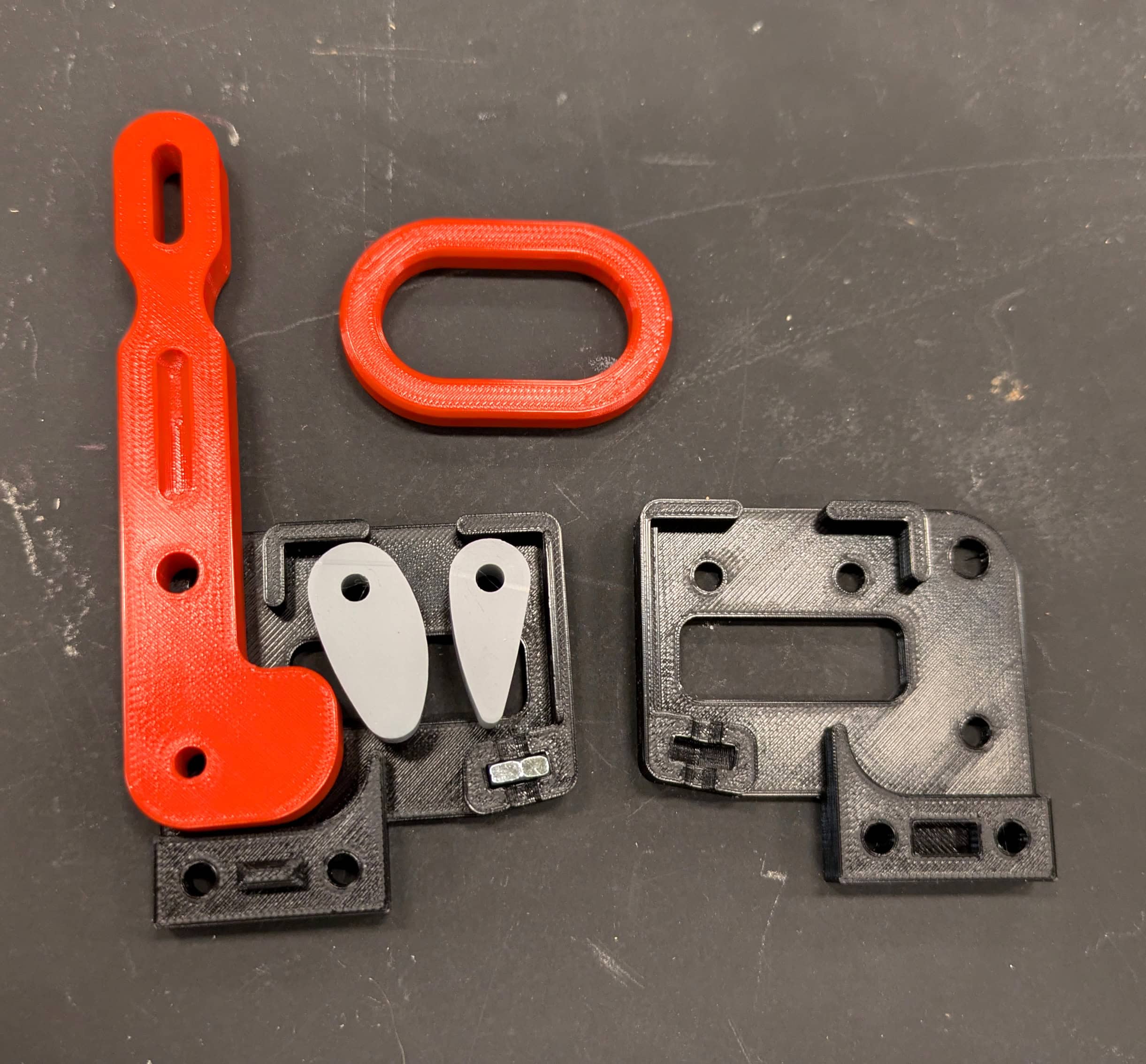
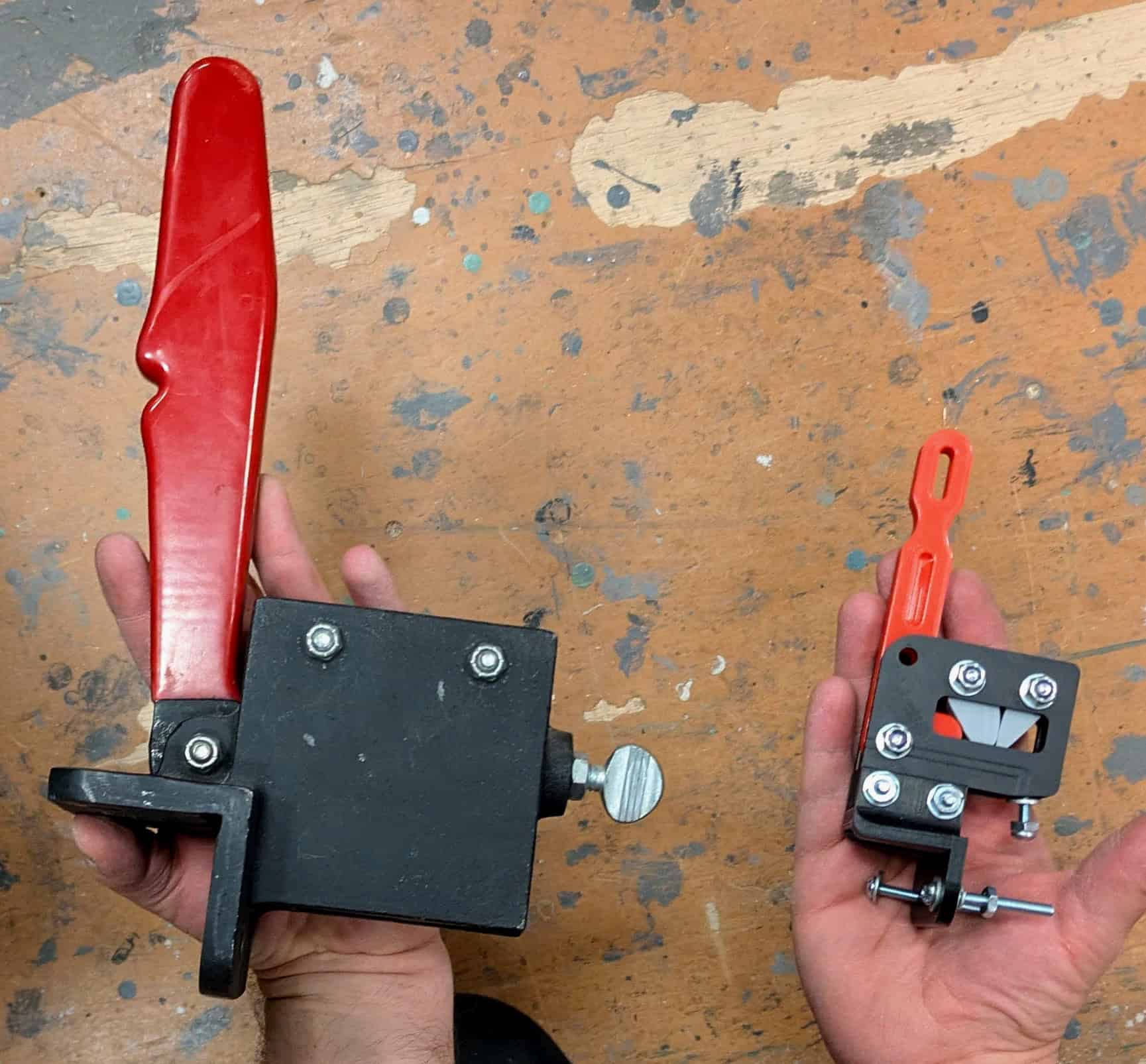
The rope locks are made from 3D-printed parts. A captured hex nut is placed inside the parts for a pressure adjustment thumb screw. By adjusting the screw, the rope lock can be made to slip during imbalanced loading conditions allowing runaways to be demonstrated.
Pulley Blocks
Sheaves
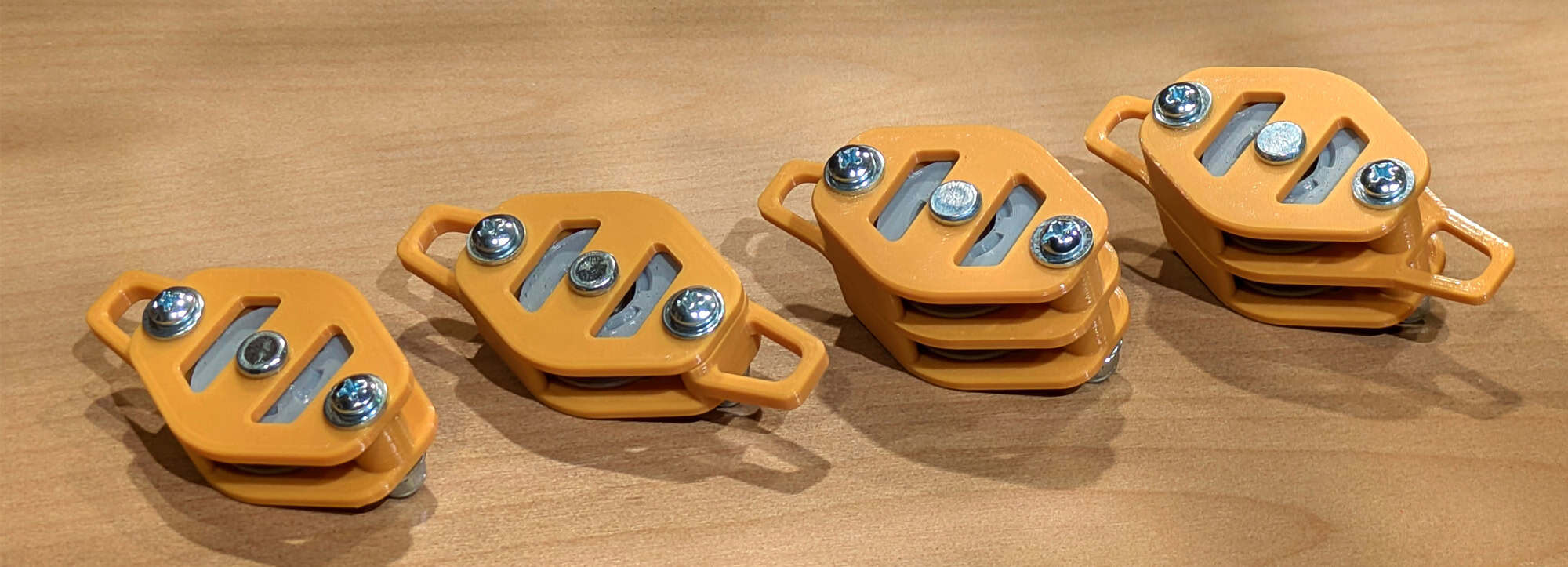
The pulley sheaves are made in “small” and “large” sizes. Each sheave size is available in two different groove sizes: 3/16” (5mm) groove for the small lift line ropes, and a 3/8” (10mm) groove for the larger purchase line rope.
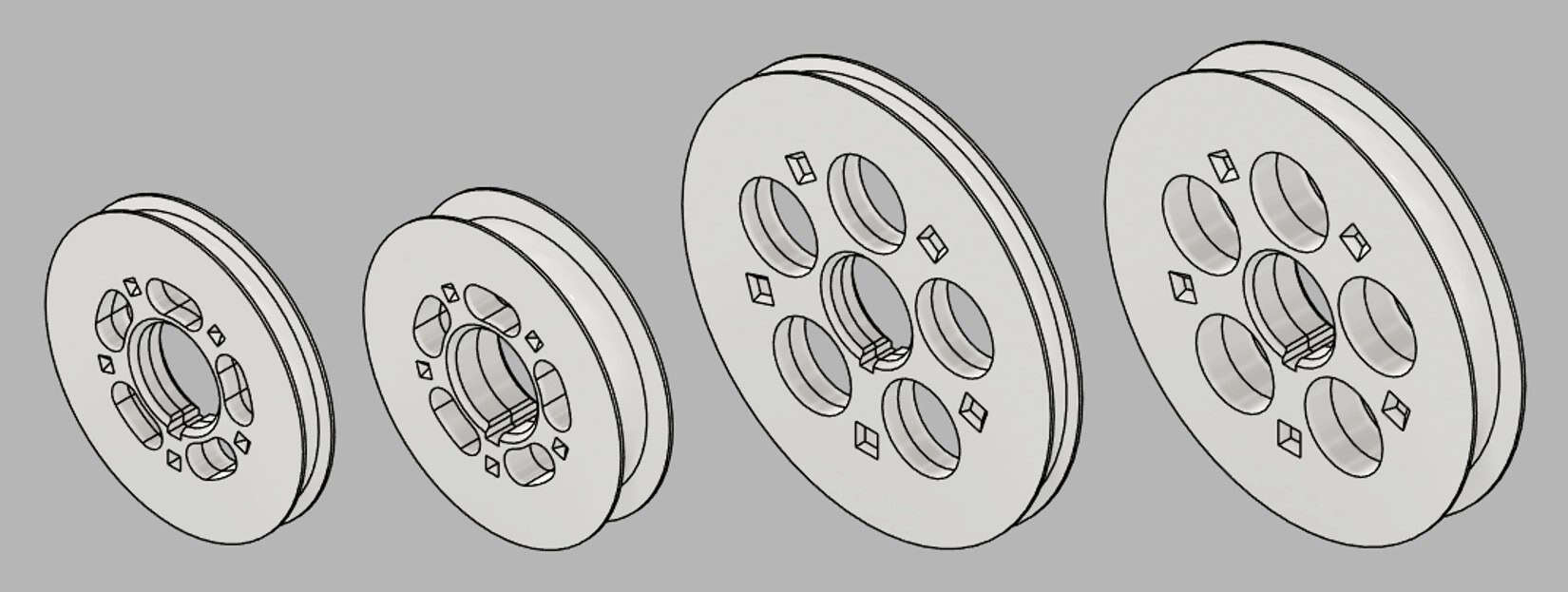
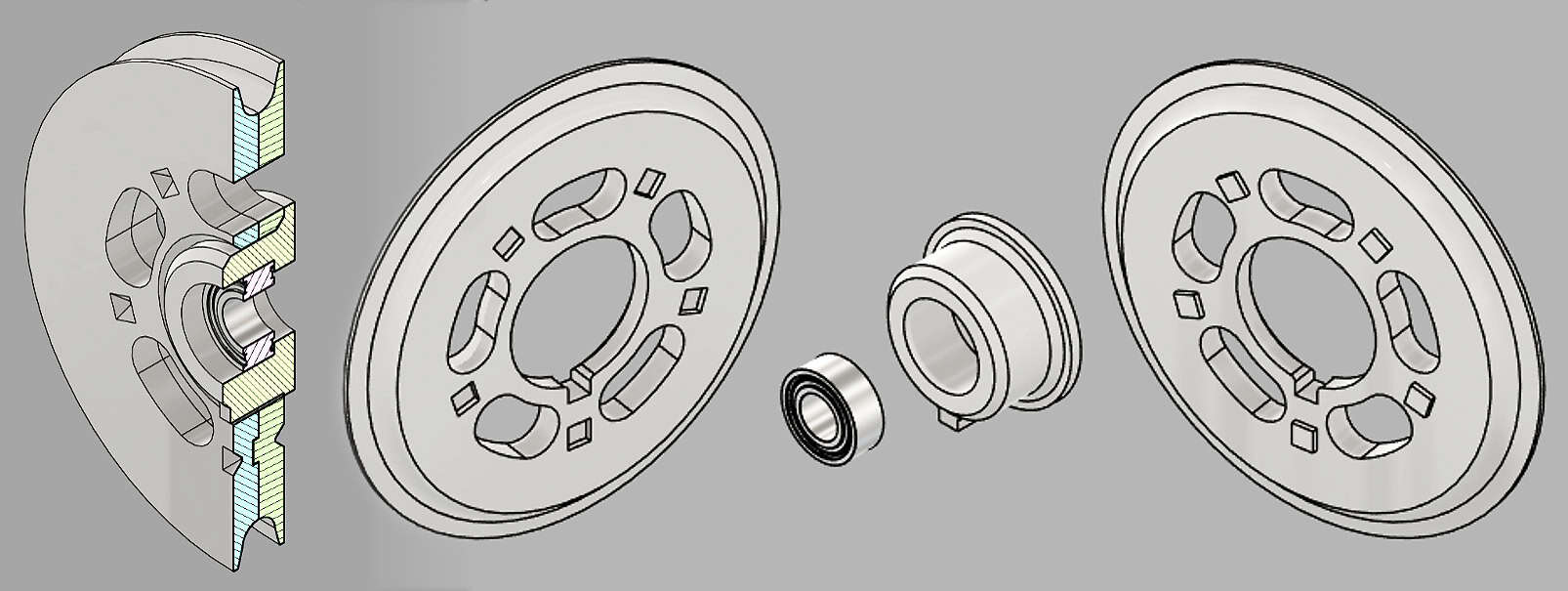
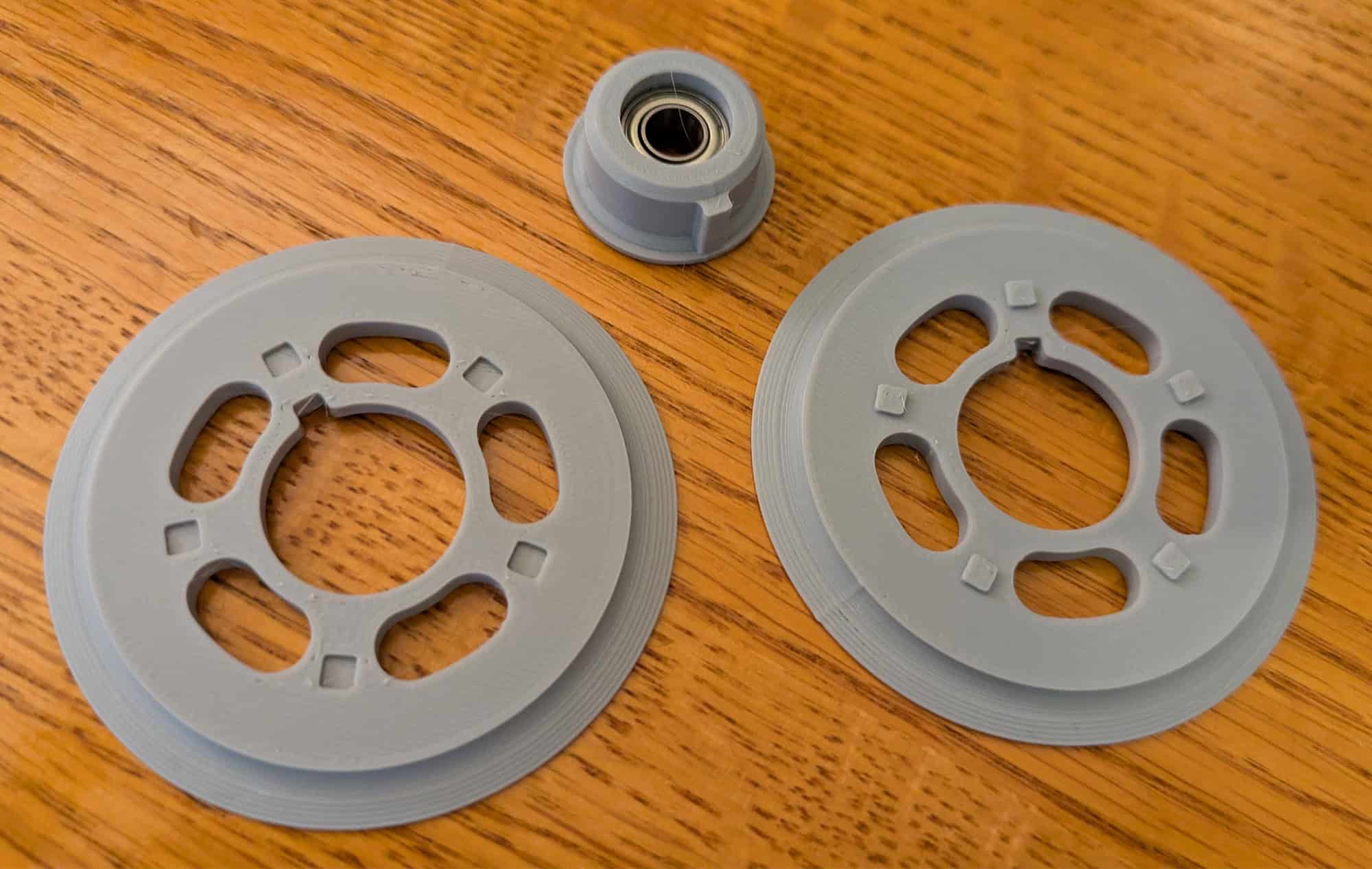
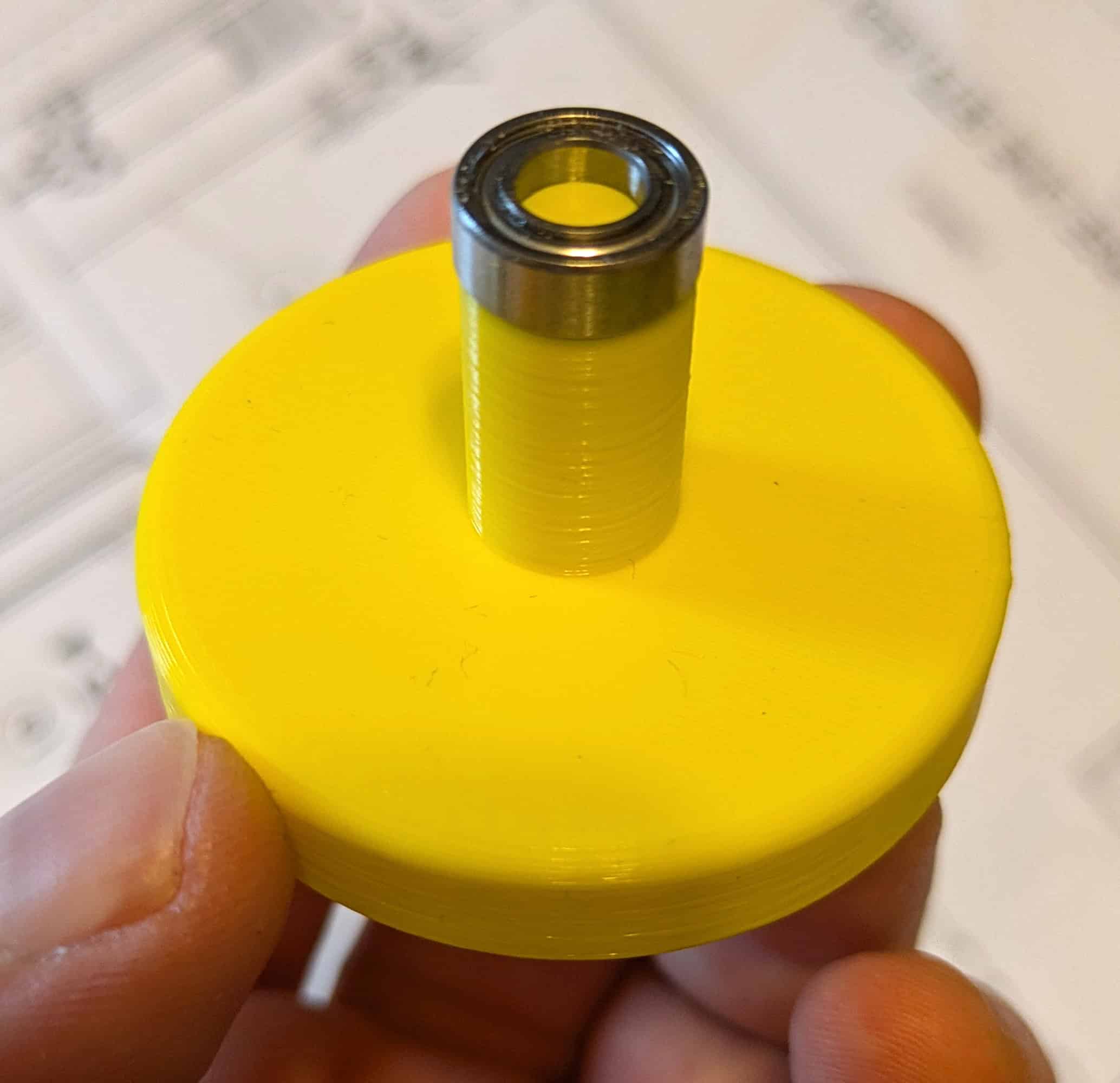
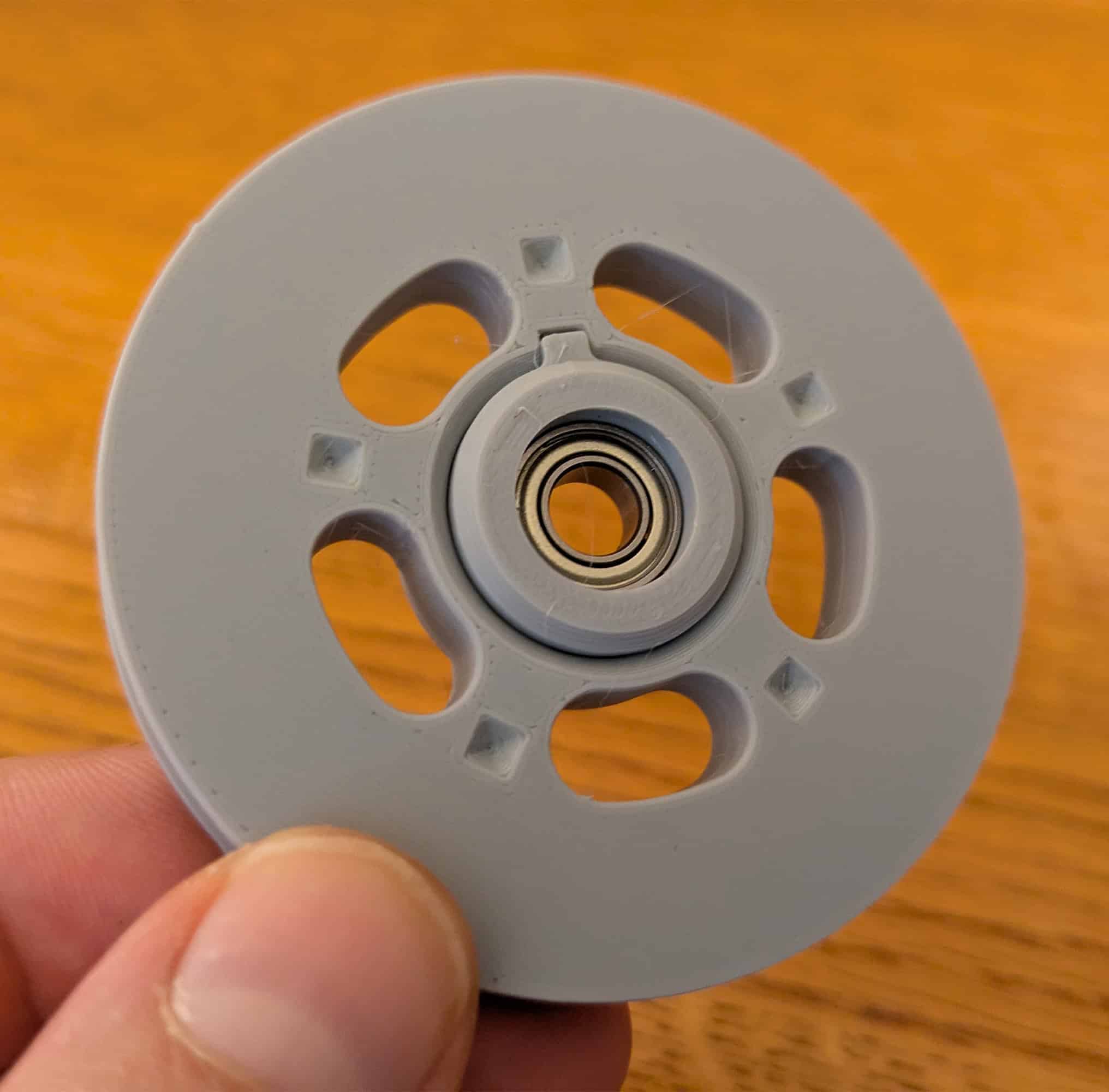
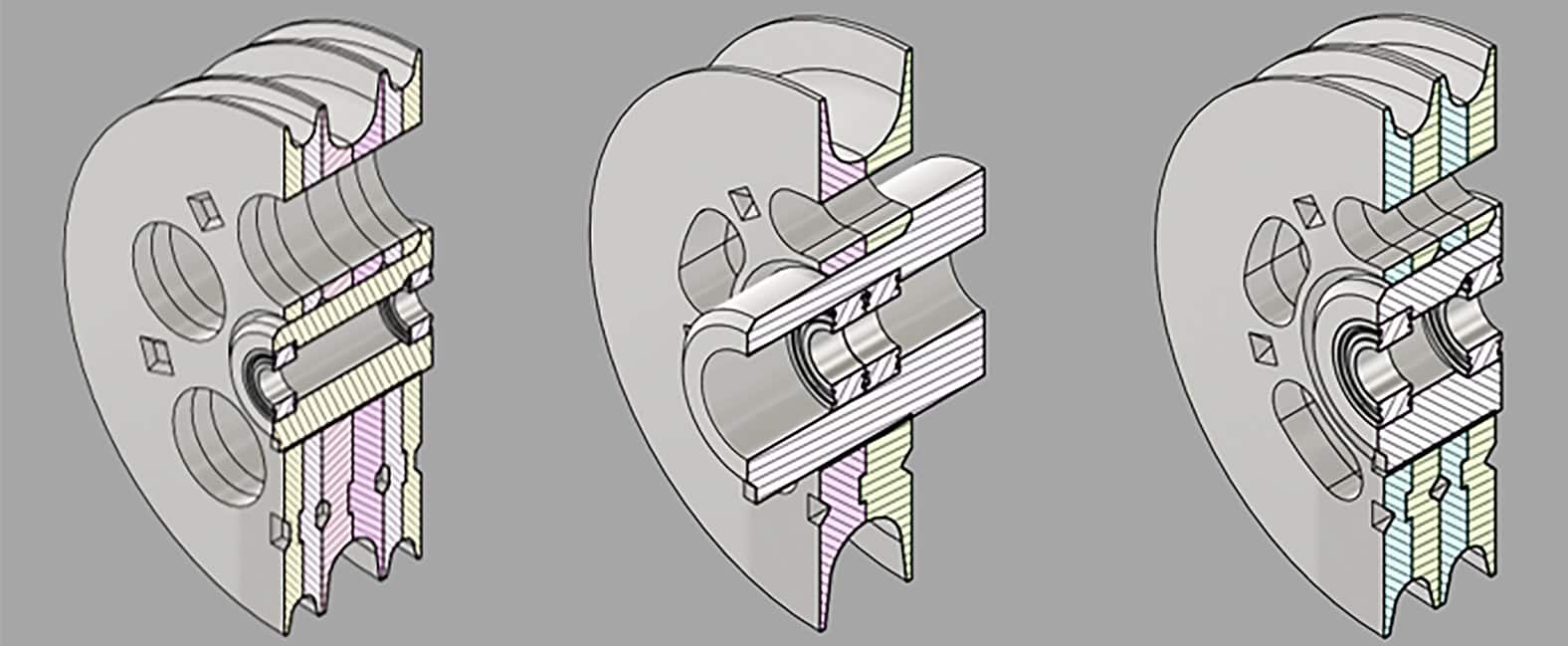
The sheaves are 3D-printed in halves which are glued together. A 3D-printed hub goes in the center which holds one or more ball bearings. There is a 3D-printed tool available to help with bearing insertion.
What type of bearing is used?
The imperial versions of the sheaves use R188ZZ ball bearings (1/4″ ID, 1/2″ OD, 3/16″ thickness). The metric versions of the sheaves use 696ZZ ball bearings (6mm ID, 15mm OD, 5mm thickness).
Sheave Stacks
Individual sheaves are assembled into stacks. Each stack has a different hub that centers the sheaves and holds the bearings.
Assembled Blocks
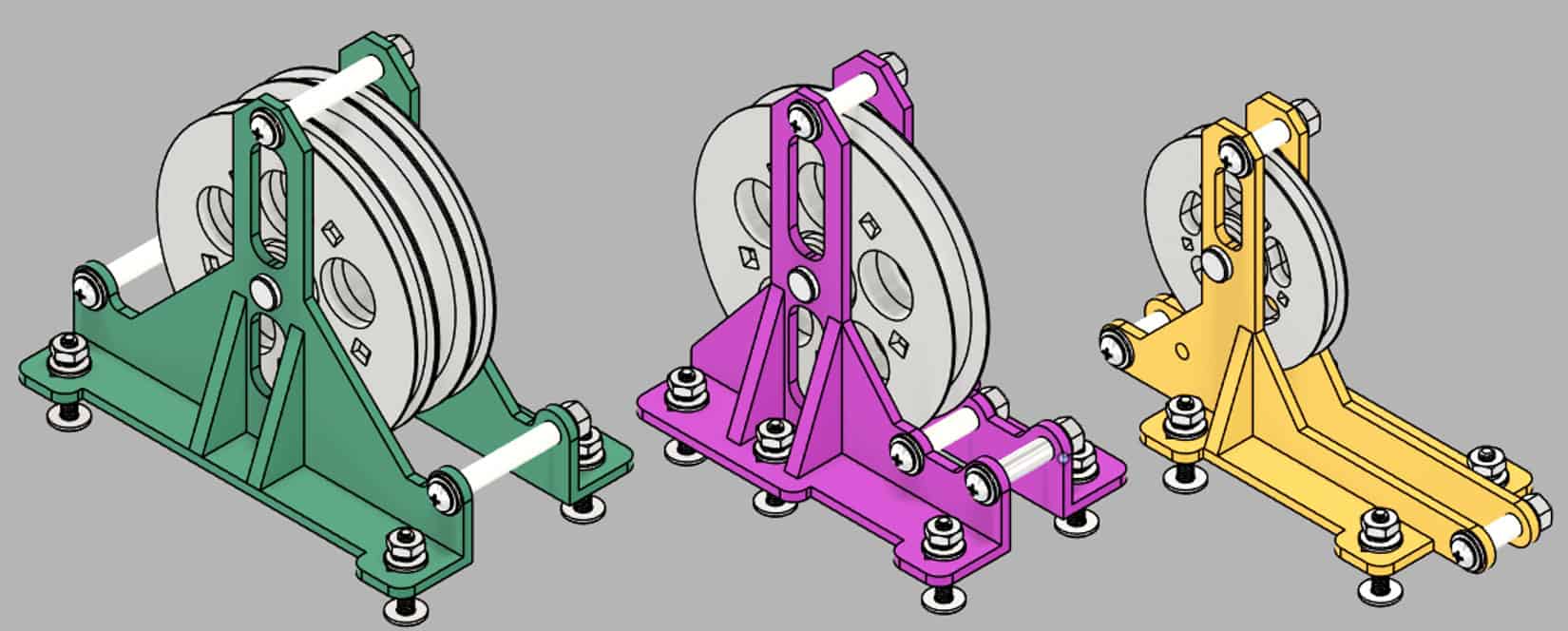
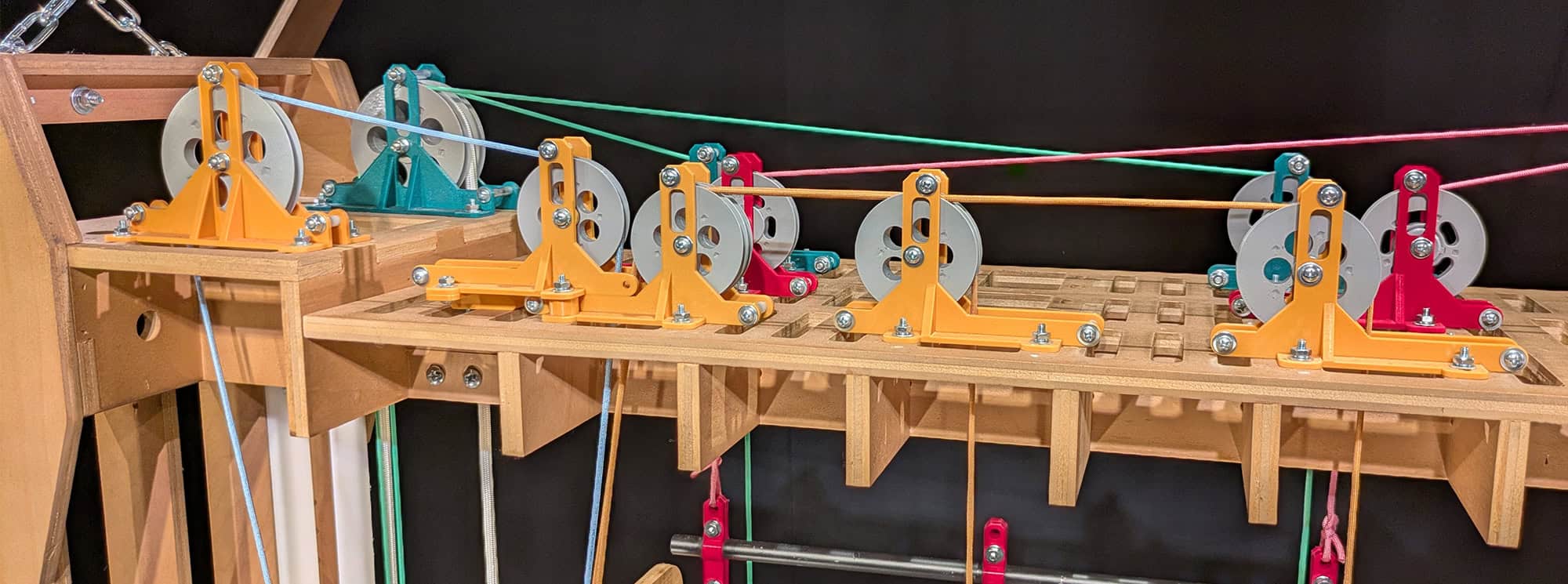
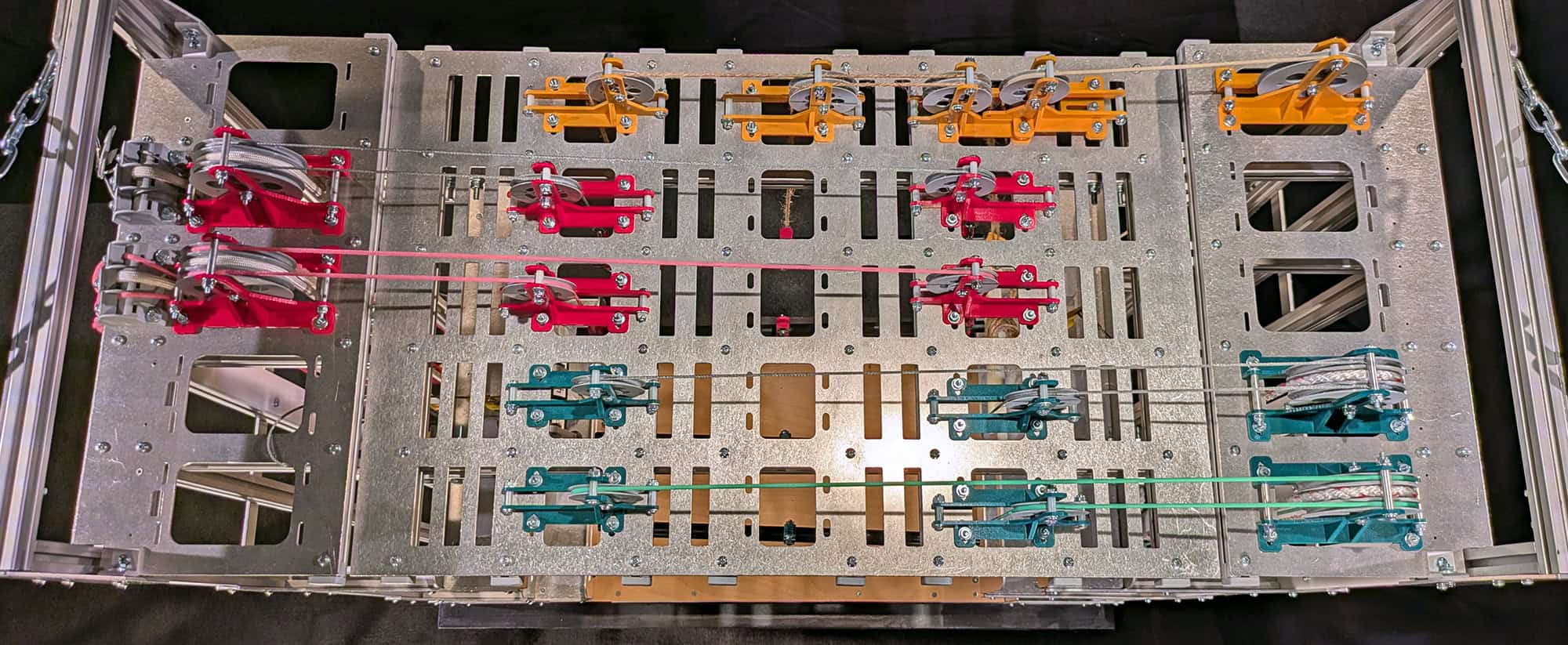
Finished sheave stacks are assembled into blocks using axles, spacers, and 3D-printed side plates. The axles are made from 1/4″ (6mm) clevis pins. For more details about the pulley blocks, see the KRT Manual.
Floating Tension Floor Block
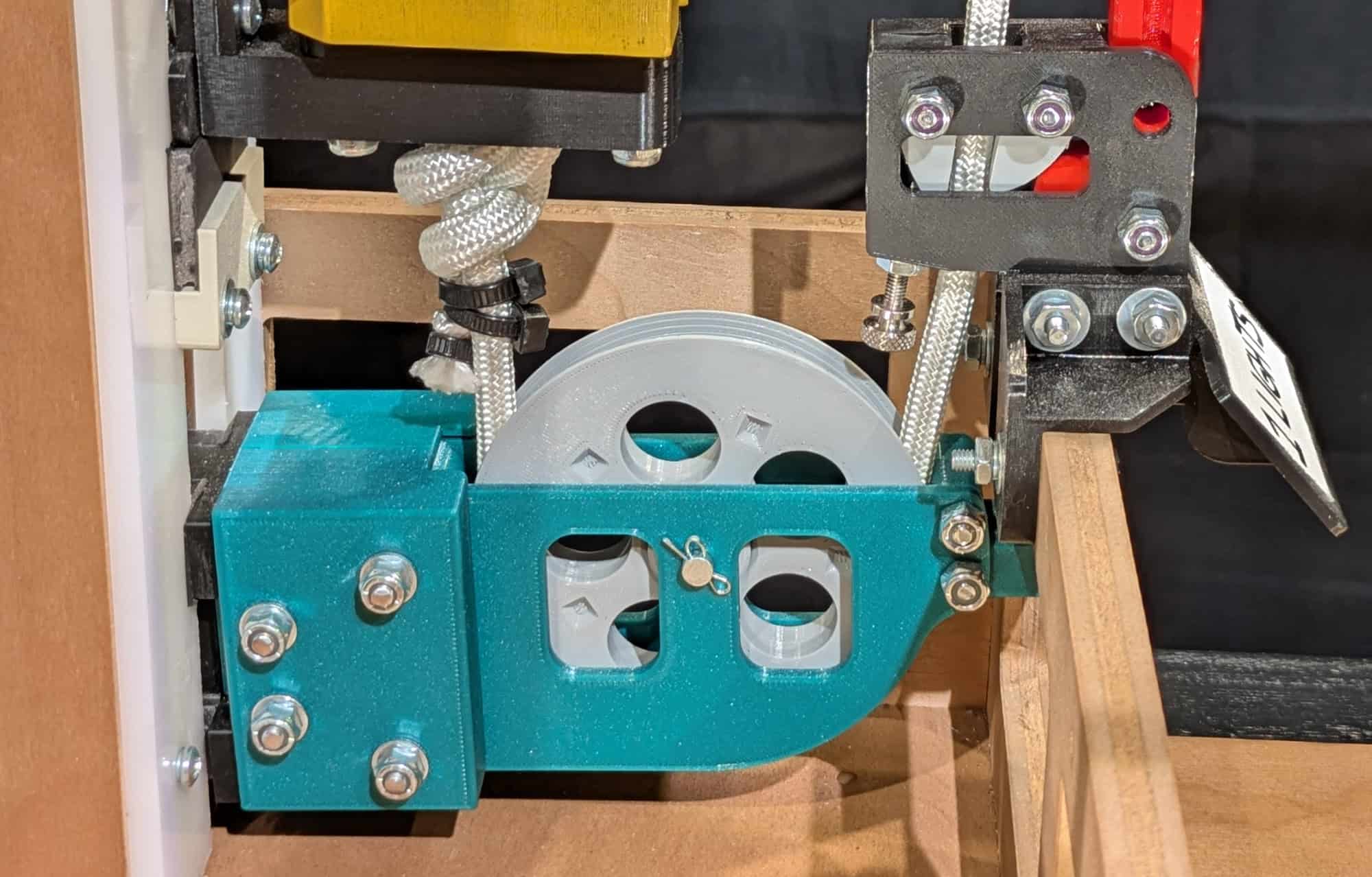
The KRT includes a floating tension floor block for only the single-purchase line set.
Arbors
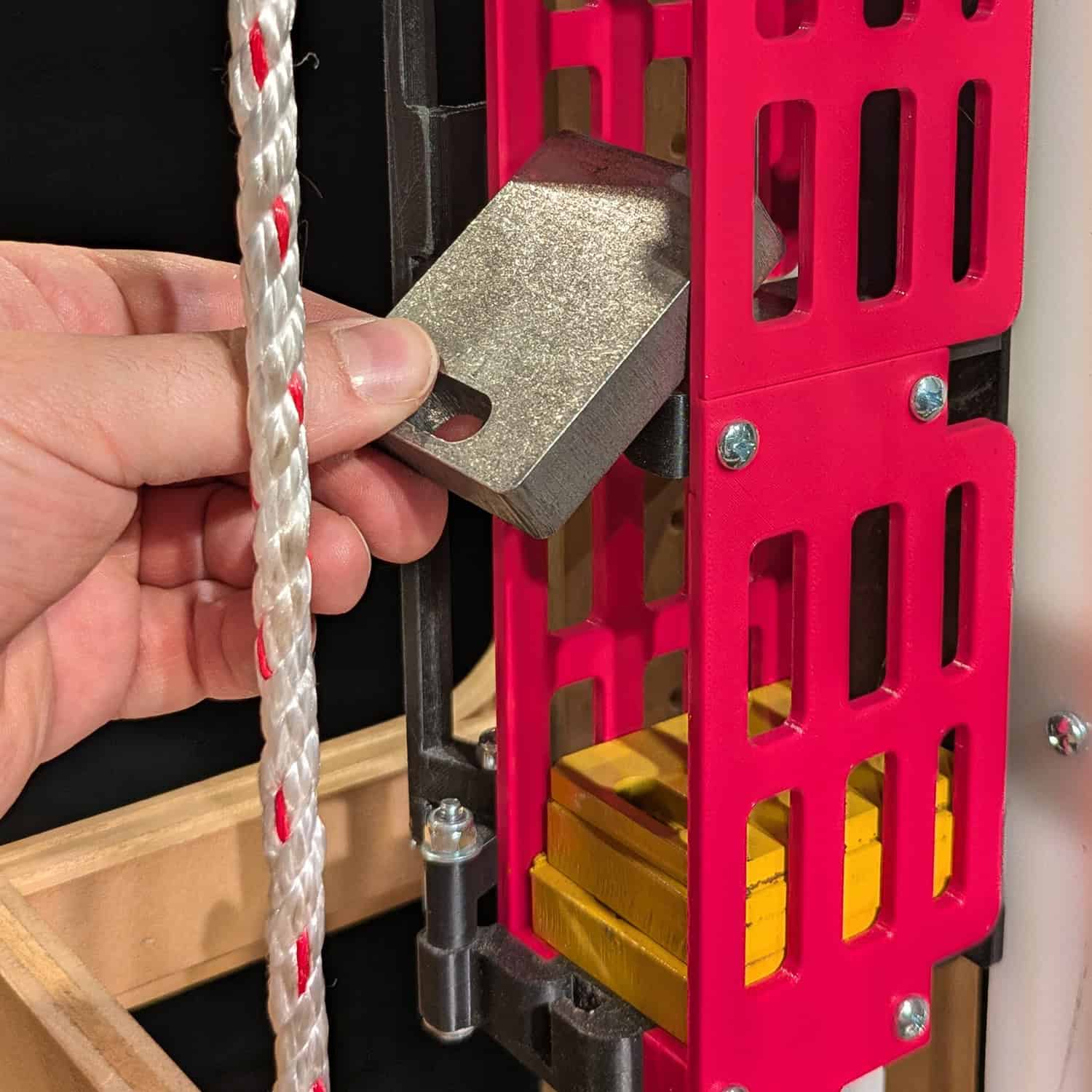
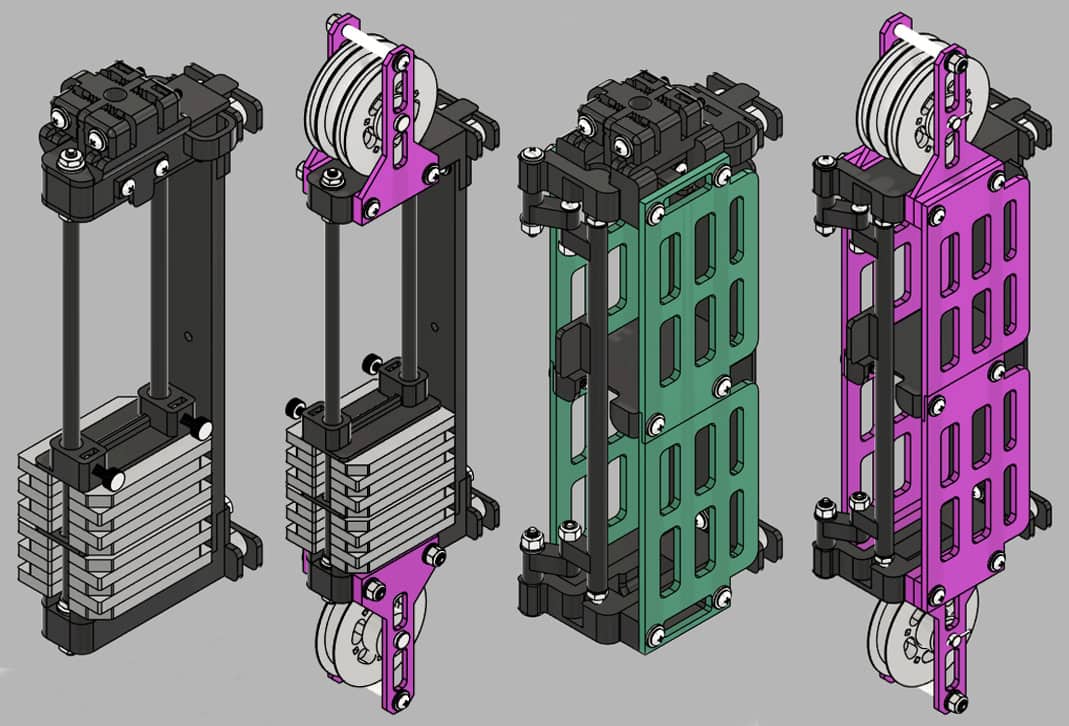
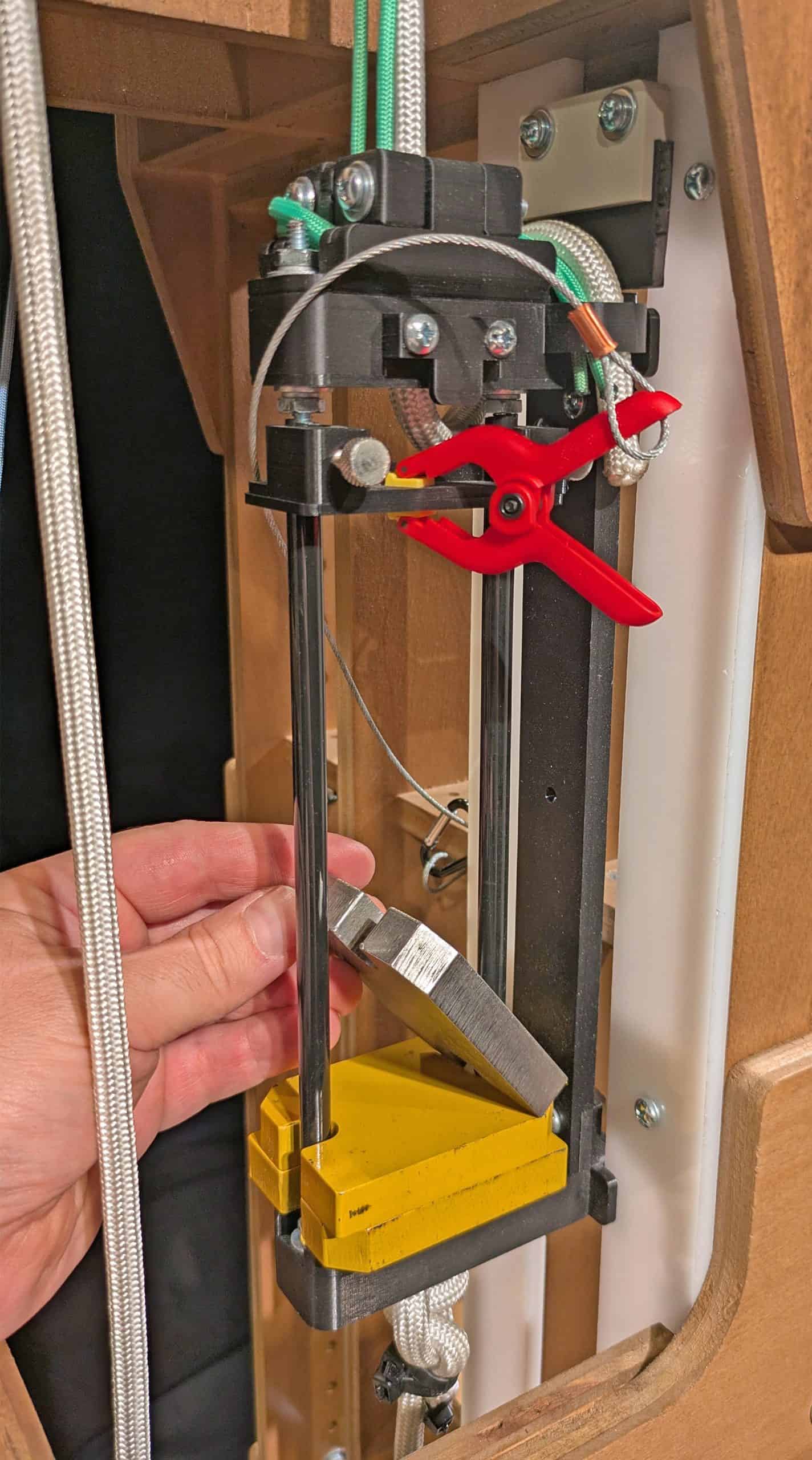
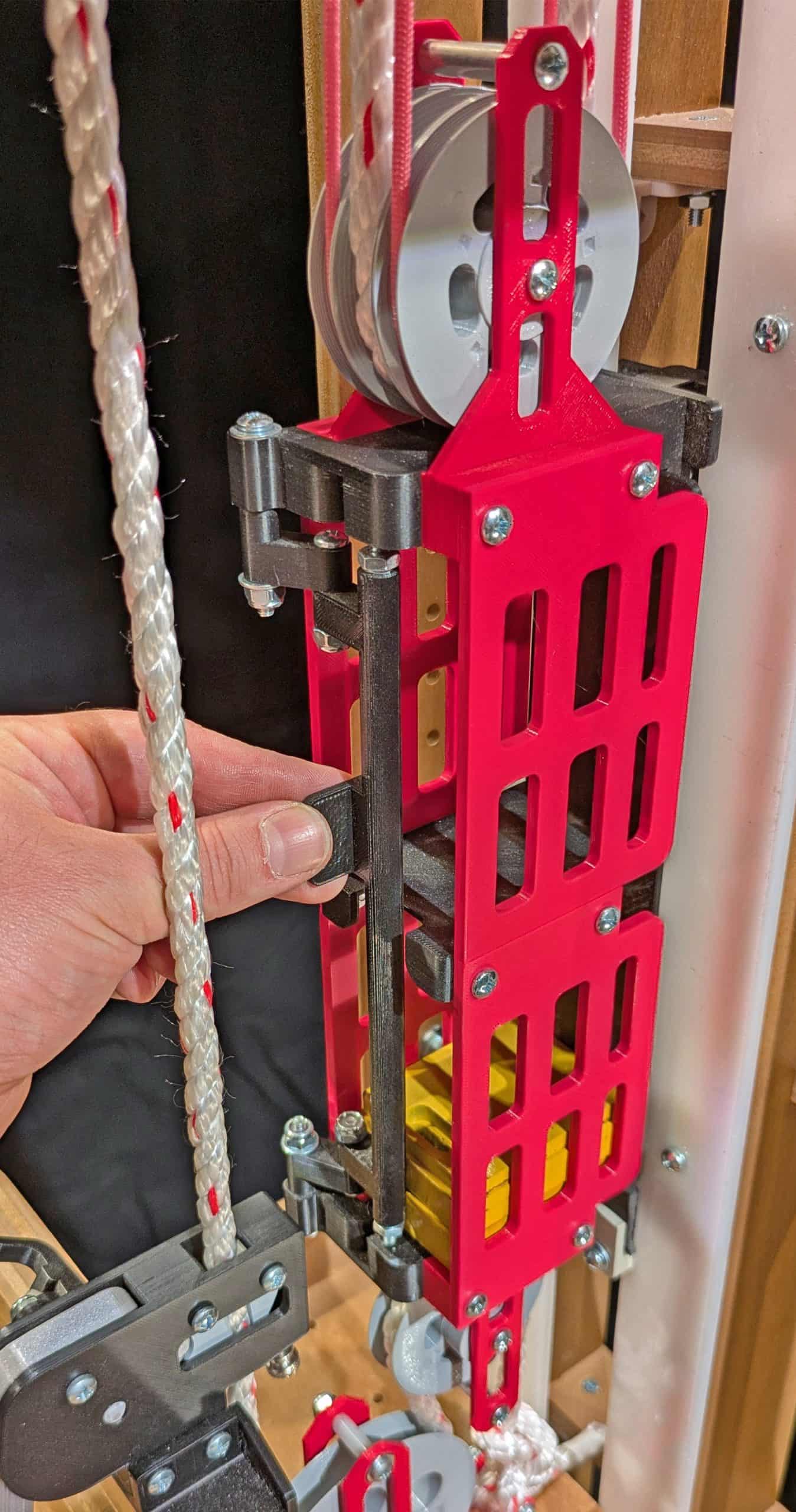
The KRT includes two common arbor styles: the rod-style and the compartment-style (or front-loading). Each style is offered in single-purchase and double-purchase variations. Outside the United States, arbors may also be referred to as cradles or carriages.
Guide Track
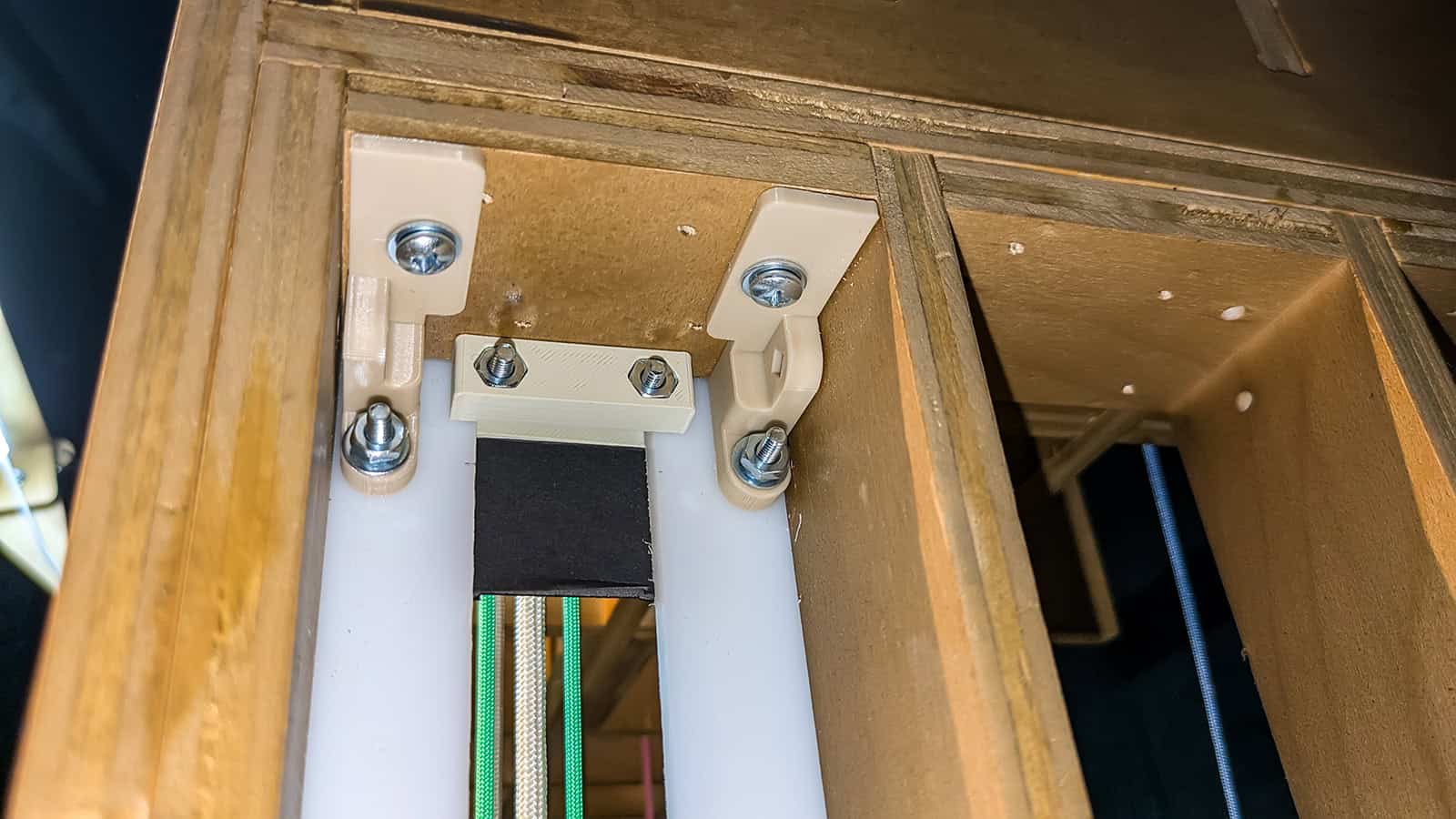
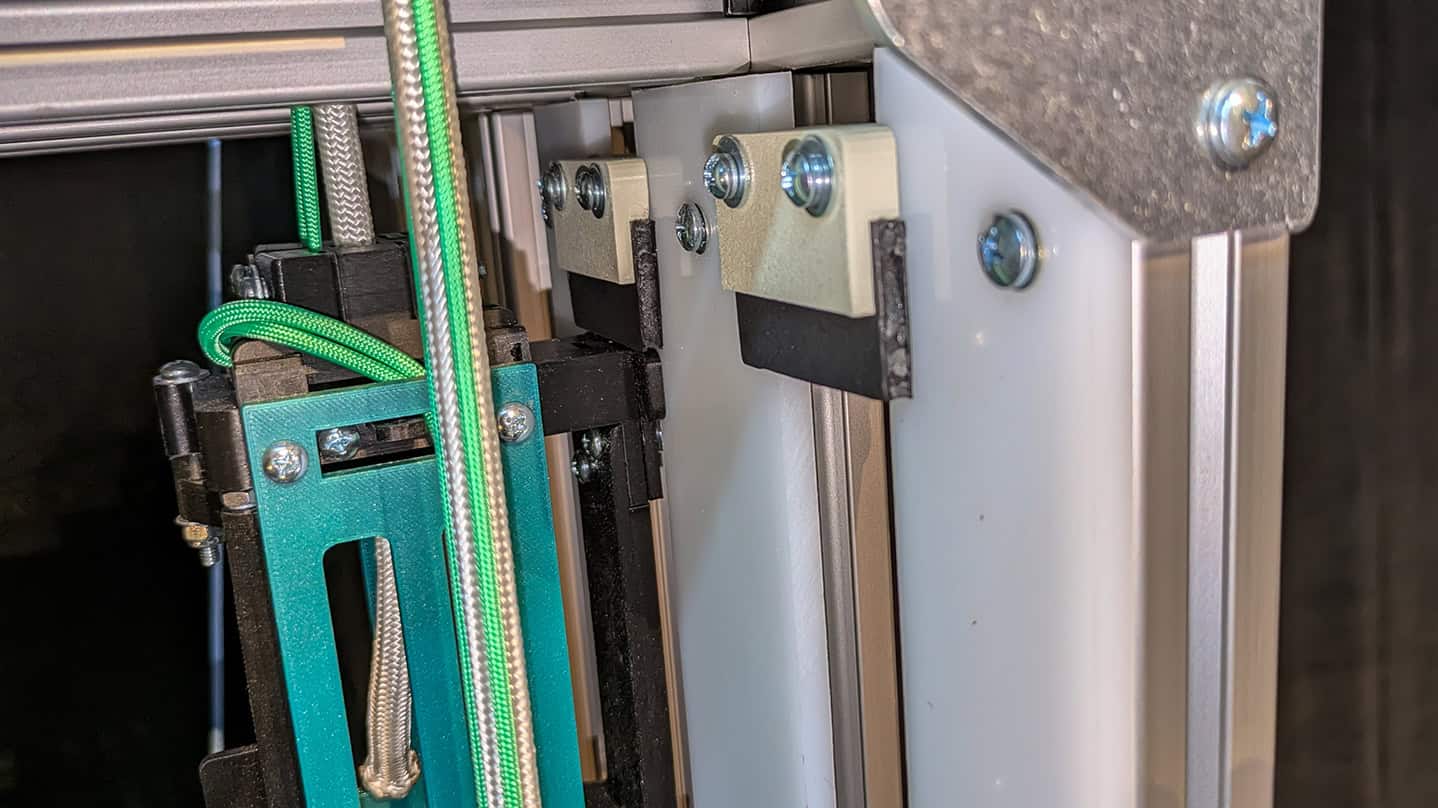
The arbor guide tracks are made from 1/4″ (6mm) HDPE plastic. On the wooden flat-pack frame, they are attached using 3D-printed brackets. The arbor stops (crash bars) clamp onto the track. A sacrificial piece of foam core absorbs the energy of the arbor.
Guide Shoes
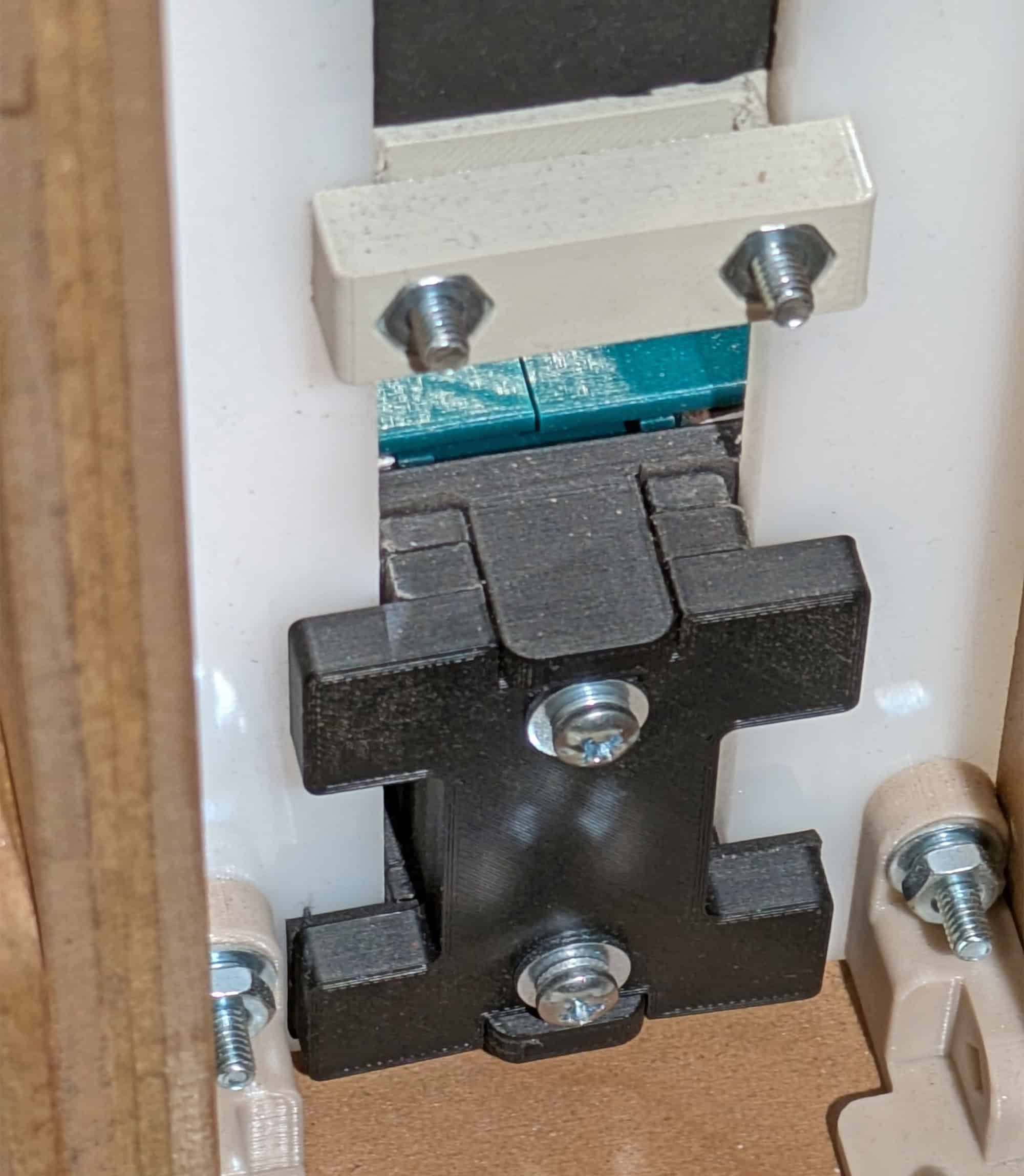
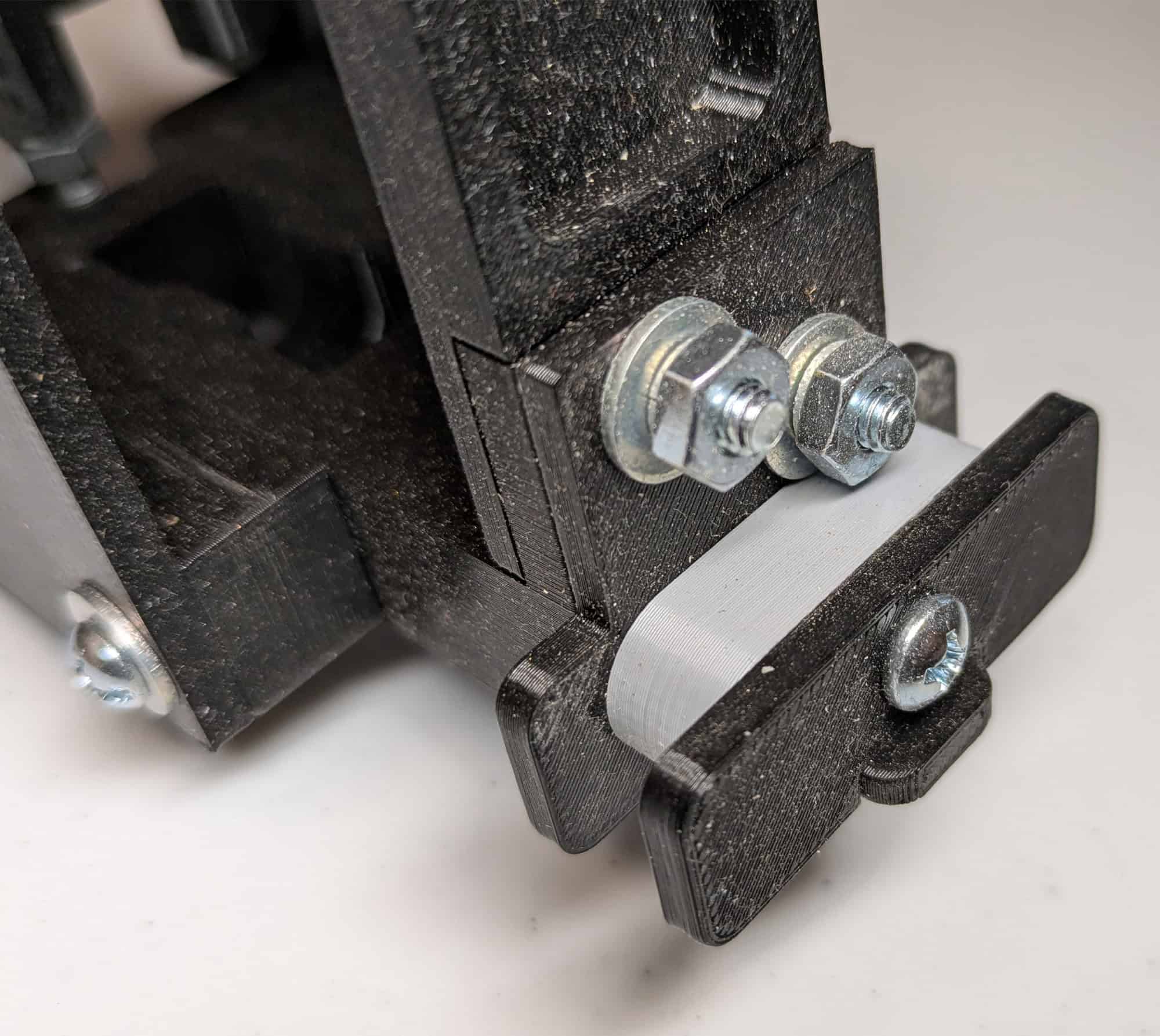
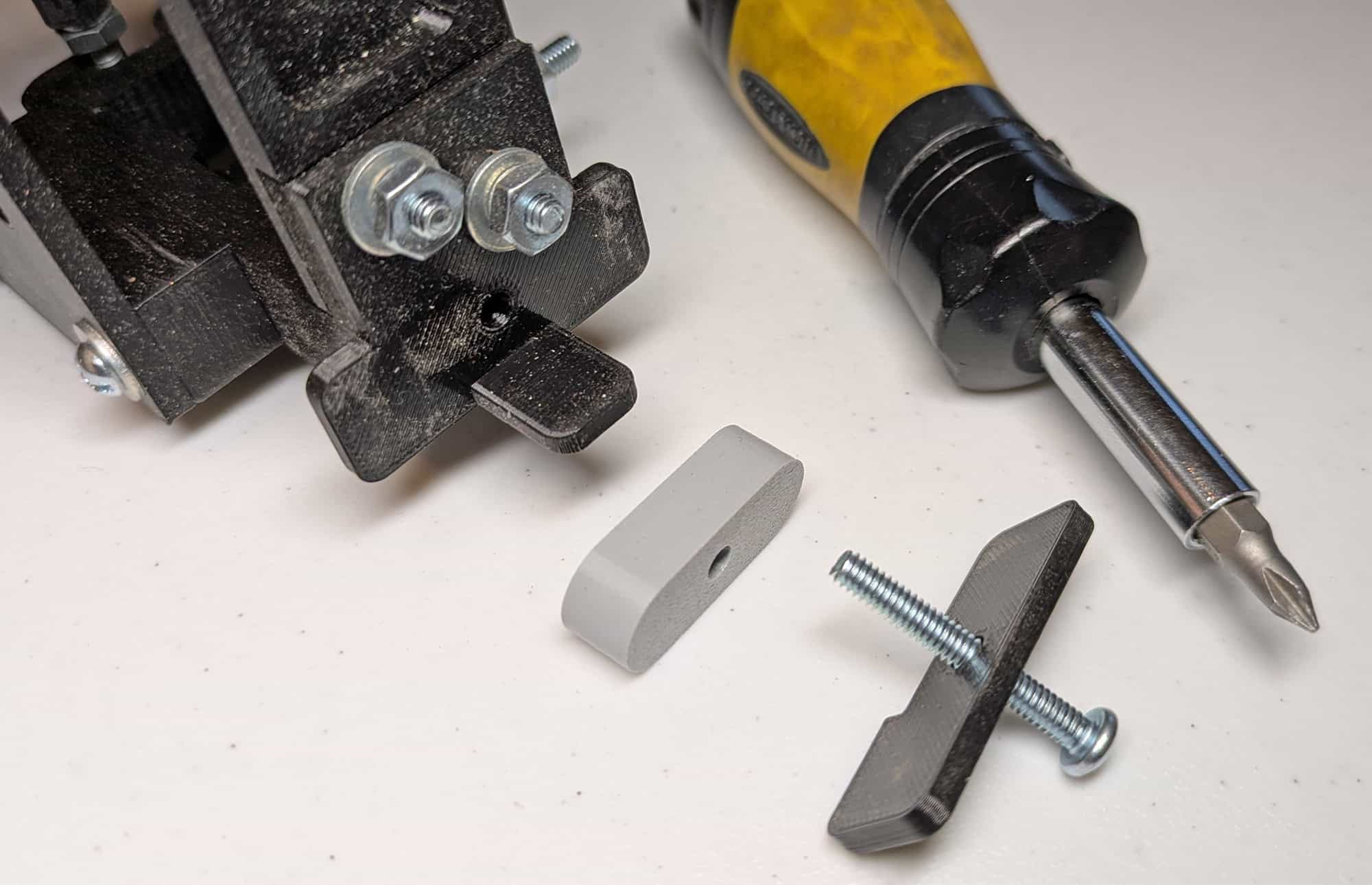
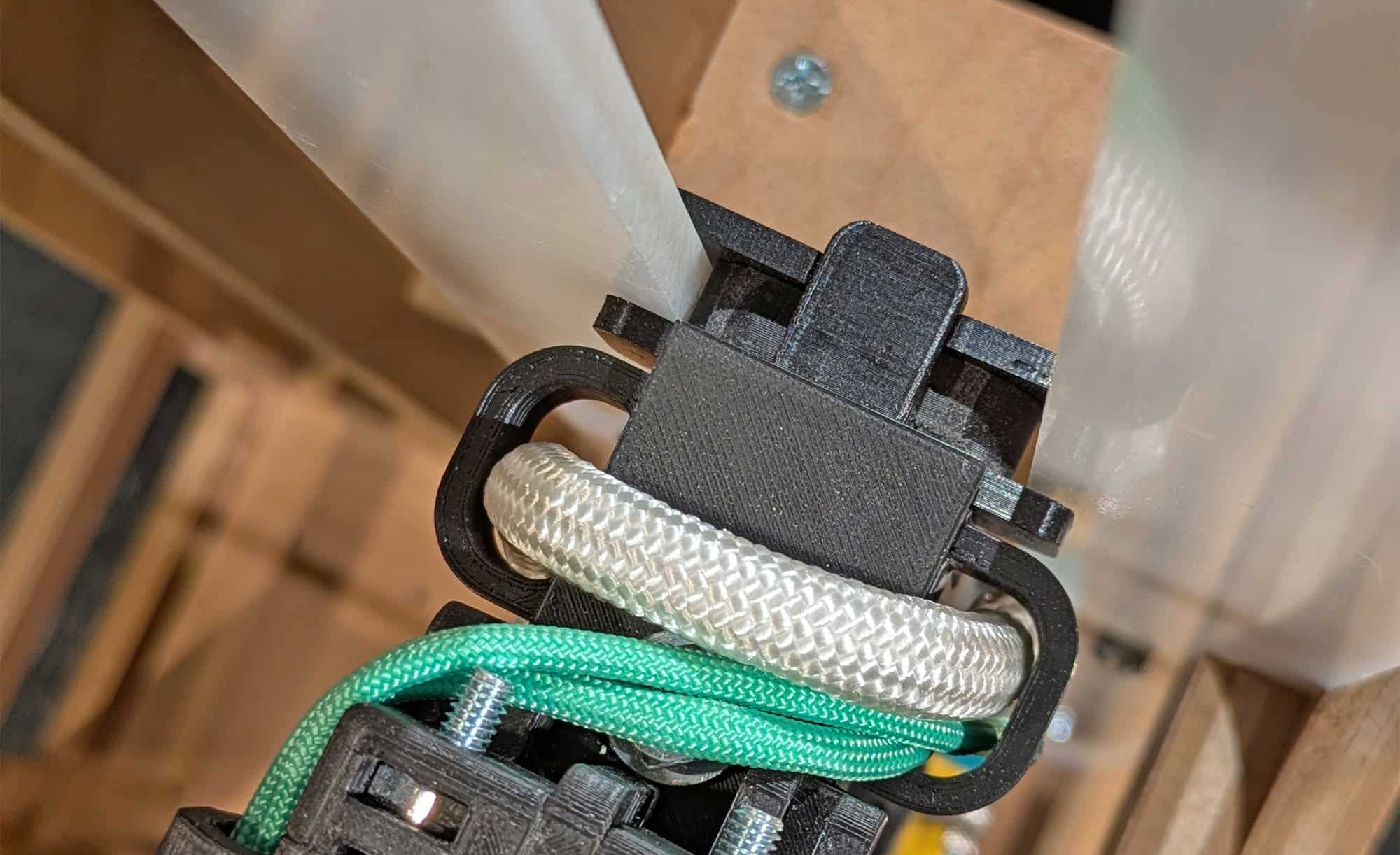
The arbor guide shoes are designed to be easily detached for installation of the arbor onto the track. The gray spacer shown below can be swapped out if the gap in the guide track is larger or narrower than expected.
Single-Purchase Rope Clamps
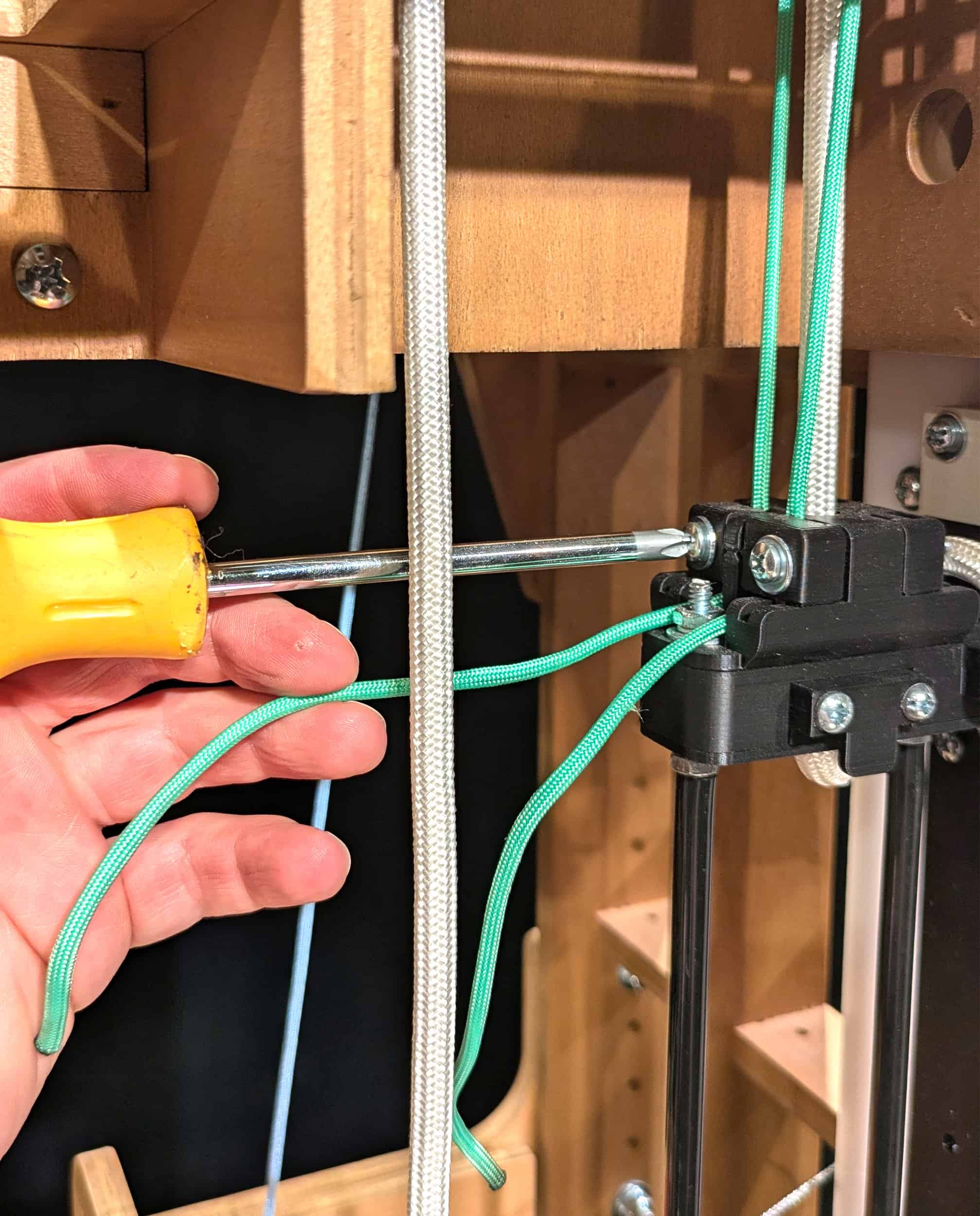
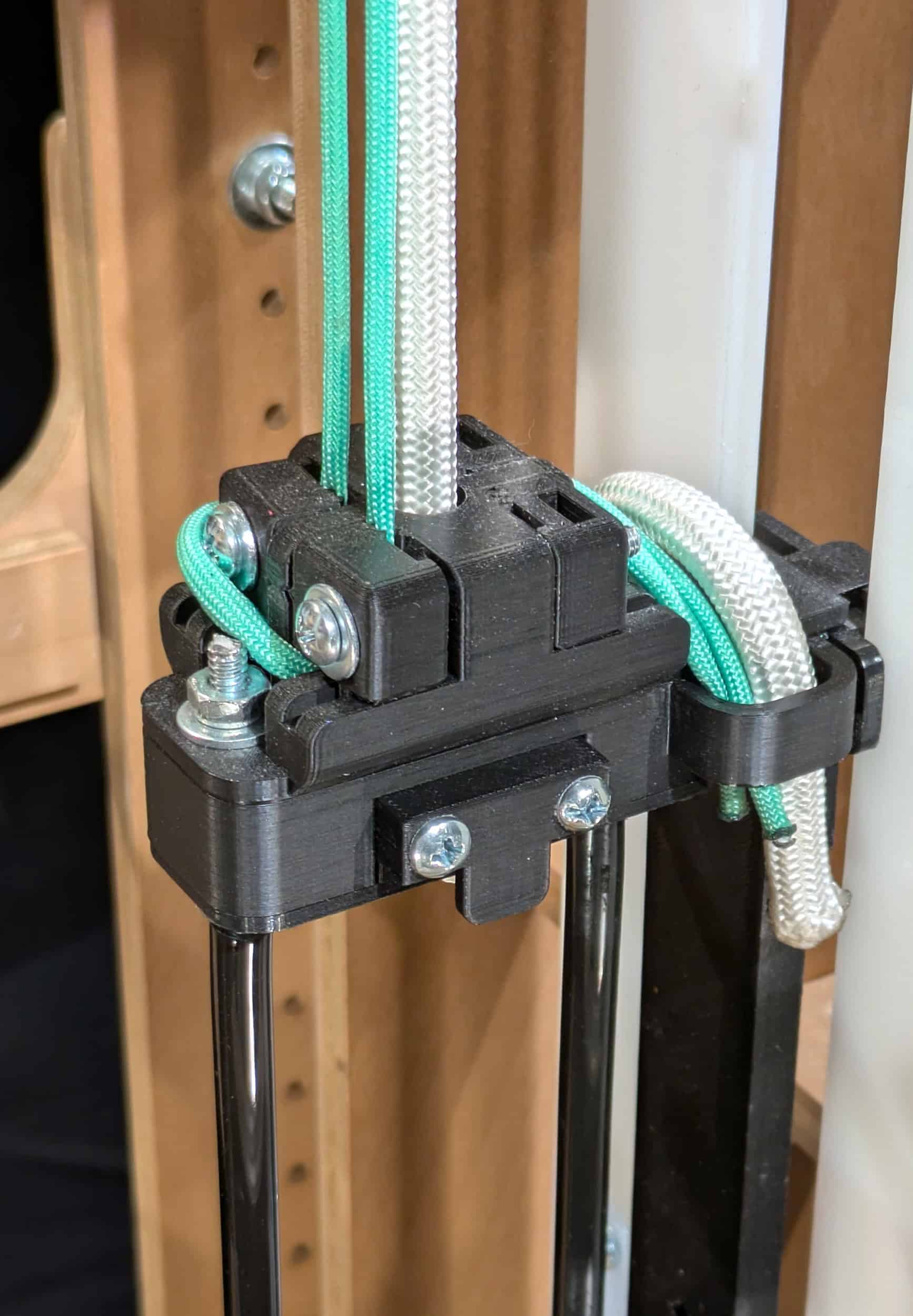
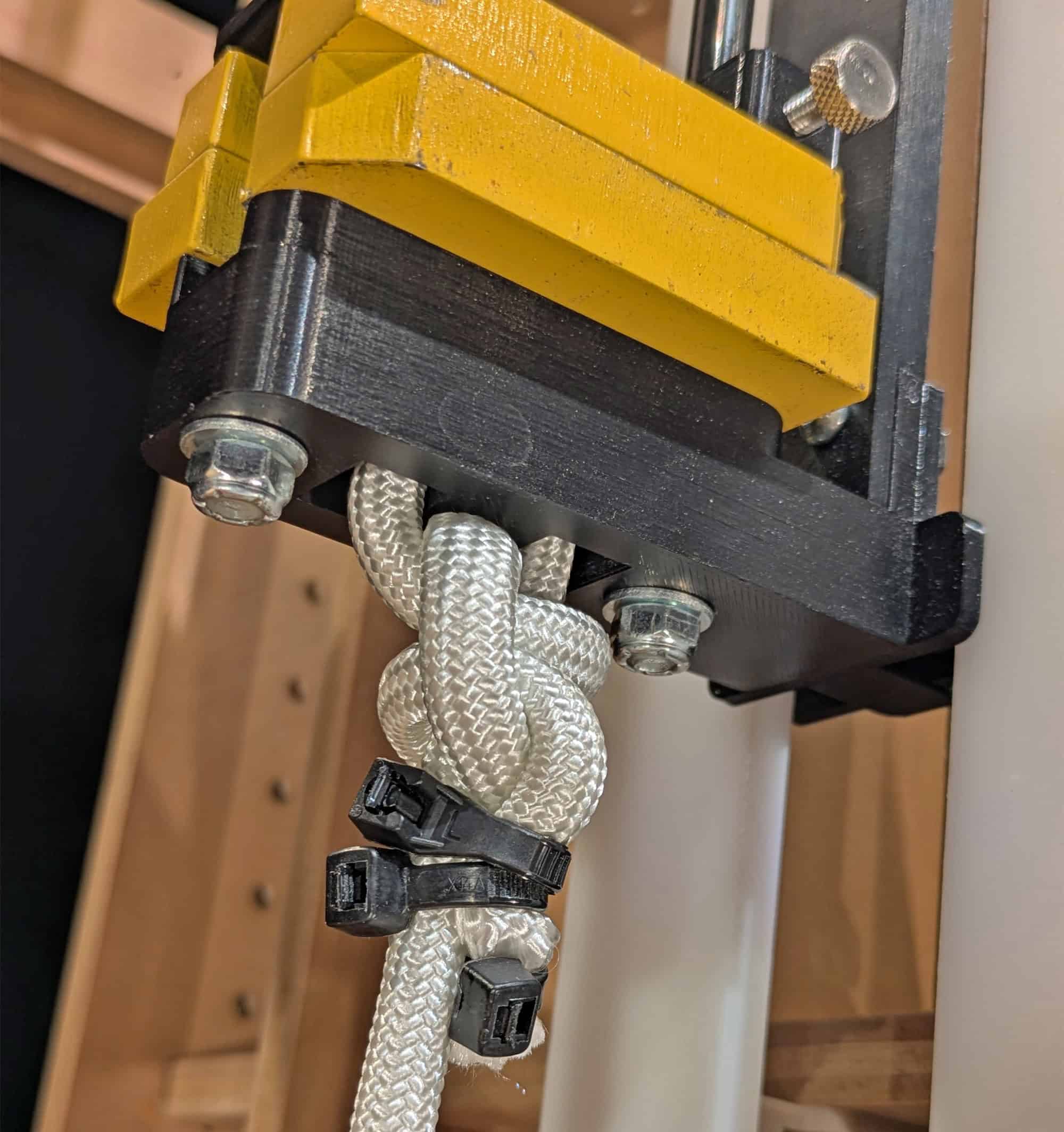
For easy trimming (leveling) and tensioning, the ropes clamp into the top of the single-purchase arbor. Storage loops in the 3D-printed parts keep the rope ends tucked out of the way.
Compartment-Style Gate
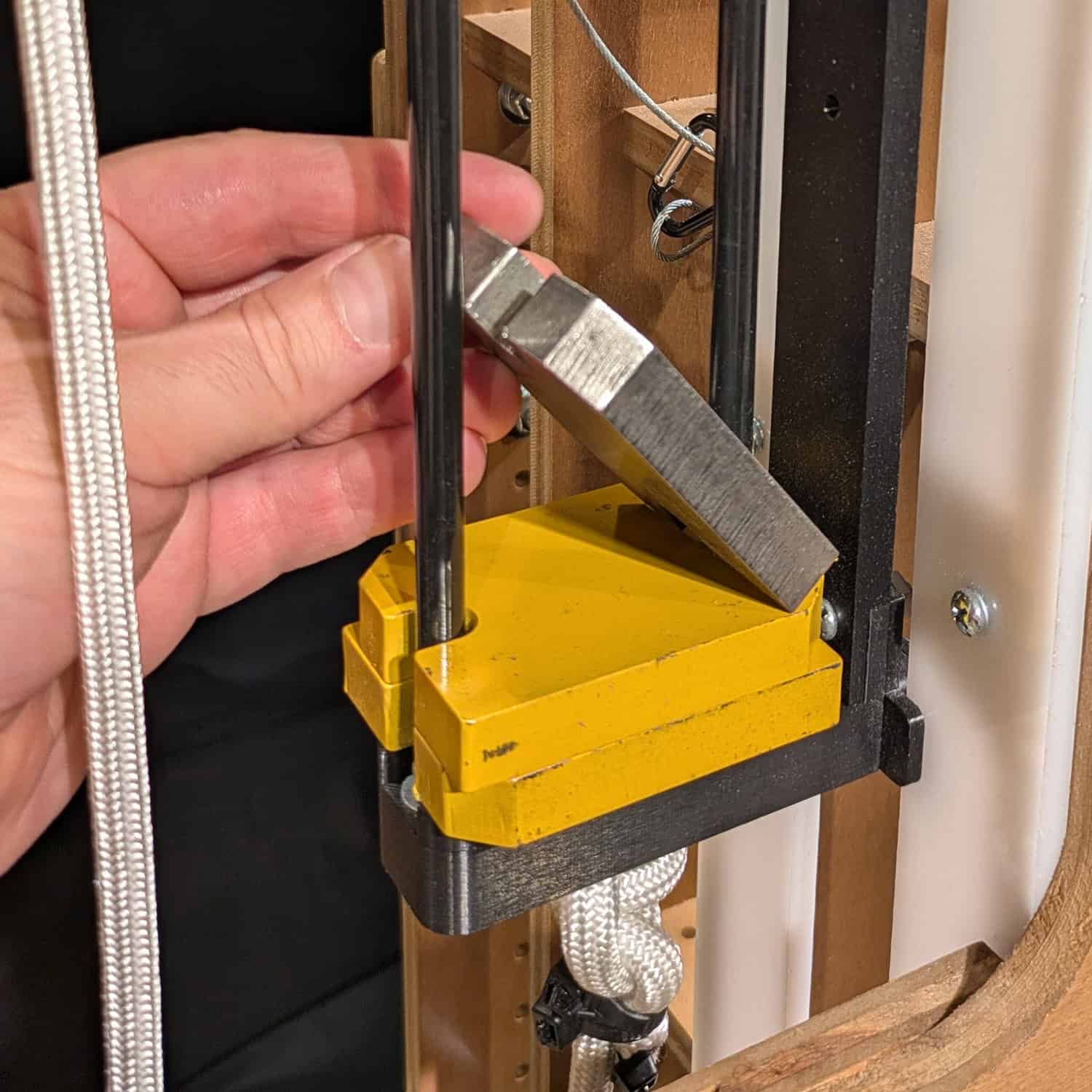
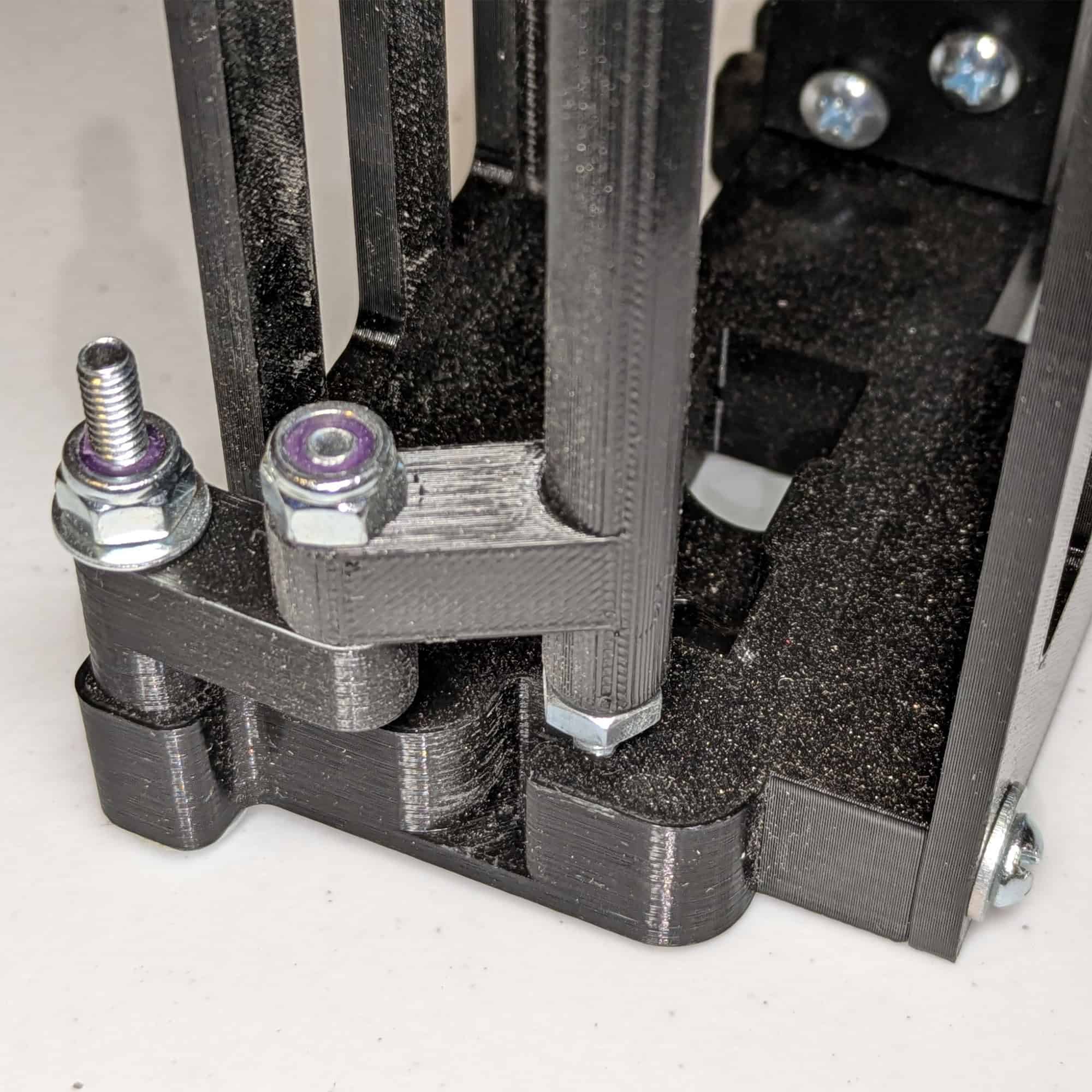
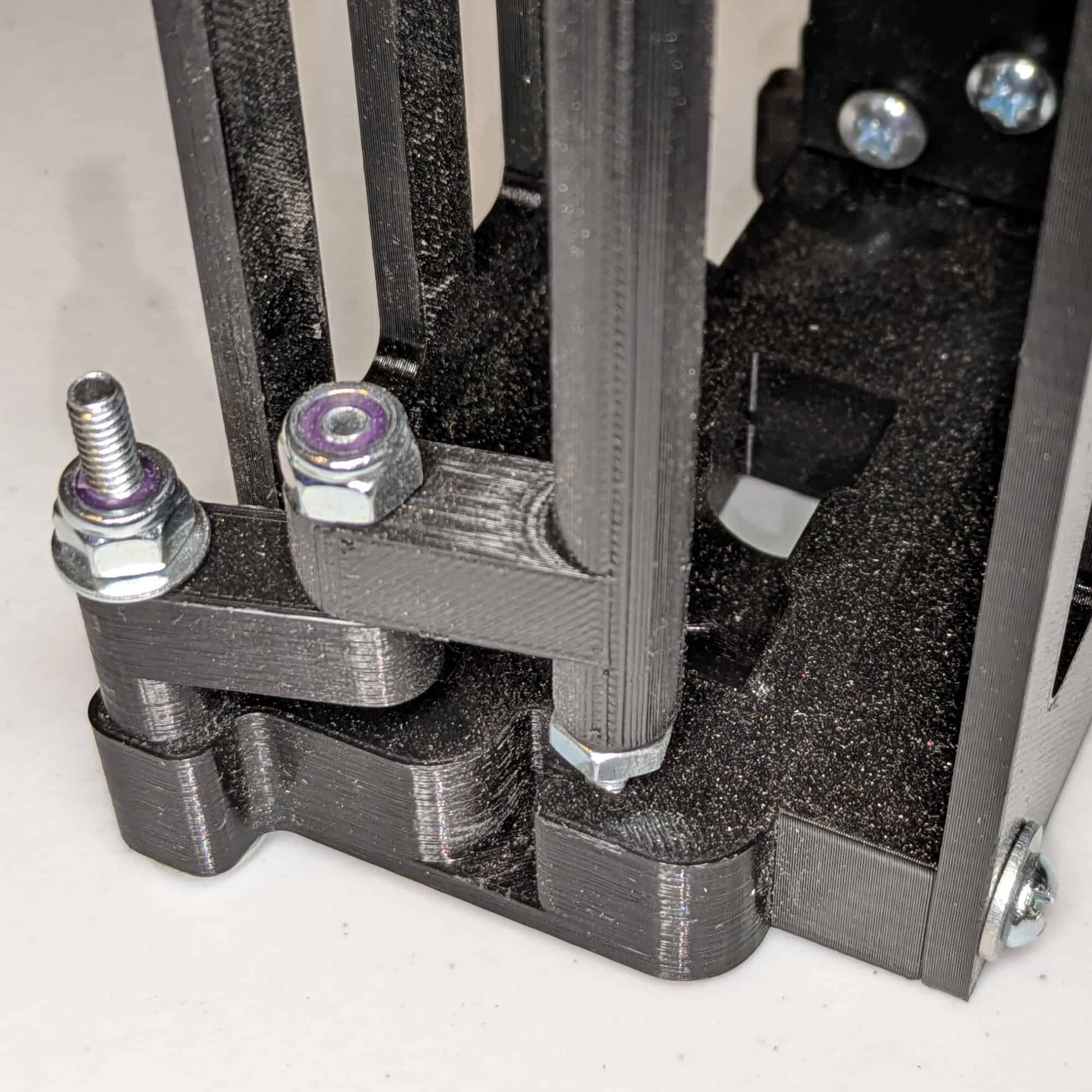
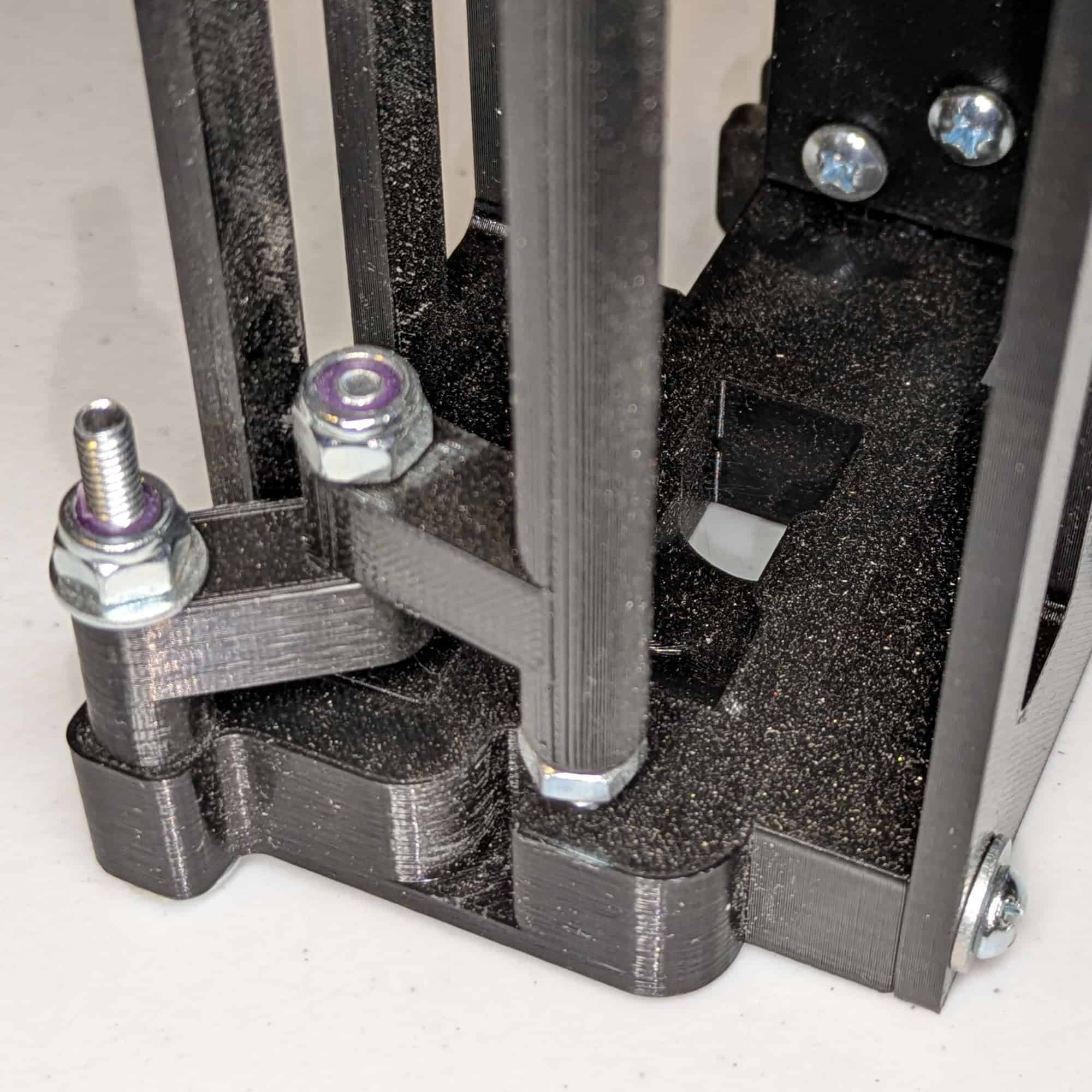
The gate on the compartment-style arbor uses an “over-centering” linkage. As shown below, the elbow joint is pushed into a straightened position of high stress after which it “pops” into the locked position. This is the same principle used in the rope lock cam mechanisms.
Counterweights
The counterweights for the KRT are designed to be CNC-cut by laser or waterjet. There is an alternate design which can be made using simpler build techniques like drilling and cutting. See the KRT Manual and drawings for more details.
Accessories
Backdrops
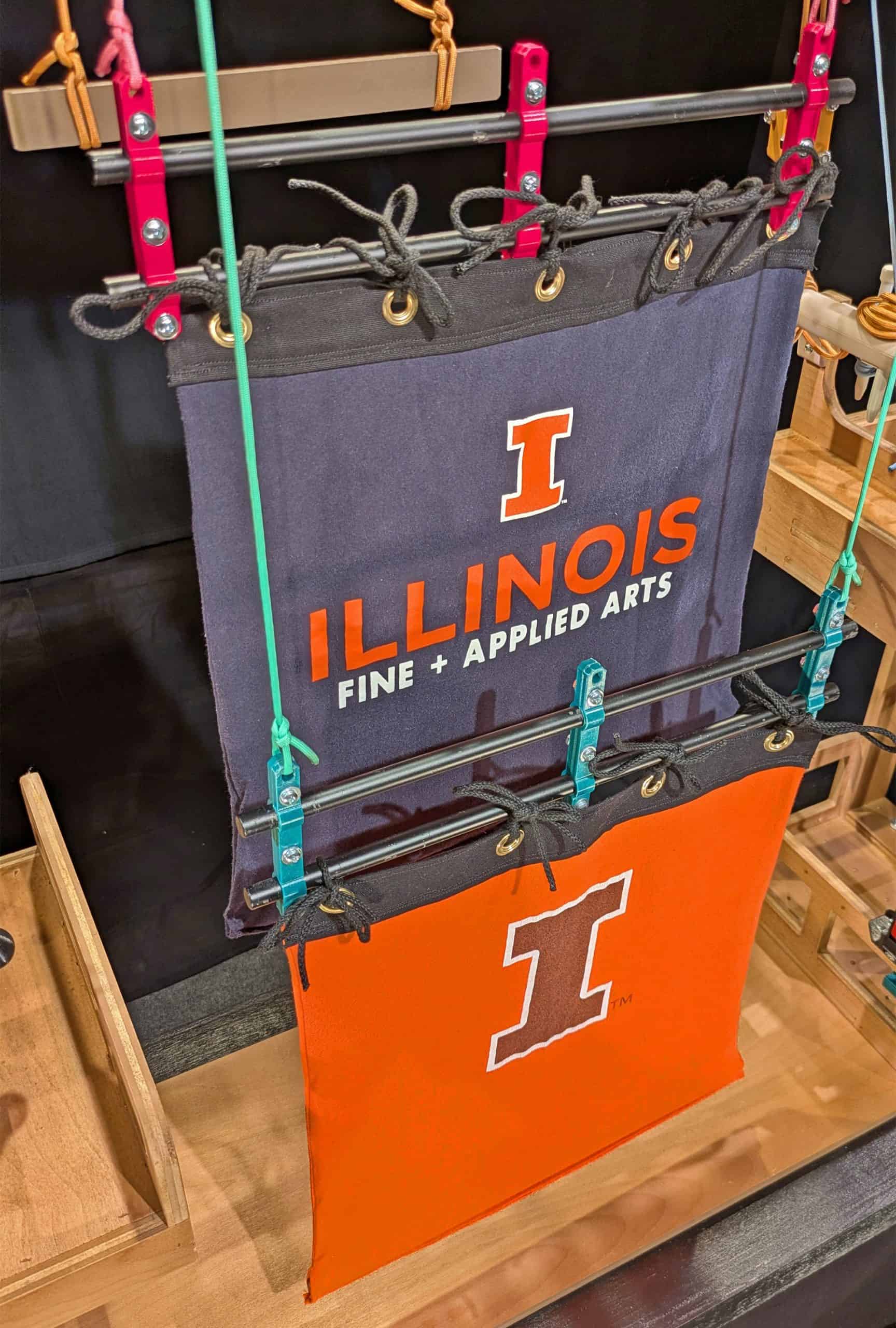
The KRT Manual includes step-by-step instructions on how to create backdrops from t-shirts or other fabric. There is a pocket at the bottom for a steel bottom pipe or chain.
Pleated Curtain
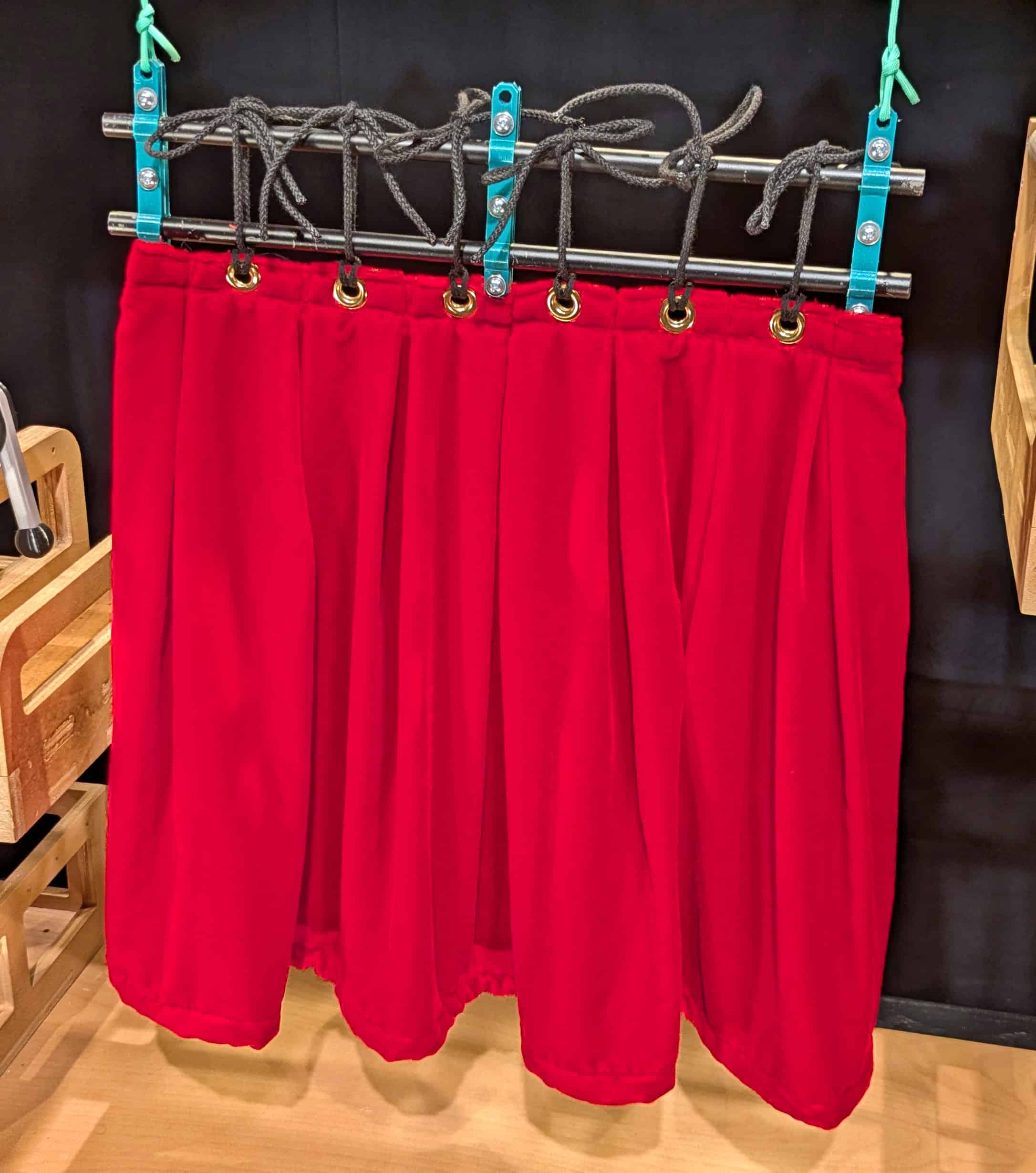
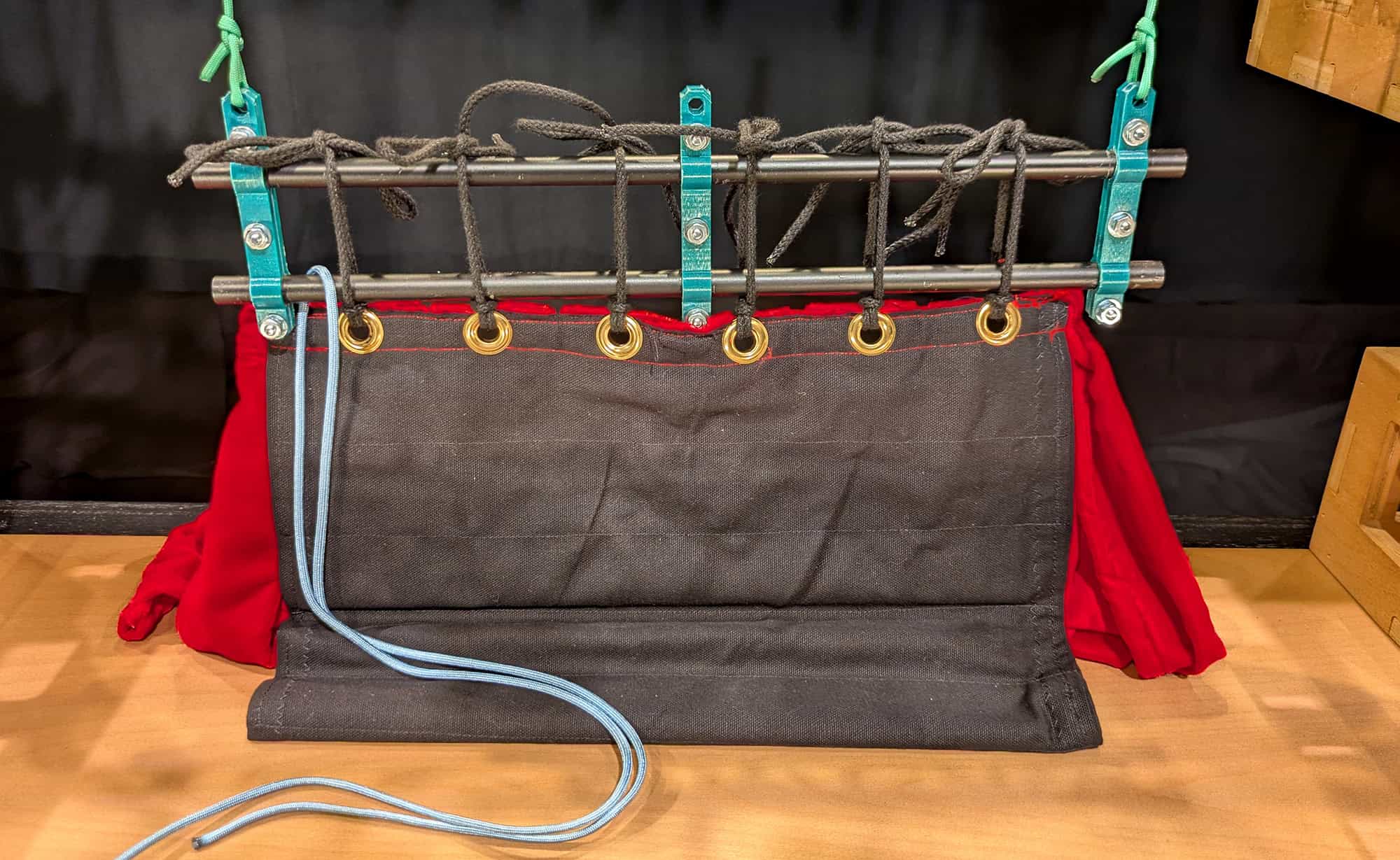
The KRT Manual includes step-by-step instructions on how to sew a pleated curtain with 200% fullness. The back lining is made from canvas and includes pockets for steel rods which give the curtain significant weight.
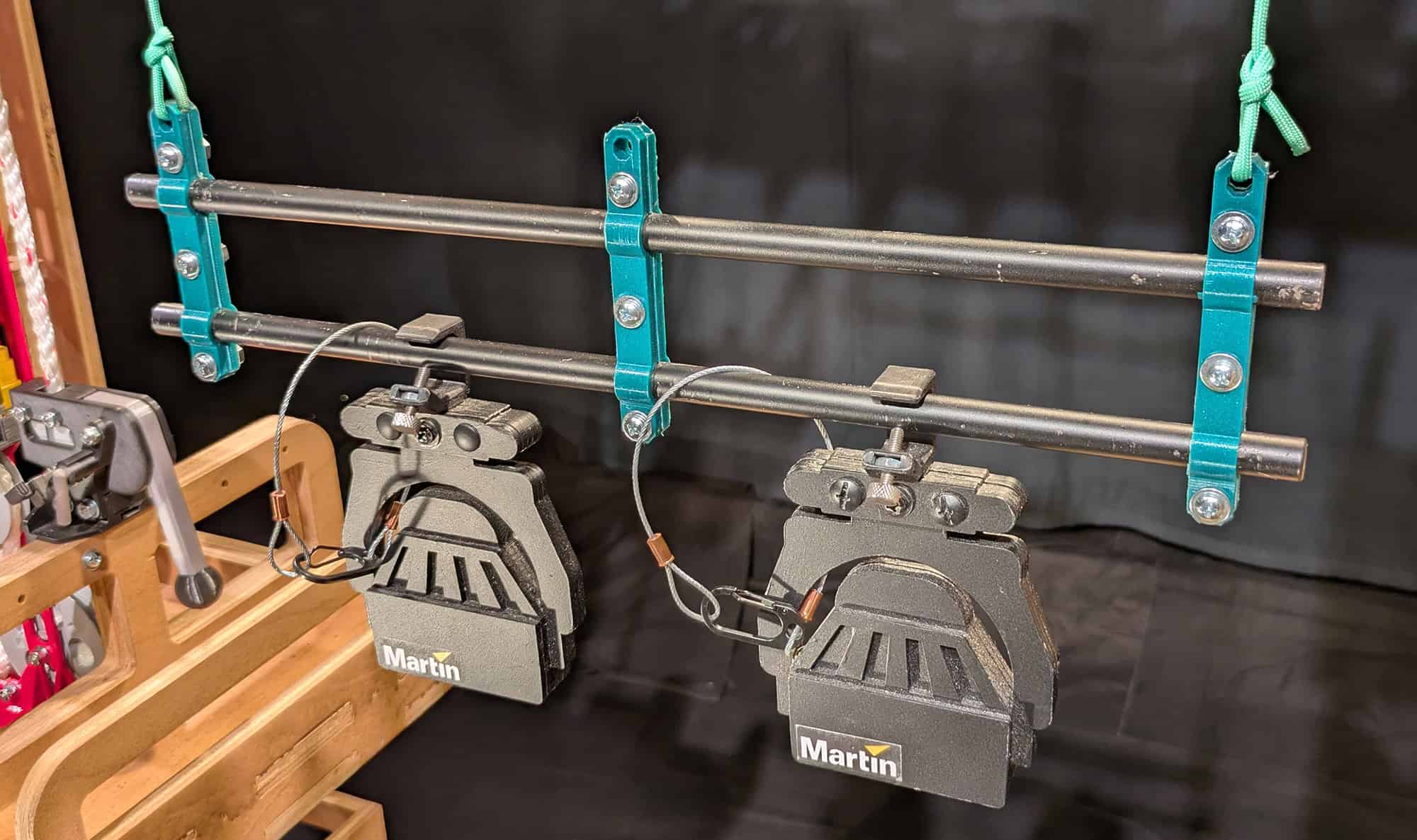
Lighting Fixture
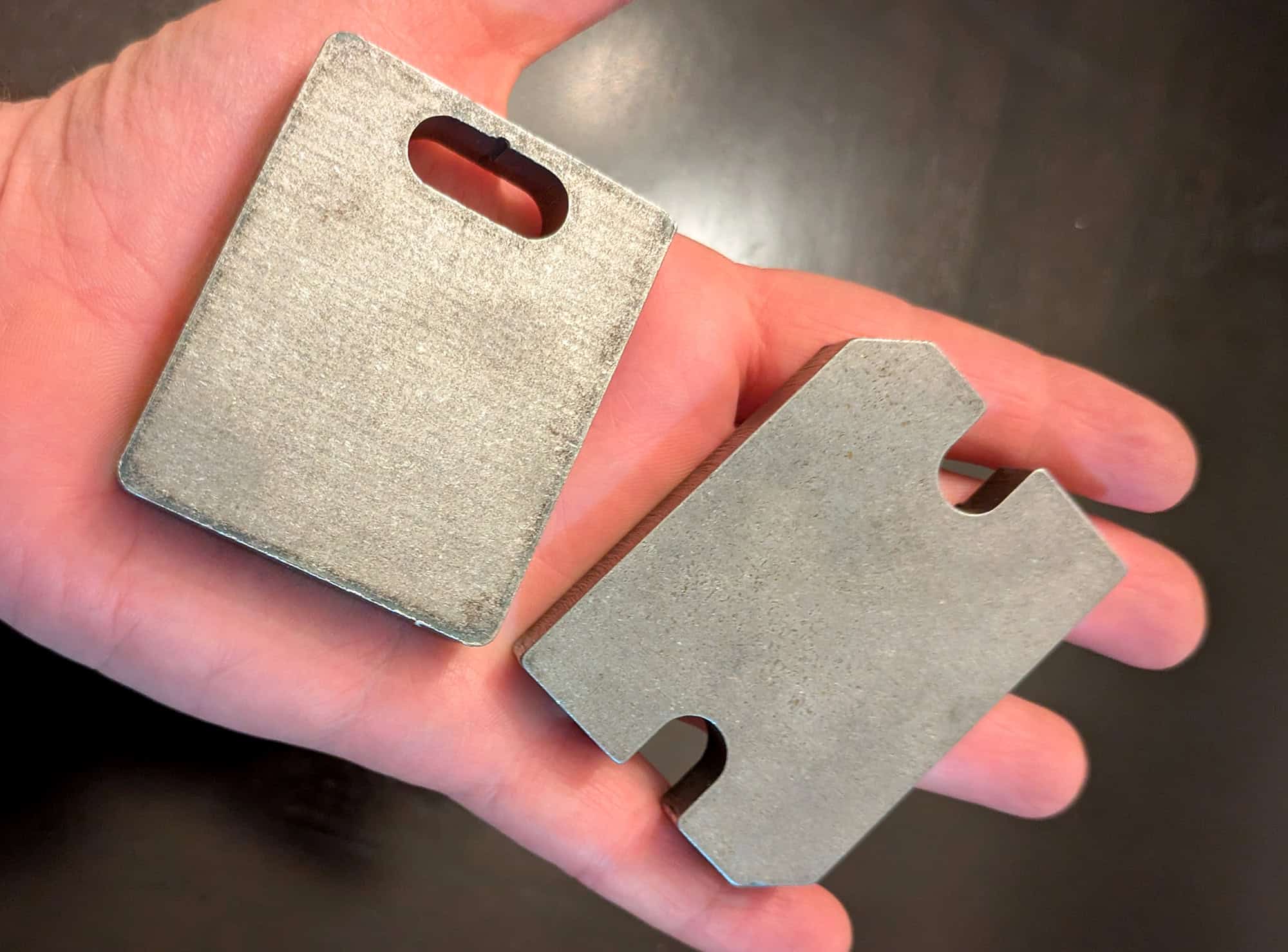
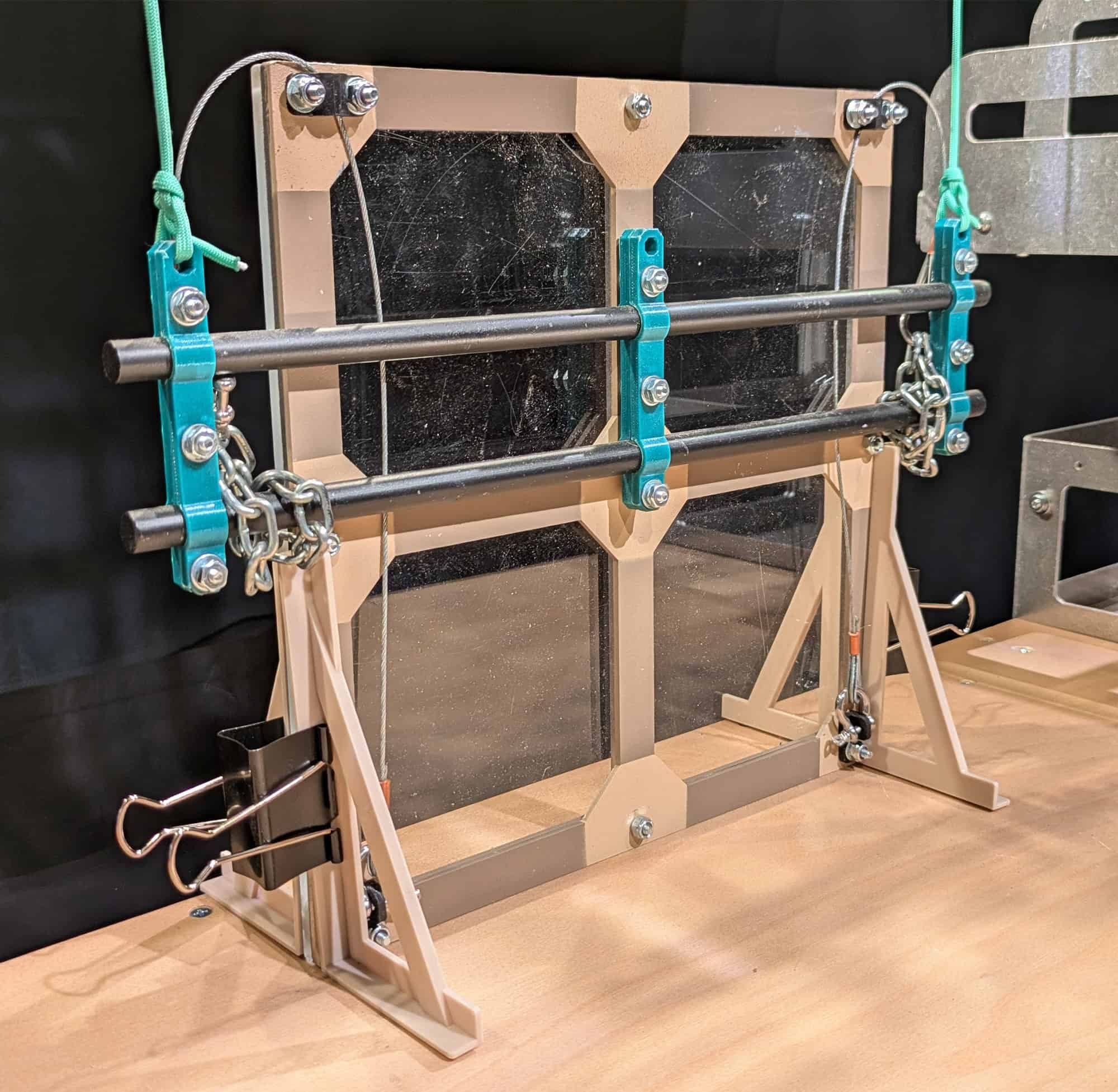
Lighting fixture batten loads are created from laser cut steel plates laminated together. 3D-printed clamps and wire rope safety cables are added for authenticity.
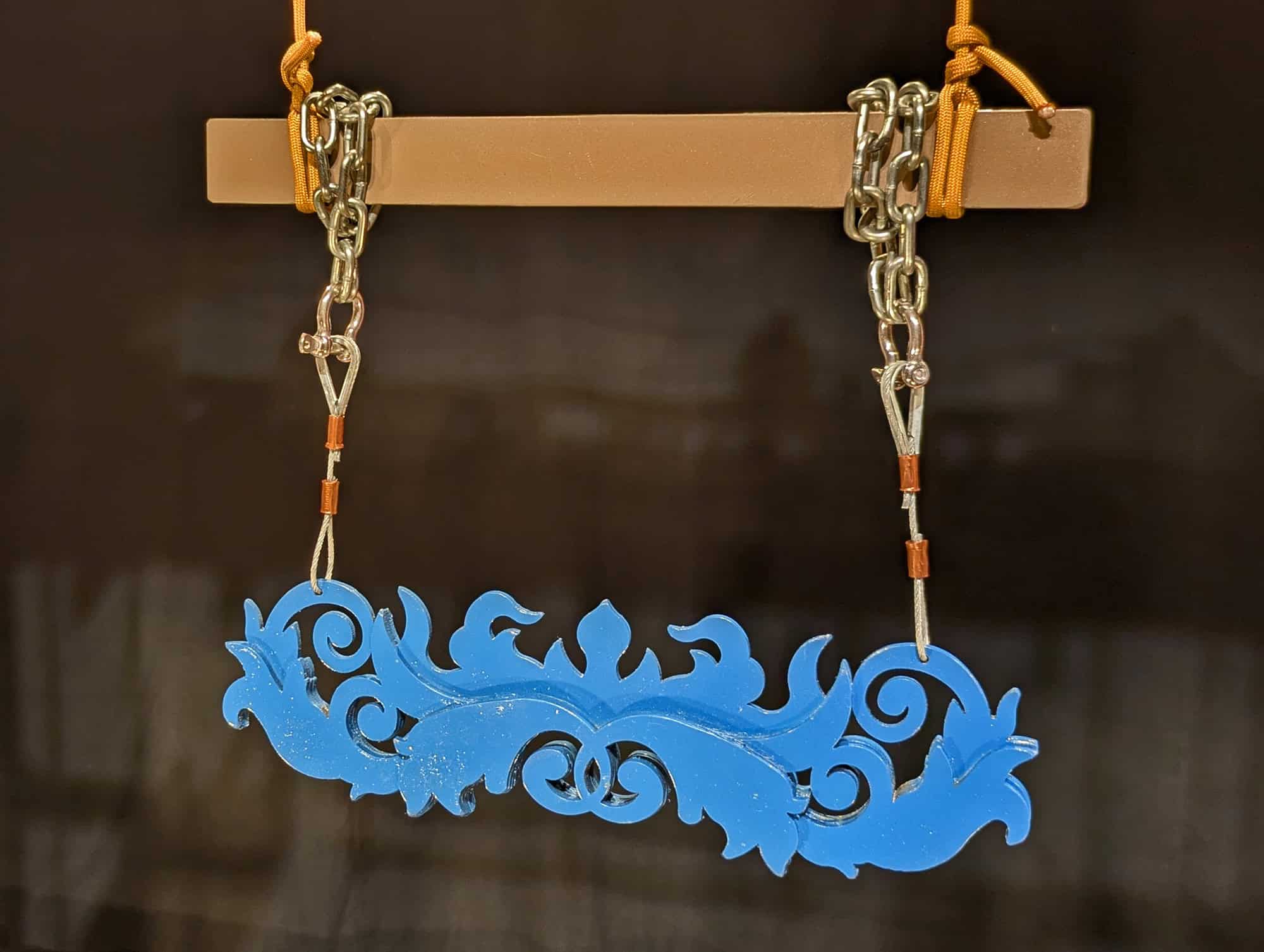
Filigree Scenery
The filigree scenery is a load specifically for the hemp line set batten, which is shorter than the other battens. The scenery is made from laser cut steel plates laminated together.
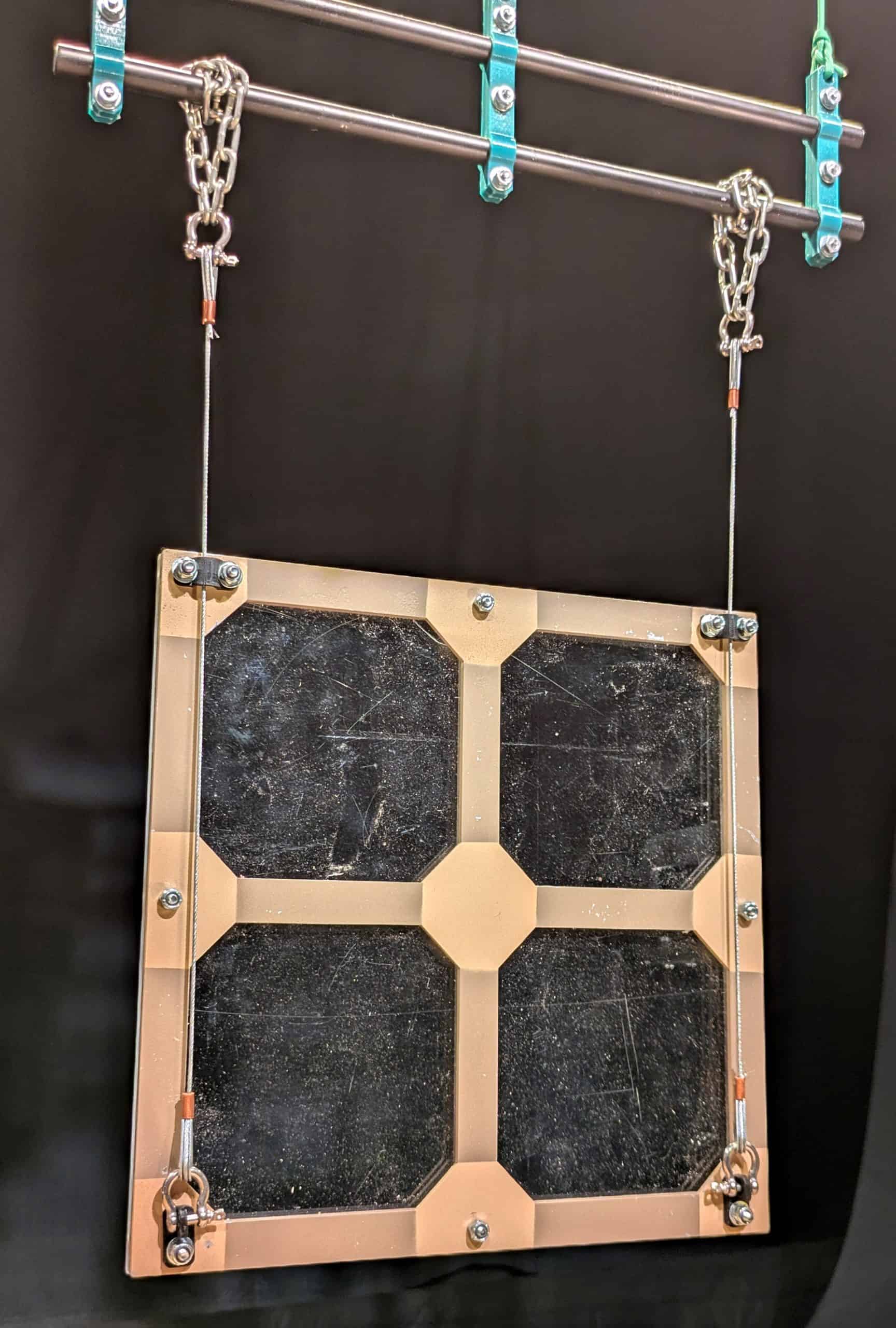
Broadway Flat
A Broadway flat is made from laser cut steel plates with an added facing. The shackle plates and keeper plates are 3D-printed.
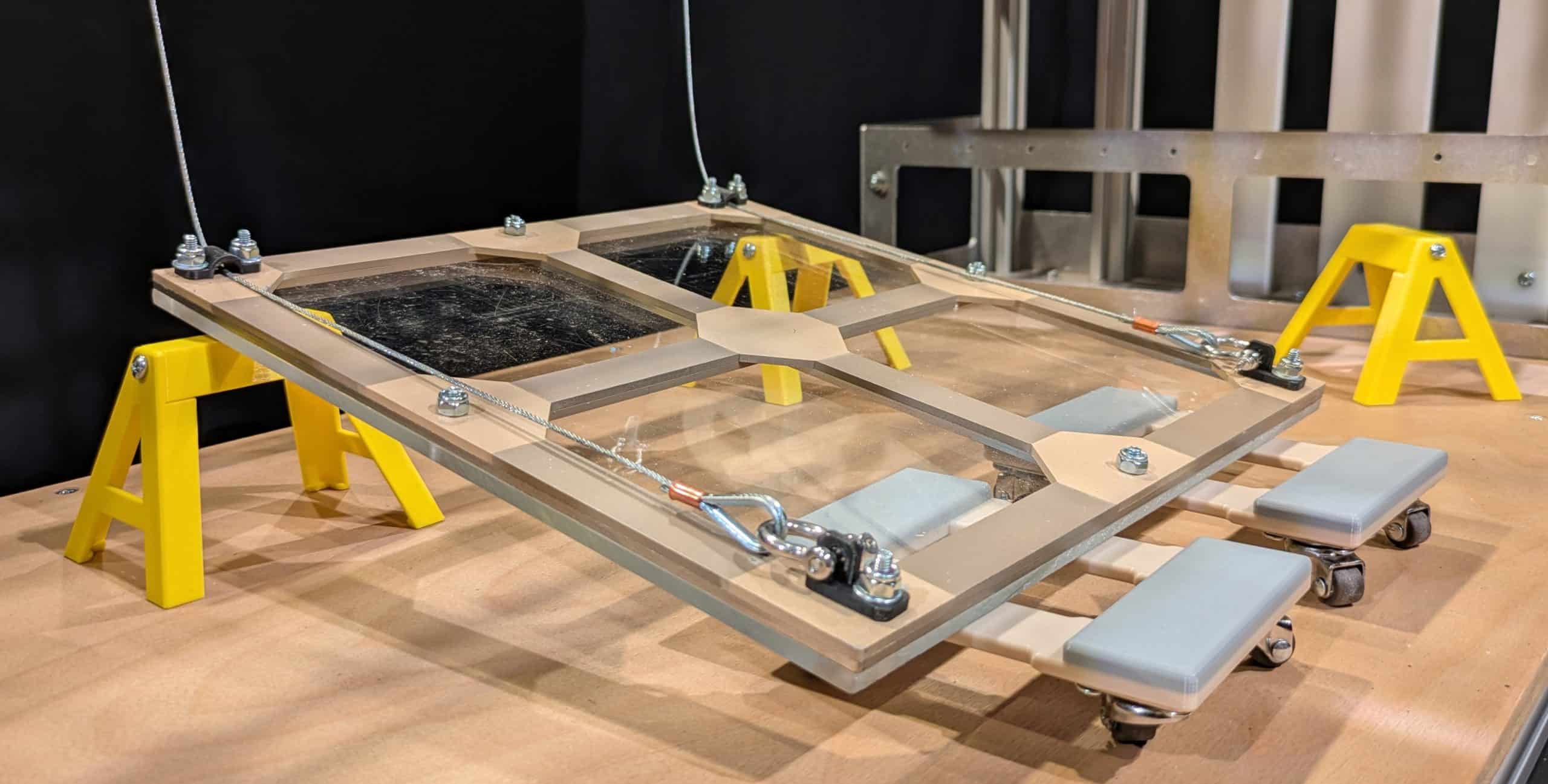
Accessories for Flying Flats
Flying hard scenery often requires accessories like sawhorses, dollies, or stage jacks. The KRT includes all of these for demonstration of different flying scenarios.
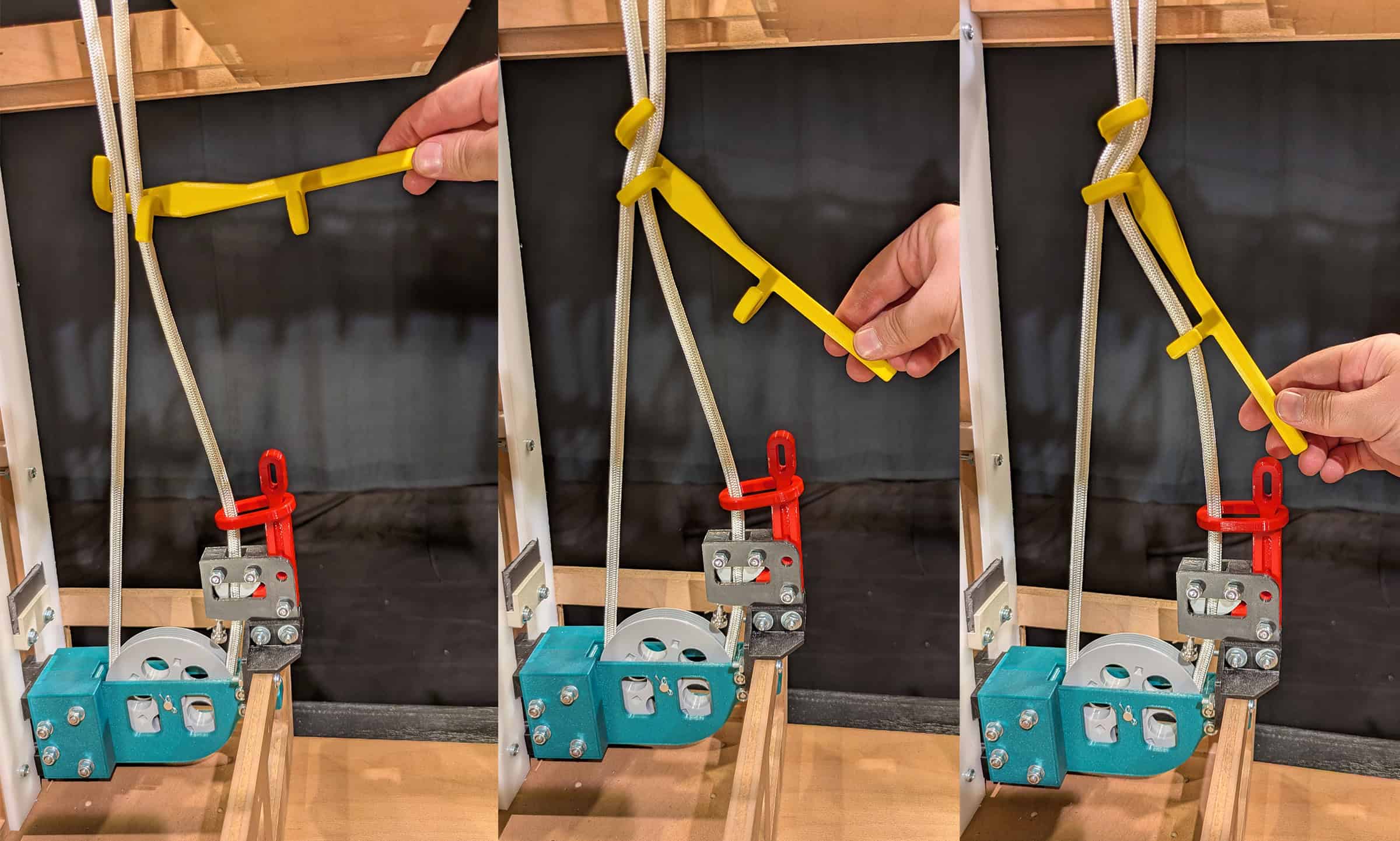
Uncle Buddy
The KRT includes a 3D-printed “Uncle Buddy” line locking tool.
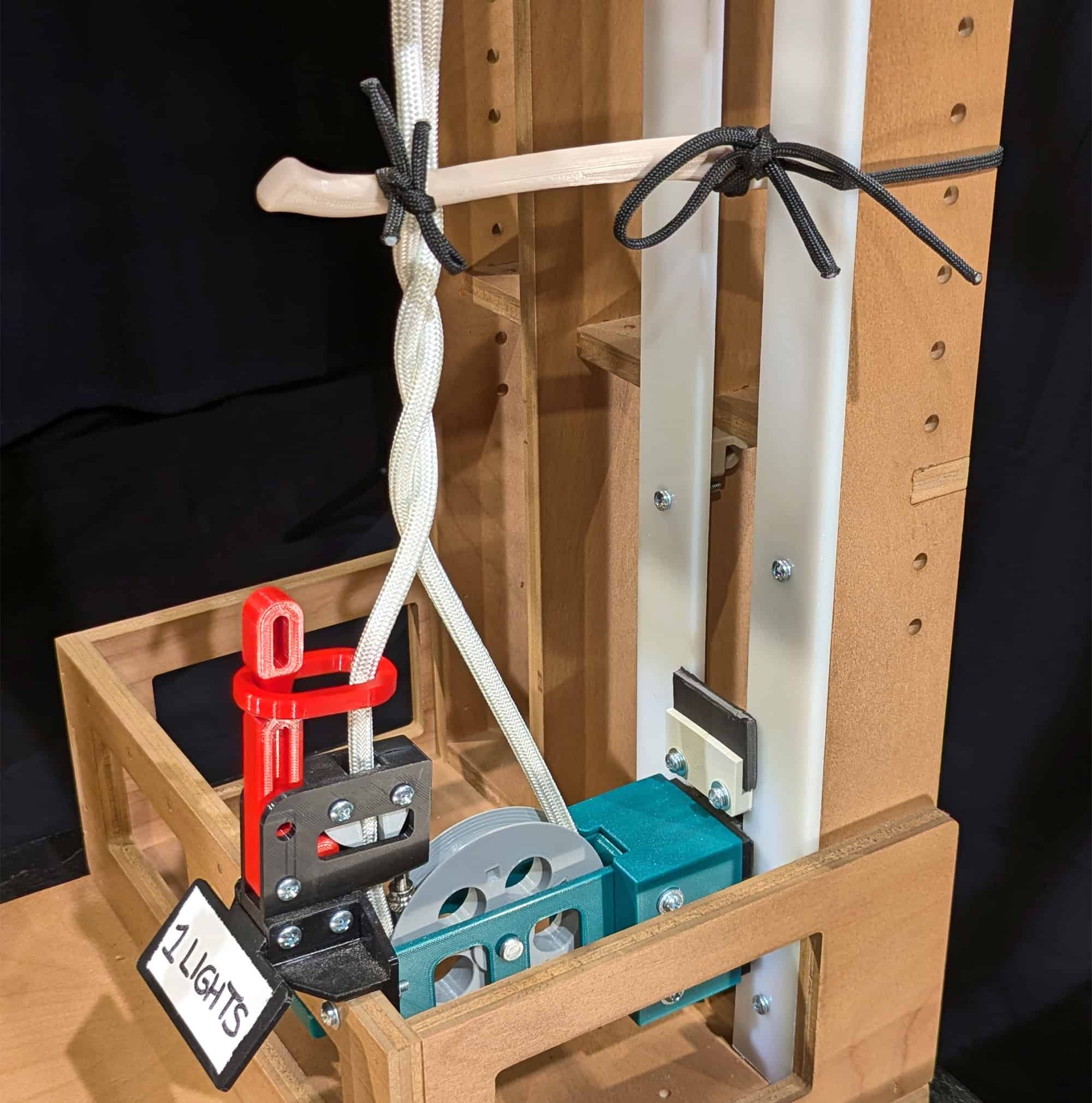
Axe Handle
The KRT includes a 3D-printed axe handle for securing the purchase line with twists in the rope.
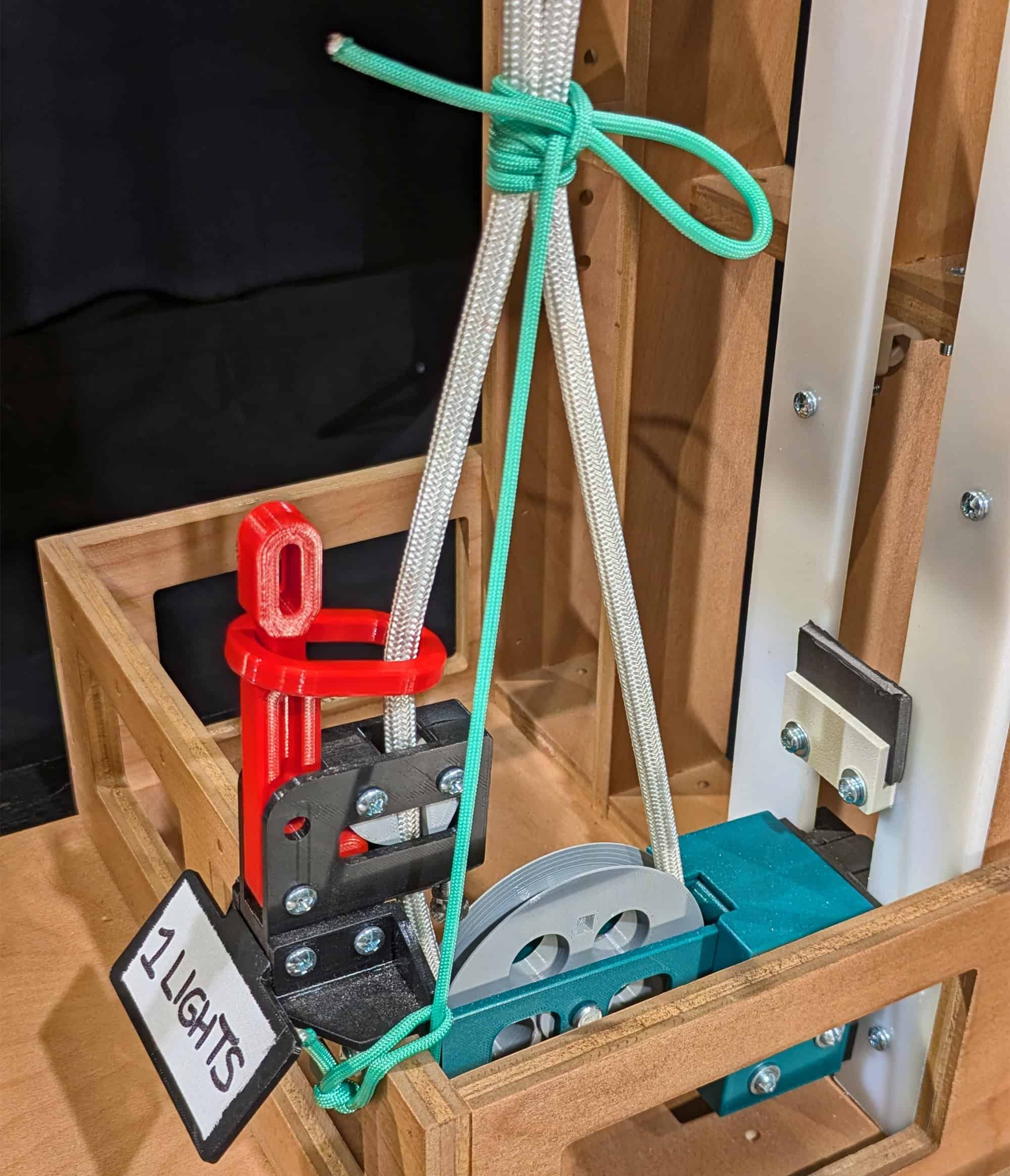
Snub Lines
Snub lines for the KRT can be made easily from paracord.
Sunday for Hemp Set
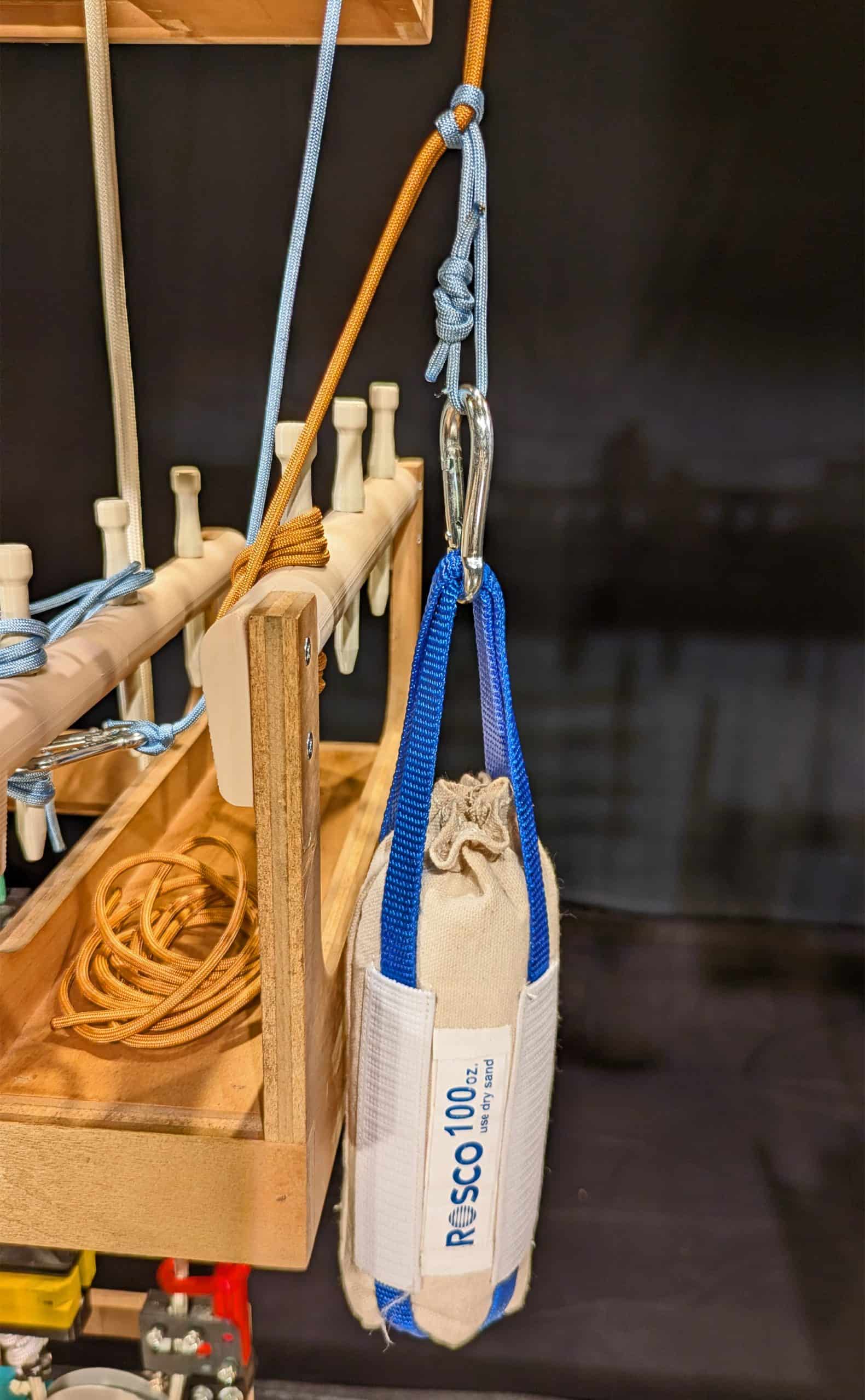
For a traditional alternative to the trim clamp, a Sunday can be made with paracord by tying it into a Prussik loop using Double-Fisherman’s knots.
Rope Splicing Fid
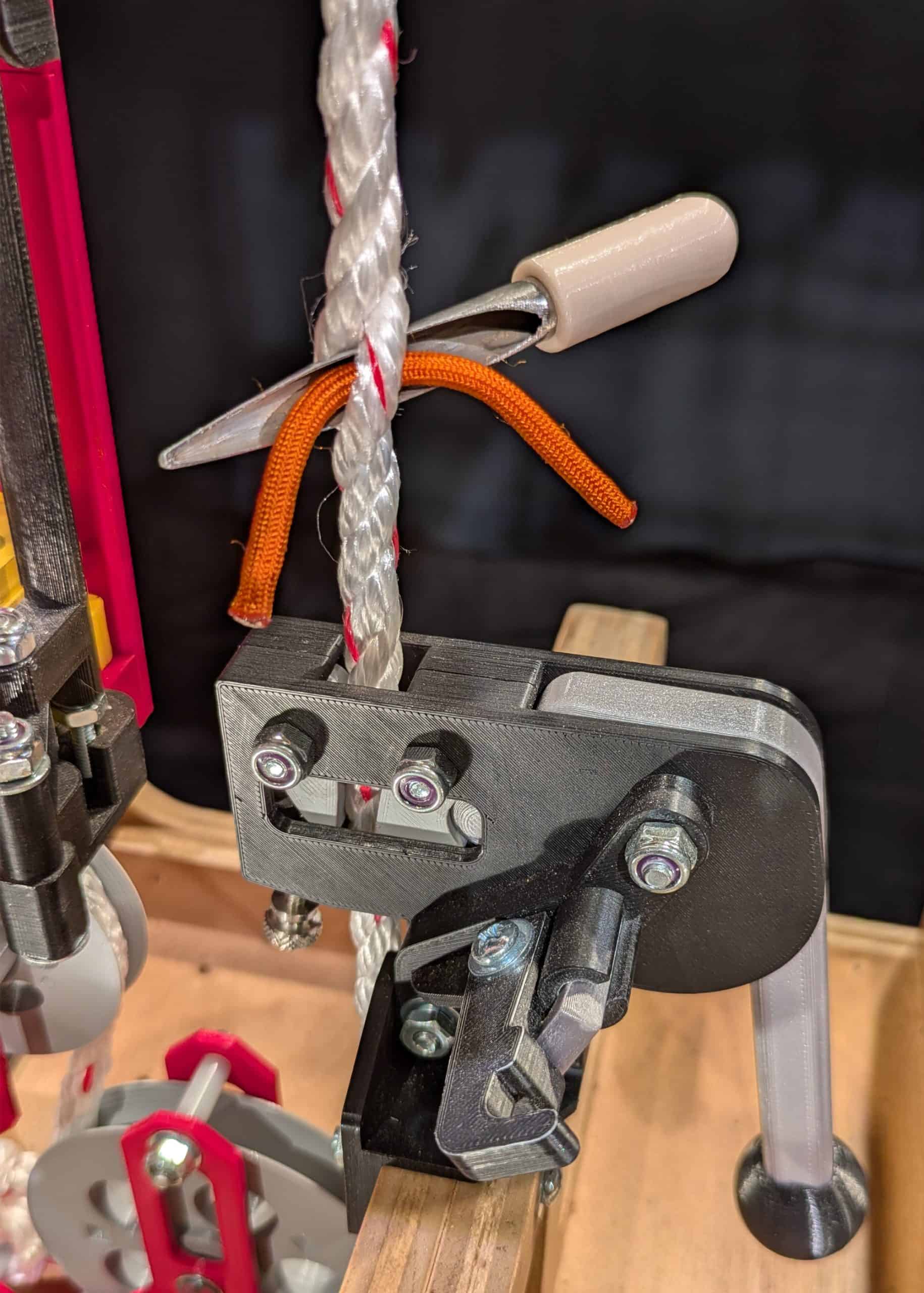
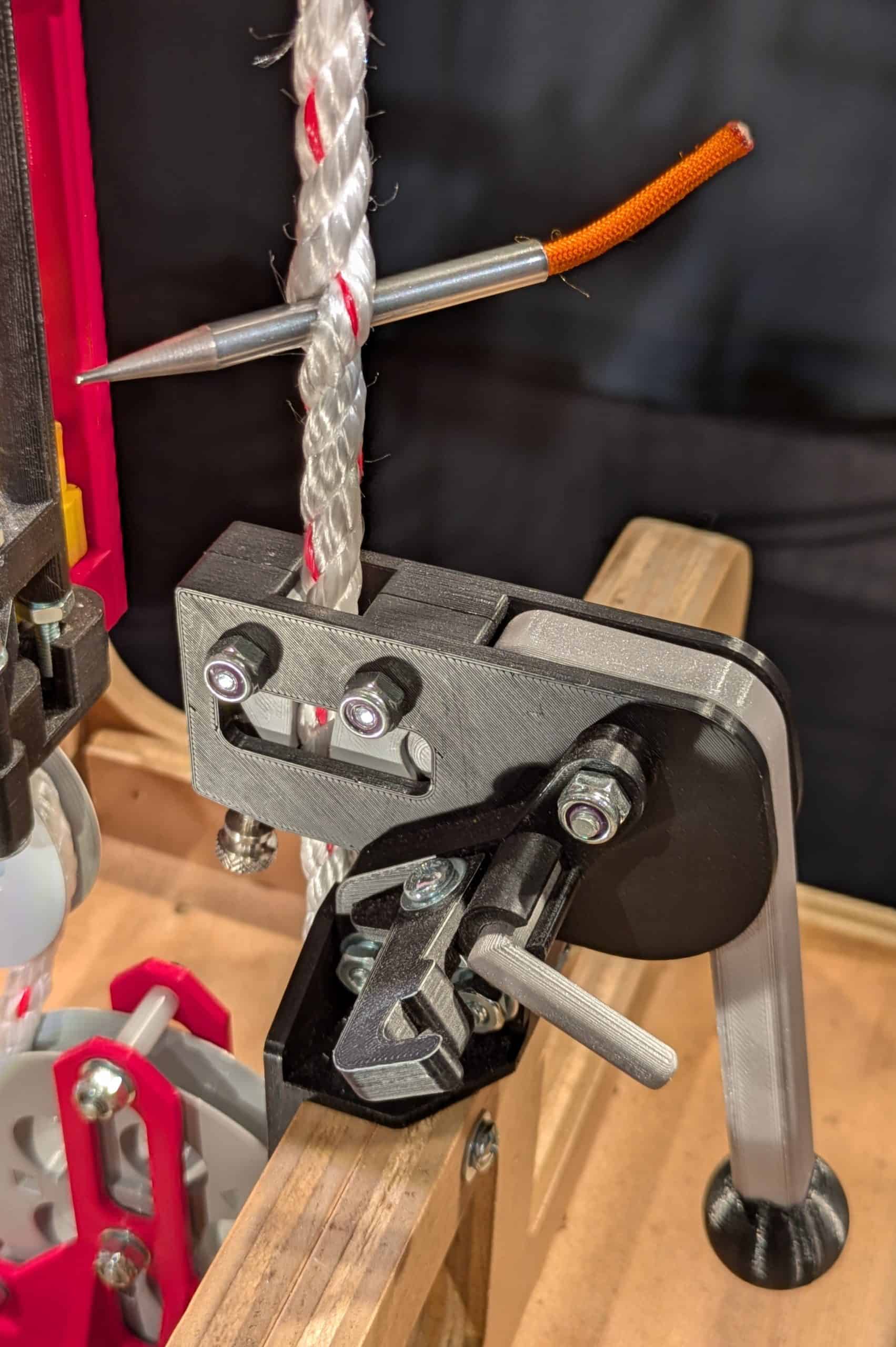
Stranded purchase lines can be spiked with ribbons, strings, or yarns. To do this, a rope splicing fid is passed through the strands and used to install the yarn. Swedish fids (left) and tubular fids (right) can both be made from knitting needles.
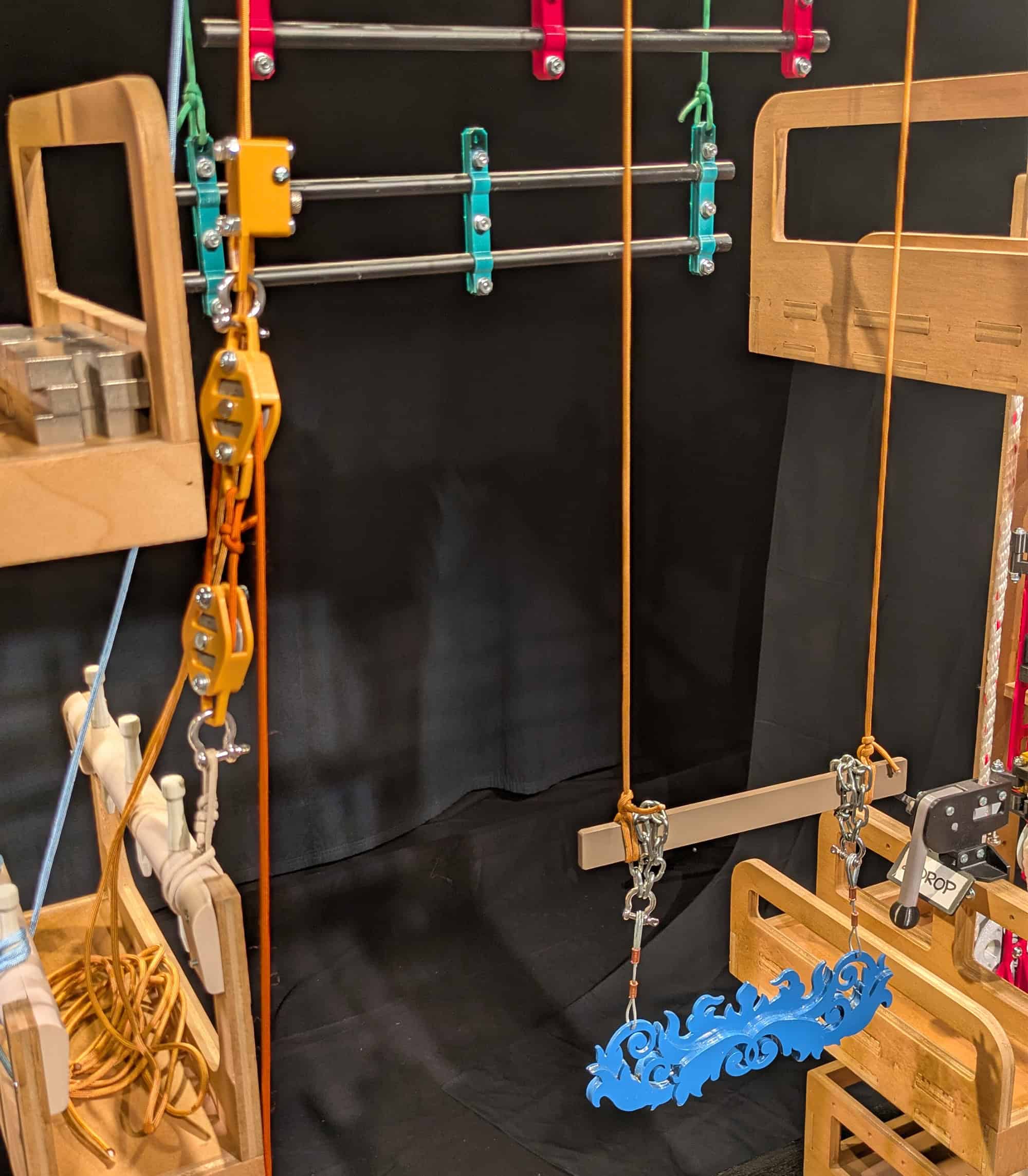
Block & Tackle
The KRT includes a system of block and tackle for teaching other rigging concepts like mechanical advantage and resultant force. This can also be used with the hemp line set. In real systems, extra advantage is sometimes needed to initially lift the load into the air.